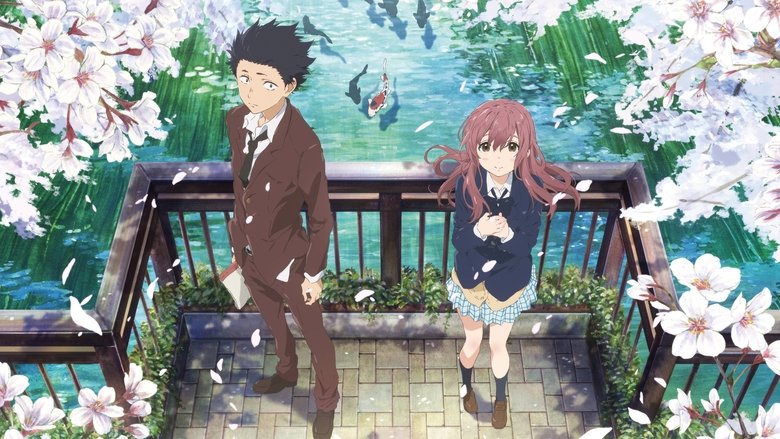

A Silent Voice: The Movie
A poignant animated drama that delicately illustrates the isolating silence of guilt and the arduous journey towards redemption, painted with the fragile hues of cherry blossoms and the quiet flow of a river.
A Silent Voice: The Movie

映画 聲の形

"Sometimes the answer is as simple as learning to listen."

17 September 2016 Japan 129 min ⭐ 8.4 (4,236)
Director: Naoko Yamada
Cast: Miyu Irino, Saori Hayami, Aoi Yuuki, Kensho Ono, Yuki Kaneko
Drama Animation Romance
Redemption and Forgiveness Bullying and Its Consequences Communication and Misunderstanding Mental Health and Social Anxiety
Box Office: $30,819,442

A Silent Voice: The Movie - Ending Explained

⚠️ Spoiler Analysis

The plot of "A Silent Voice" culminates in a series of dramatic and emotionally charged events. The fragile peace of the new friend group shatters on a bridge when Naoka Ueno confronts Shouko, and the unresolved tensions and past resentments boil over, causing Shouya to lash out and alienate everyone, including Shouko. Deeply believing she is the source of everyone's pain, Shouko attempts to commit suicide by jumping from her balcony during a fireworks festival. Shouya manages to save her at the last moment but falls in her place, landing him in a coma.

This climax is a critical turning point. While Shouya is unconscious, his act of sacrifice forces the other characters to confront their own feelings and responsibilities. Shouko, overwhelmed with guilt, works to repair the broken friendships. When Shouya awakens, he seeks out Shouko at their bridge. In a tearful reunion, he apologizes for everything and asks her to help him live. The hidden meaning that becomes clear is that both characters were trapped in a cycle of self-hatred; Shouya felt he deserved punishment for his past, while Shouko felt she was a burden who caused pain. His fall was the shock that broke them both free.

The film's final scene at the school festival is the ultimate catharsis. As Shouya walks through the crowded hall with his friends, he forces himself to look up. For the first time, he allows himself to hear the voices of the people around him, and one by one, the blue 'X's that have covered their faces for years peel away and fall to the floor. Overwhelmed by the sensory experience of connection he has denied himself, he breaks down in tears. This ending signifies that he has finally forgiven himself and is ready to accept the world, with all its good and bad voices, completing his long and arduous journey of redemption.

Alternative Interpretations

While the film's ending is generally seen as hopeful, some viewers interpret it with a more cautious optimism. The final scene, where the 'X's fall away and Shouya cries, can be read not as a complete cure for his social anxiety but as the first major step in a long and ongoing process of healing. His problems are not magically solved, but he has finally gained the ability to face them and connect with others.

Another area of discussion is the dynamic of forgiveness. Some interpretations question whether Shouko's immediate forgiveness of Shouya is truly a healthy response, or a symptom of her own deep-seated lack of self-worth and her tendency to blame herself for everything. From this perspective, the story is not just about Shouya earning forgiveness, but also about Shouko learning to value herself enough to acknowledge the pain she was caused and move forward from a position of strength, not just passive acceptance.

Furthermore, the roles of the supporting characters, particularly Naoka Ueno and Miki Kawai, can be interpreted in different ways. While they are antagonists to the protagonists' reconciliation, some viewers see them as realistic portrayals of individuals who are unable or unwilling to confront their own culpability in the past bullying, representing the societal defense mechanisms and lack of accountability that allow bullying to persist.