
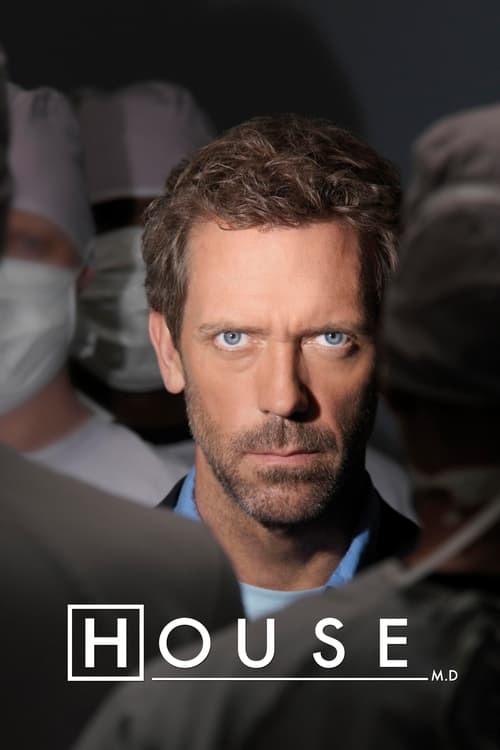
"Feel better?"
Cast: Hugh Laurie, Robert Sean Leonard, Omar Epps, Jesse Spencer, Lisa Edelstein
House — Characters & Cast
Character Analysis
Dr. Gregory House
Hugh Laurie
Motivation
House's primary motivation is solving the puzzle. He is compelled by intellectual curiosity and a deep-seated need to find the truth, to prove he is right. This is driven by his belief that life is otherwise meaningless. He is not motivated by a desire to help people, but by the challenge of the diagnosis. Over time, a secondary, often hidden, motivation emerges: a desire to connect with others and alleviate his own loneliness, though his fear of vulnerability constantly undermines this.
Character Arc
House begins as a brilliant but deeply cynical and isolated diagnostician, defined by his pain, his addiction, and his philosophy that "everybody lies." His primary focus is the intellectual puzzle of medicine, not the patients themselves. Throughout the series, his relationships, particularly with Wilson and Cuddy, challenge his nihilistic worldview. He experiences cycles of hope and despair, attempting to find happiness through a romantic relationship with Cuddy and sobriety, but his self-destructive tendencies repeatedly sabotage these efforts. His arc is not a simple progression towards becoming a better person but a complex struggle against his own nature. In the end, he chooses human connection over his profession, faking his own death to spend time with a dying Wilson, suggesting a profound shift in his priorities from solving abstract puzzles to valuing a personal relationship.
Dr. James Wilson
Robert Sean Leonard
Motivation
Wilson is motivated by a deep-seated empathy and a desire to help others, both his patients and, most significantly, House. He sees the good in House beneath the abrasive exterior and is driven by a loyal, almost desperate, need to save his friend from himself. His motivation is also colored by his own neediness and a pattern of being drawn to complex, damaged individuals.
Character Arc
Wilson starts as House's steadfast, and seemingly only, friend. He is the moral center of the show, consistently trying to guide House towards ethical behavior and emotional honesty. His arc involves grappling with his own flaws, including a history of failed marriages and a tendency to be a "people-pleaser." He is often manipulated by House but also enables him. His relationship with Amber and her subsequent death in Season 4 mark a significant turning point, causing a deep rift with House and forcing Wilson to confront his own choices. His diagnosis with terminal cancer in the final season becomes the catalyst for the series' ultimate conclusion, solidifying his role as the one person who could fundamentally change House's perspective on life.
Dr. Lisa Cuddy
Lisa Edelstein
Motivation
Cuddy is motivated by a dual desire: to run an effective and reputable hospital, and to find personal fulfillment, primarily through motherhood and a meaningful relationship. Her motivation regarding House is complex; she is driven by a need to control him professionally, a grudging respect for his medical brilliance, and a deep, long-standing romantic affection for him. She is motivated by the hope that she can have both a stable life and a relationship with him, a hope that is ultimately shattered.
Character Arc
Cuddy is initially presented as the capable, often exasperated, administrator who must manage House's genius while mitigating the chaos he creates. Her arc revolves around balancing her demanding career with her deep desire for a family and a personal life. She is one of the few characters who can match House's wit and challenge him directly. Over many seasons, their professional antagonism evolves into a complex romantic relationship. She takes a huge emotional risk by committing to House, believing she can be the one to help him change. However, his relapse and destructive behavior prove to be too much, and after he drives his car into her house, she ends the relationship and leaves the hospital, and the show, at the end of Season 7. Her arc is a tragic exploration of loving a brilliant but broken man, and ultimately choosing her own well-being and that of her child over him.
Cast
Explore More About This Movie
Dive deeper into specific aspects of the movie with our detailed analysis pages