
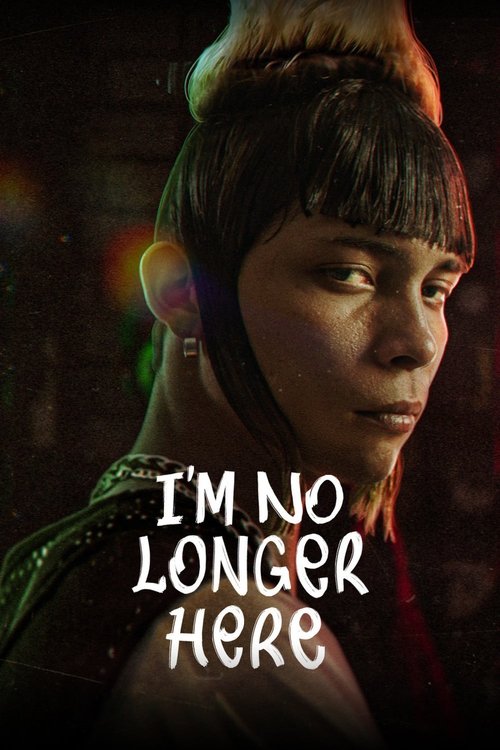
Ya no estoy aquí
I'm No Longer Here - Symbolism & Philosophy
Symbols & Motifs
Cumbia Rebajada (Slowed-Down Cumbia)
The music symbolizes a desire to prolong youth and resist the passage of time in a hopeless environment. By slowing the music down, the characters make the fleeting moments of joy and dance last longer. It is the heartbeat of their identity and cultural home; for Ulises, it's a lifeline to his past and a form of emotional expression when words fail.
It is ever-present in the film, playing from radios and Ulises' cherished MP3 player. He dances to it in Monterrey with his crew and alone on rooftops and subways in New York. The final scene poignantly features the MP3 player's battery dying, symbolizing the final severance of his connection to his past and the intrusion of a harsh, silent reality.
Ulises' Hairstyle
The distinctive, gelled hairstyle is the most prominent visual signifier of Ulises' identity and membership in the Kolombia subculture. It's a crown that gives him confidence and status in Monterrey. Cutting it off in New York is a symbolic act of surrender and self-erasure, a desperate moment where he sheds the last vestige of his former self after realizing he can neither fit in nor go back.
Ulises meticulously maintains his hair in Monterrey and the first part of his time in New York. After a series of rejections and profound homesickness, he gets intoxicated on paint thinner and impulsively chops off his signature sideburns, signifying his rock bottom.
The MP3 Player
The MP3 player is a sacred object, a tangible link to his friends, his home, and his identity. It was a gift from his friend Chaparra, purchased with money the group pooled together, symbolizing their collective bond. In the alienating environment of New York, it becomes his only companion and the sole source of the cumbia that keeps his spirit alive.
Chaparra gives the MP3 player to Ulises as he is forced to leave Monterrey. He listens to it constantly in New York. Its battery dying in the final scene is a crucial symbolic moment, plunging him into the chaotic sounds of his changed hometown without the comfort of his music.
Philosophical Questions
Is identity inherent, or is it a reflection of our community and culture?
The film argues compellingly for the latter. Ulises' entire sense of self is tied to his role in Los Terkos and the Kolombia culture. When this context is removed, his identity dissolves. His clothes, hair, and dance become a costume without a stage, forcing the viewer to question how much of our own identity would remain if we were completely uprooted from our familiar cultural signifiers and social circles.
What is the true meaning of 'home'?
"I'm No Longer Here" explores the idea that home is more than a physical place. For Ulises, home is a rhythm, a style, and a group of people. His profound homesickness is a longing for a specific cultural moment. The tragic conclusion, where he returns to Monterrey only to find it utterly changed and his culture gone, suggests that one can be exiled even in their own hometown. The film asks if home can ever be reclaimed once it is lost, or if it only exists in memory.
Core Meaning
The film is a poignant exploration of identity, belonging, and the devastating effects of displacement. Director Fernando Frías de la Parra uses the story of Ulises and the ephemeral Kolombia subculture to convey the pain of cultural erasure and the struggle to preserve one's essence when stripped of community and context. The core message revolves around the idea that identity is not just an internal construct but is intrinsically linked to place, music, and shared experience. When Ulises is forced to migrate, he doesn't just lose his home; he loses the reflection of himself that his culture provided. The film serves as a metaphor for a rapidly expiring youth, with the slowed-down cumbia representing a desire to make a fleeting moment last longer because the future is uncertain and bleak. It is a lament for a lost time, a lost place, and a lost self.