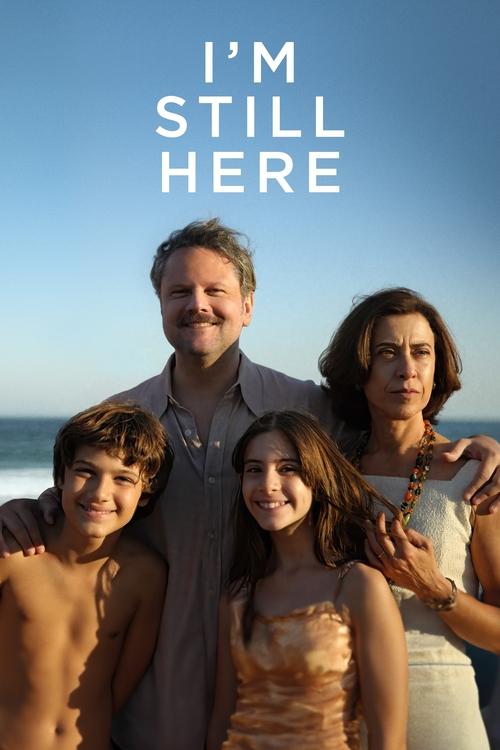
Ainda Estou Aqui
"When a mother's courage defies tyranny, hope is reborn."
I'm Still Here - Symbolism & Philosophy
Symbols & Motifs
The Open vs. Closed House
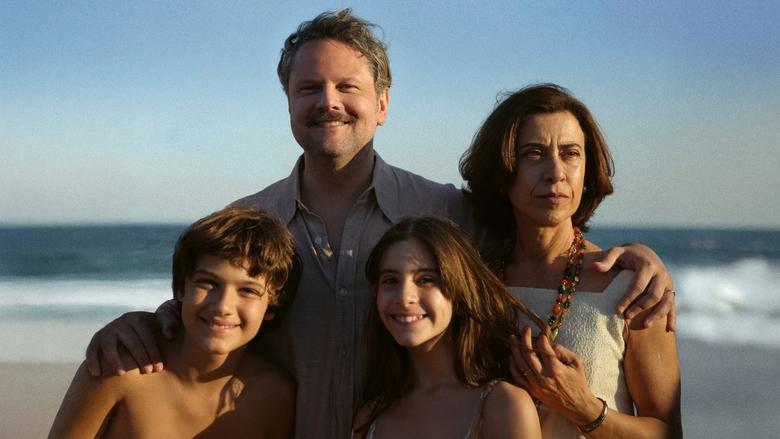
The Paiva family home symbolizes their state of being. Initially, it is open, sunny, and full of life, representing freedom, warmth, and intellectual curiosity. After Rubens' abduction, the military agents force the family to close all doors and curtains, transforming the home into a dark, claustrophobic space that mirrors the oppressive political atmosphere and the family's imprisonment by fear and uncertainty.
This is a central visual motif. The film's first act is characterized by bright, sunlit shots of the house and the nearby beach. The turning point is the moment the agents invade and order the house sealed, plunging the setting and the film's tone into darkness.
The Sea
The sea initially represents the family's idyllic freedom and happiness. However, it also carries a sense of foreboding. In the opening scene, Eunice floats peacefully, but her tranquility is shattered by the sound of a military helicopter overhead, foreshadowing the impending doom that will disrupt their lives.
The film opens with a shot of Eunice in the sea, establishing the setting by Leblon Beach. This image of peace juxtaposed with the helicopter's roar sets the tone for the entire film: a beautiful life lived under constant, looming threat.
Super 8mm Home Movies
The use of Super 8mm footage symbolizes memory and a lost, more innocent time. These sequences represent the happy past that the dictatorship stole from the Paiva family, creating a sense of nostalgia and making the subsequent tragedy even more poignant.
Director Walter Salles and cinematographer Adrian Teijido intersperse the main narrative with footage shot on Super 8mm film, which was popular in the 1970s. These moments capture the family's joyful, everyday life before the abduction, appearing like authentic family videos.
Philosophical Questions
How does a society heal from a trauma that it refuses to fully acknowledge?
The film delves into Brazil's collective trauma from the military dictatorship, a period whose perpetrators were largely protected by an amnesty law. Eunice's long fight for an official death certificate for her husband—a basic acknowledgment of fact—symbolizes the nation's wider struggle for truth and reconciliation. The film shows that without an official reckoning, the ghosts of the past continue to haunt the present, and the wounds inflicted by state violence can fester for generations, creating a cycle of unresolved grief and political tension.
What is the relationship between personal memory and historical truth?
"I'm Still Here" is built on the intersection of a family's intimate memories and the official, often falsified, historical record. Based on a memoir, the film champions the power of personal testimony to challenge state narratives. Eunice's struggle is to make her personal truth—the reality of her husband's murder—a part of the national historical truth. The film's poignant ending, where Eunice's own memory fades, raises the question of who becomes the keeper of truth when the primary witnesses are gone, suggesting that art and collective remembrance are essential to prevent history from being erased.
Core Meaning
At its core, "I'm Still Here" is a profound exploration of memory, resilience, and resistance in the face of state-sponsored terror. Director Walter Salles sought to tell a story about the reconstruction of a family's memory and, by extension, a country's memory. The film is a powerful indictment of authoritarianism, not through explicit depictions of violence, but by focusing on the devastating emotional void and psychological torture inflicted upon a family torn apart. It highlights the transformation of personal grief into political action, showing how one woman's refusal to forget becomes an act of defiance against a regime that seeks to erase its crimes. The movie serves as a poignant reminder that the fight for democracy and human rights is a continuous struggle, making a timely statement against the rise of far-right ideologies and the denial of historical atrocities.