
Skip to content
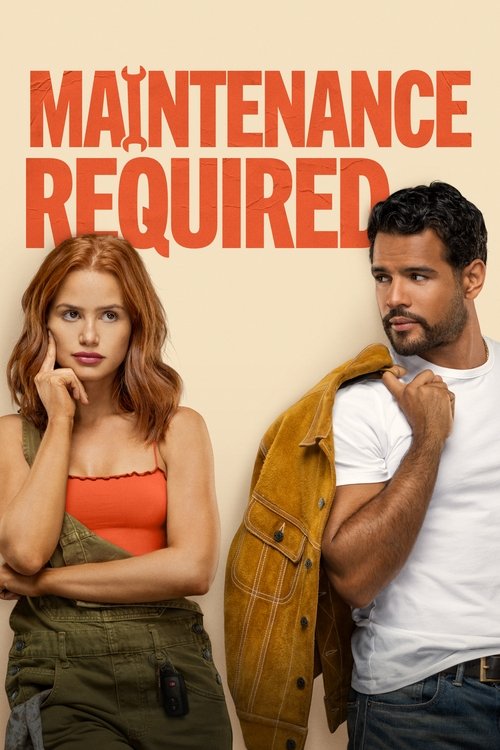
Maintenance Required
A sun-warmed garage romance where grease-stained hands and anonymous late-night messages collide — two rivals discovering that the heart, like any engine, only runs when someone finally listens to it.
Maintenance Required

"Online... they’re anonymous soulmates. In real life they’re rivals."

07 October 2025 United States of America 100 min 6.1 (206)

Director: Lacey Uhlemeyer

Cast: Madelaine Petsch, Jacob Scipio, Katy O'Brian, Madison Bailey, Matteo Lane

Comedy Romance The independent underdog versus corporate scale Anonymity, intimacy and the honesty of the screen Women's expertise in a male-coded trade Inheritance, grief and a father's shadow Chosen family and the workplace as home

Maintenance Required — Ending Explained

⚠️ Spoiler Analysis

Full spoilers follow.

The central irony. Charlie's all-female mechanic shop is threatened when a massive corporate-owned auto repair chain opens directly across the street. Battered by the pressure, she pours out her frustrations to an anonymous friend she has made on an online car forum. That confidant is Beau — the man managing the chain across the road. Neither knows who the other is online. The film therefore runs two simultaneous relationships between the same two people: adversarial in person, tender on the screen, each one steadily sabotaging the other. Every kindness Beau offers online is, structurally, information extracted from a competitor; every hostility in the street is aimed at the person he is closest to.

The turn. The revelation collapses both relationships at once. Charlie loses not only a business rival's goodwill but the one person she had been fully honest with — the betrayal is doubled, because the confidence she gave was about him.

The resolution. Beau divulges that he has left Miller Boys, the chain he was managing, and apologizes for not being upfront with Charlie. He then reveals he is closing a deal on a '68 Dodge that needs a lot of work, and asks whether she would help him restore it. She agrees, and they drive away together. The proposal is deliberately not romantic on its surface: he doesn't ask for forgiveness in the abstract, he asks for labor performed together over time, which is the film's entire definition of love and the literal meaning of its title. He also disarms himself first — quitting the job before asking — so the request arrives without the power imbalance attached.

The epilogue. A year later, Charlie is working happily on a car with Beau and feels that someone — possibly her dad — has been looking out for her. This retroactively reframes the whole film. The story was never only about saving a business or winning a man; it was about an inheritance. The garage was her father's, and the closing beat suggests that what he left her was not a building but a way of living: fix things, keep fixing them, and let someone hand you a wrench.

What becomes clear in hindsight. The chain across the street and the anonymous forum are the same idea in two forms — both are ways of dealing with people you cannot see. The film's argument is that the cure for both is the same: show up as yourself, in person, with your hands dirty. And the unrestored car in the final shot is a pointed refusal of the genre's usual closure. Nothing is finished; it's just being maintained.

Alternative Interpretations

The ending as earned reconciliation. The generous reading takes the finale at face value: Beau leaves the corporate chain, apologizes for not being upfront, and proposes restoring a '68 Dodge together. He has surrendered the power imbalance before asking for forgiveness, and the shared project — rather than a kiss or a speech — is the film's honest picture of what repair looks like. The one-year epilogue confirms it worked.

The ending as evasion. A more skeptical reading, closer to the film's harsher reviews, notes how quickly the deception is dissolved. Beau lied to a woman whose business he was actively threatening; the script resolves that by removing the job rather than dramatizing the betrayal. Critics who found the film clichéd and soulless were reacting partly to this — the structural conflict between corporate power and the independent shop is settled by one man's resignation, which leaves the system itself untouched.

The father as presence or as projection. The closing beat, in which Charlie feels that someone — possibly her dad — has been looking out for her, can be read as a gentle supernatural suggestion, or, more plausibly, as the film's definition of inheritance: the dead look after us through the skills, the building and the people they left behind. Under that reading, Charlie's sense of being watched over is simply her recognizing that she has kept his work running.

Who the romance is actually about. Some viewers have argued the central love story is not Charlie and Beau at all but Charlie and her crew — that the film's genuine emotional investment lies with the shop's chosen family, and the heterosexual romance is the delivery mechanism. Reviews that praised the O'Brian–Bailey–Petsch dynamic above the leads implicitly support this.

Explore More About This Movie

Dive deeper into specific aspects of the movie with our detailed analysis pages

Similar Movies