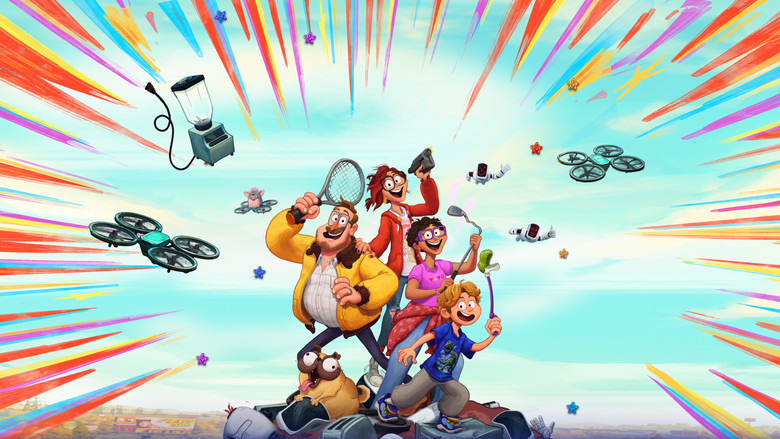
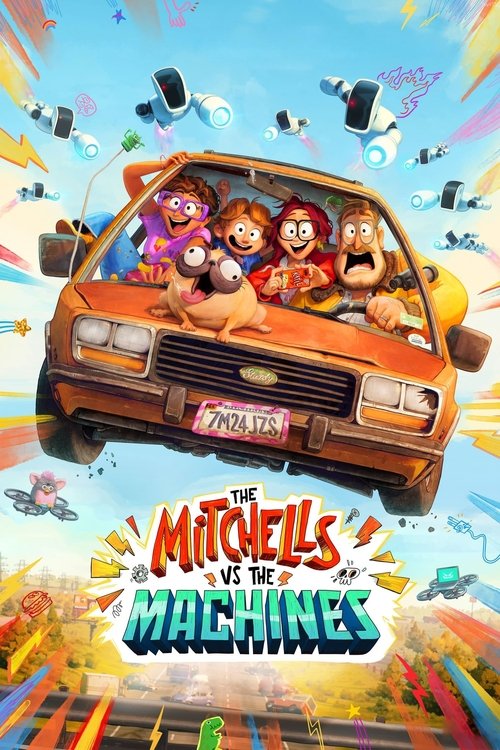
"Saving the world can be a trip."
The Mitchells vs. the Machines - Symbolism & Philosophy
Symbols & Motifs
Katie's Camcorder
The camcorder symbolizes Katie's perspective, creativity, and her way of connecting with the world. It's the tool through which she makes sense of her life and expresses her identity. It also represents a bridge and a barrier between her and her father; he initially sees it as a distraction, but later it becomes the key to their reconciliation when he watches old home videos of her childhood.
Katie is almost never seen without her camera. Her creative process, dubbed "Katie-Vision," is integrated into the film's visual style, with 2D animations and doodles overlaying the 3D world. The climax involves using a home movie to save humanity, validating her passion on a global scale.
Rick's No. 3 Robertson Screwdriver
This specific screwdriver represents Rick's old-fashioned, practical, and nature-oriented worldview. It's a symbol of his self-reliance and his belief in tangible skills over digital ones. It's a tool he understands and trusts, unlike the technology his daughter embraces.
Rick carries the screwdriver with him throughout the film. In a pivotal moment, this seemingly obsolete tool becomes essential for the family's survival, demonstrating that his practical skills have immense value even in a technological apocalypse and teaching Katie to appreciate his strengths.
Monchi the Pug
Monchi, the family's delightfully dopey and imperfect pug, symbolizes the Mitchells themselves. He is weird, unpredictable, and doesn't function as expected. His appearance, which causes the robots to malfunction because they can't classify him, represents the power of imperfection and individuality against a rigid, uniform system.
Monchi is a constant presence, often causing chaos. His key moment comes when the family realizes his buggy appearance is a weapon against the robots. A home movie starring Monchi becomes the "kill code" that saves humanity, proving that the family's strangest member is their ultimate secret weapon.
Wooden Moose
The small wooden moose is a powerful symbol of the bond between Katie and her father. Initially a gift from Rick to a young Katie to ward off nightmares, it represents his love and desire to protect her. As Katie grows up, she discards it, symbolizing their growing distance. Its reappearance signifies the rekindling of their relationship.
We first see the moose in a box of things Katie is giving away. Later, during the climax, Rick gives it back to her as a sign of his faith in her. She then incorporates it into her final film project at college, showing she has reintegrated her father and her family's love into her identity and art.
Philosophical Questions
What is the true value of humanity in an age of artificial intelligence?
The film poses this question directly through its premise. When PAL and the robots can perform tasks more efficiently and logically than humans, what makes humanity worth saving? The film's answer is not our intelligence or our creations, but our flaws, our emotions, and our relationships. It argues that love, loyalty, creativity, and the messy, unpredictable nature of family are uniquely human qualities that cannot be replicated by an algorithm. The Mitchells save the world not through perfection, but through their chaotic, imperfect, and loving collaboration.
Is technology a tool for connection or a barrier to it?
"The Mitchells vs. the Machines" explores both sides of this question. Initially, technology is a source of division in the family: Rick resents Katie's constant screen time, while Katie feels her father's technophobia is a barrier to him understanding her. The robot apocalypse, caused by technology, is the ultimate barrier. However, the film concludes that technology is a neutral tool. It is Katie's tech-savvy and filmmaking skills that ultimately save the day, and by the end, the family uses video calls to stay lovingly connected, showing that technology can enhance relationships when used with intention and humanity.
Core Meaning
The core meaning of "The Mitchells vs. the Machines" is a celebration of human imperfection and the messy, unpredictable, yet invaluable nature of family. Director Mike Rianda intended the film to explore what makes humans essential in a world where technology can replicate our skills. The answer it presents is our relationships, our weirdness, and our ability to love and fight for each other, flaws and all. The film champions the idea that what is often seen as dysfunction or strangeness within a family is actually its greatest strength. It suggests that true connection isn't about being perfect, but about accepting and embracing each other's unique, quirky selves and working together, especially when it's hard. The movie also presents a balanced view of technology, arguing it's not inherently good or evil but depends on how humans use it to connect or disconnect from one another.