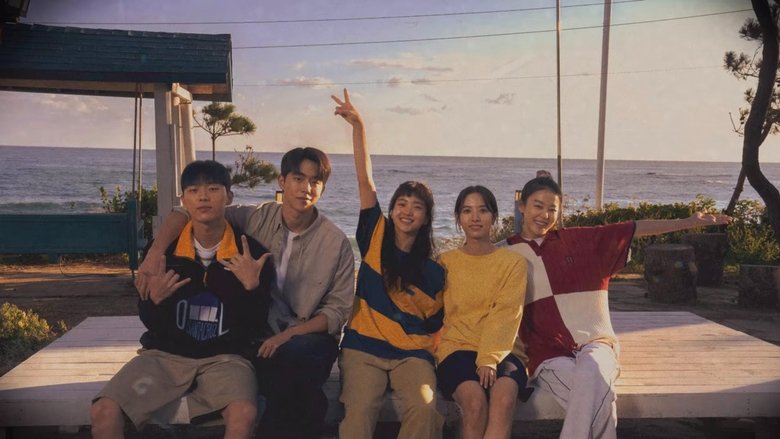

Twenty Five Twenty One
A nostalgic coming-of-age drama pulsating with the bittersweet ache of fleeting youth, where the glint of a fencing blade reflects the resilient light of dreams amidst the shadows of a changing era.
Twenty Five Twenty One

스물다섯 스물하나

12 February 2022 — 03 April 2022 South Korea 1 season 16 episode Ended ⭐ 8.4 (297)
Cast: Kim Tae-ri, Nam Joo-hyuk, Bona, Choi Hyun-wook, Lee Ju-myoung
Drama
The Resilience of Dreams in Crisis The Bittersweet Nature of First Love Sportsmanship and Rivalry Nostalgia and Memory The Weight of Responsibility

Twenty Five Twenty One - Symbolism & Philosophy

Symbols & Motifs

Water Fountains

Meaning: These symbolize shared, unburdened happiness and the ability to find joy in simple rebellions.
Context: The iconic scene where Hee-do turns a school fountain upside down to create a 'rainbow' for Yi-jin, telling him they can be secretly happy together despite his promise to never be happy again.

Fencing Masks

Meaning: The mask represents both the protective barrier characters put up to hide their vulnerability and the true identity they find only in the heat of competition.
Context: Used throughout matches to illustrate the characters' internal struggles; notably when Hee-do and Yu-rim finally embrace while still wearing their gear after a tense match.

Full House Comic Books

Meaning: A symbol of connection, persistence, and the shared cultural touchstones of the 90s.
Context: Hee-do's obsession with the series and Yi-jin's job at the rental shop provide their initial points of interaction and a tangible link to their youthful innocence.

Tunnels

Meaning: Tunnels represent transitions, safe havens, and the boundary between the past and the future.
Context: The tunnel where they share pivotal moments of support and where, years later, the older Hee-do finds closure regarding her breakup with Yi-jin.

Diaries

Meaning: The preservation of a version of oneself that no longer exists; the bridge between the mother's past and the daughter's present.
Context: Min-chae's reading of the diaries drives the narrative, revealing the gap between the legendary 'Na Hee-do' of history and the mother she knows.

Philosophical Questions

Can a relationship be considered successful if it doesn't end in marriage?

The series challenges the societal definition of success by showing how the love between the leads, despite ending, gave them the strength to survive their darkest times.

To what extent are we responsible for the circumstances of 'the times' we live in?

It explores how macro-economic events (IMF) and global tragedies (9/11) fundamentally alter individual morality and life paths, often leaving people with no choice but to adapt.

Is nostalgia a tool for healing or a trap that prevents us from living in the present?

Through Adult Hee-do's initial forgetfulness and eventual rediscovery of her diary, the show asks if we must let go of the past to move forward, or if remembering is the only way to stay whole.

Core Meaning

The core meaning of the series lies in the celebration of the ephemerality of youth and the acceptance that not everything meant to change us is meant to stay with us. The creators emphasize that while dreams may fail and first loves may end, the growth, resilience, and happiness experienced during those times remain permanent fixtures of one's identity. It argues that the "spark" of youth is a finite resource that fuels the rest of a person's life, and that "the times" (the socio-economic era) may dictate our circumstances, but they cannot erase the internal strength forged through struggle.