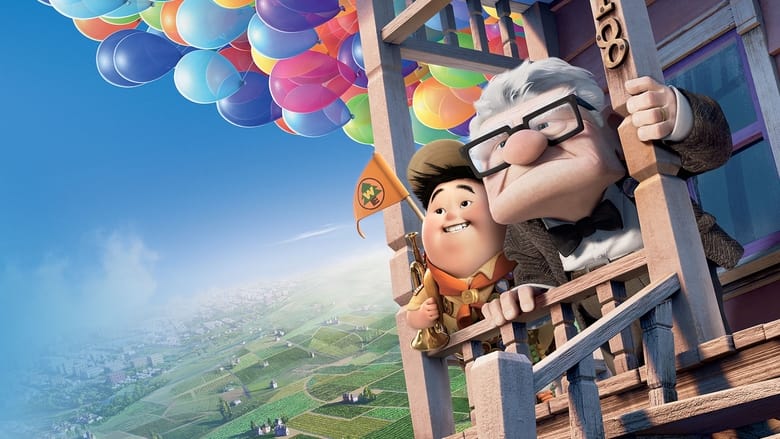

"The greatest adventure is just getting back home."
Up - Symbolism & Philosophy
Symbols & Motifs
Carl's House
The house symbolizes Carl's past, his memories, and his enduring love for Ellie. It is a physical manifestation of their life and dreams together. Initially, it's a sanctuary, but it also becomes a prison of his grief, weighing him down and isolating him from the world. Letting go of the house at the end symbolizes Carl's emotional growth and his readiness to embrace a new life and new adventures. Its final landing spot at Paradise Falls signifies that the promise to Ellie has been fulfilled, freeing him.
The house is the central set piece of the film. Carl and Ellie build their lives within it. After Ellie's death, Carl refuses to leave it, even as the city develops around him. He attaches balloons to it to fly it to South America. During the climax, he must choose between saving the house and saving his new friends, ultimately sacrificing the house's contents to make it light enough to fly again, and then letting it drift away to save Russell and Kevin from Muntz.
The Balloons
The thousands of colorful balloons represent Carl's dreams, hope, and his desire to escape the confines of his grief-stricken life. They are a whimsical and powerful symbol of freedom and the lifting of his spirits. The act of releasing the balloons is Carl's last-ditch effort to keep his promise to Ellie and reclaim a sense of adventure.
Carl, a former balloon salesman, uses the balloons to make his house fly. The image of the house carried by a vibrant canopy of balloons is the film's most iconic visual. The number of balloons animated for the liftoff scene was 20,622, though animators calculated it would take millions in real life.
The 'Ellie Badge'
The grape soda bottle cap that Ellie gives Carl when they first meet becomes a symbol of their bond, their shared spirit of adventure, and their promise. It represents the simple, everyday moments that constitute true love and adventure. When Carl gives it to Russell at the end, it signifies the passing of this spirit to a new generation and the formation of a new family bond. It becomes the most important badge for Russell, representing love and belonging, not just a Wilderness Explorer achievement.
As children, Ellie pins the grape soda cap on Carl's shirt, calling him a member of her club. Carl wears it throughout the film. In the final scene, at Russell's Wilderness Explorer ceremony, Carl pins it on Russell's sash, in the empty spot where his 'Assisting the Elderly' badge would go, calling it "The Ellie Badge."
Paradise Falls
Paradise Falls represents the ultimate, idealized adventure for Carl and Ellie—a dream destination that is always just out of reach. It symbolizes the goals and promises that drive people. However, the film ultimately shows that the destination is less important than the journey and the companions one travels with. For Carl, reaching the falls is less significant than the relationships he forges along the way.
Inspired by their hero Charles Muntz, young Carl and Ellie dream of moving their clubhouse to Paradise Falls. It remains their lifelong, unfulfilled goal. Carl's entire motivation for the journey is to place their house on the cliffs overlooking the falls. The location is inspired by the real-life Angel Falls in Venezuela.
Philosophical Questions
What is the true nature of adventure?
The film consistently challenges the conventional idea of adventure as solely consisting of daring expeditions to exotic places, an idea initially championed by Charles Muntz. It posits that a life filled with love, companionship, and shared everyday moments can be the most profound adventure of all. The wordless montage of Carl and Ellie's marriage—saving money, fixing up their home, growing old together—is presented as a complete and fulfilling adventure. The film asks the viewer to reconsider their own definition of an adventurous life, suggesting it is defined not by the destinations reached but by the quality of the journey and the relationships nurtured along the way.
How should we contend with loss and the memory of the past?
"Up" provides a nuanced exploration of grief. Carl's initial response to Ellie's death is to turn his house into a mausoleum and himself into a recluse, effectively stopping his own life to preserve the past. The film questions whether this is a healthy way to honor a loved one. Through his journey and Ellie's final message, the film suggests that the best way to honor the dead is to continue living, to find new purpose, and to create new bonds. It argues against being a prisoner of memory, proposing instead that memories should be a source of strength that propels one forward into new experiences.
What constitutes a family?
The film presents a powerful argument for the idea of a found family. Carl, who couldn't have children with Ellie, and Russell, who has an absent father, are both missing key family connections. Along with the outcast dog Dug and the parent-less bird Kevin, they form an unconventional but deeply loving and loyal family unit. They choose to care for and protect one another. Carl's final act of becoming a grandfather figure to Russell solidifies this theme, demonstrating that the bonds of love and shared experience, not blood, are what truly define a family.
Core Meaning
The central message of "Up" is that adventure can be found in the everyday moments and relationships we cherish, not just in grand, exotic journeys. The film explores the idea of letting go of the past to embrace the present and future. Director Pete Docter and his team wanted to convey that while honoring the memory of loved ones is important, one must not let grief and attachment to the past prevent them from living a full life. Carl's journey illustrates that true adventure lies in human connection and that it's never too late to start a new chapter. Ellie's final message to Carl in her adventure book, "Thanks for the adventure - now go have a new one!", encapsulates this core meaning, encouraging him to find new purpose and joy.