12 Angry Men - Symbolism & Philosophy
Symbols & Motifs
The Switchblade
A symbol of perceived reality vs. actual possibility. It represents the prosecution's 'unique' evidence until Juror #8 produces an identical one, shattering the illusion of certainty.
Introduced dramatically when Juror #8 jams an exact duplicate of the murder weapon into the table, instantly visually validating the concept of reasonable doubt.
The Eye Glasses
Symbolizes clarity and blindness. The physical act of seeing is linked to the intellectual act of understanding. It represents the key to unlocking the truth behind the eyewitness testimony.
Juror #9 notices Juror #4 rubbing the marks on his nose, realizing the key witness likely wore glasses and couldn't have seen the murder clearly without them. This revelation turns the tide for the rational Juror #4.
The Electric Fan
Represents the rising and cooling of tensions. The heat mirrors the jurors' anger; when the fan finally works (or the rain starts), it signals a shift in the room's dynamic and a cooling of tempers.
The jurors struggle with the broken fan in the stifling heat during the most heated arguments; its eventual activation coincides with the momentum shifting toward acquittal.
The Baseball Tickets
Symbolizes triviality and civic apathy. It highlights the dangerous indifference of those who view civic duty as an obstacle to their personal entertainment.
Juror #7 constantly checks his watch and references the Yankees game, showing he would condemn a man to death simply to not miss the first pitch.
Philosophical Questions
Is 'Reasonable Doubt' a flaw or a feature?
The film asks whether it is better to let a guilty man go free than to convict an innocent one. It explores the moral threshold of certainty required to take a human life, suggesting that 'doubt' is the highest form of civilized justice.
Can true objectivity ever exist?
Every juror interprets the 'facts' through the lens of their own past—slums, sports, business, or family. The film questions if objective truth is attainable, or if a verdict is always just a consensus of subjective biases.
What is the responsibility of the individual in a democracy?
Through Juror #8, the film posits that democracy is not passive. It argues that citizenship requires courage—the courage to be the 'one' against the 'eleven' and to disrupt the comfortable status quo for the sake of what is right.
Core Meaning
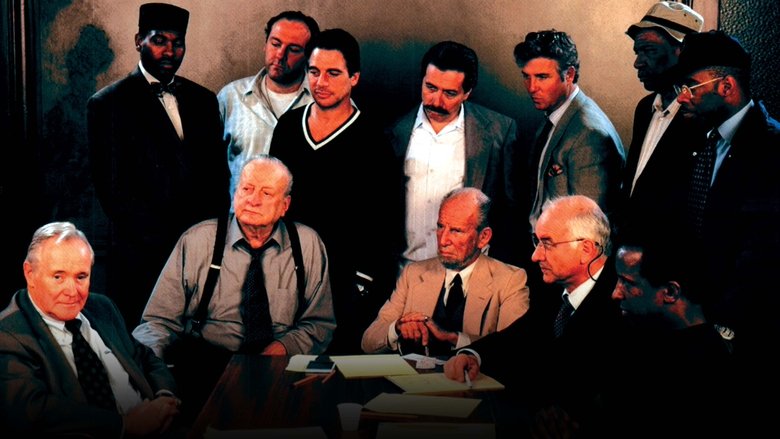
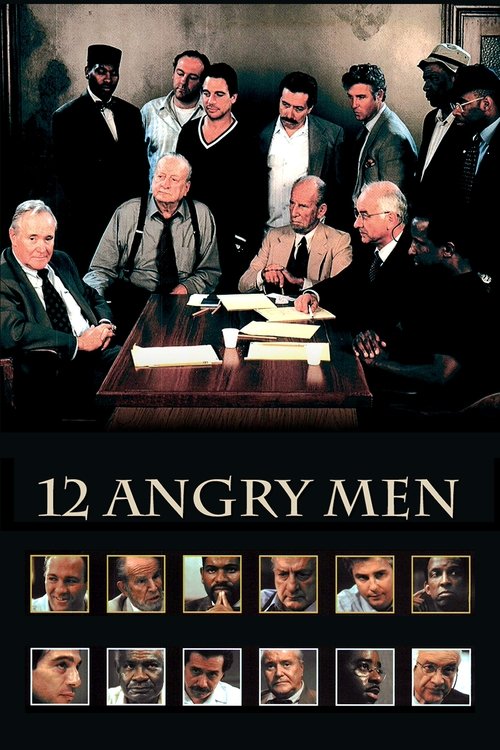
The film posits that justice is not automatic but a strenuous, active process that requires empathy, reason, and the courage to stand alone. It serves as a mirror to society, suggesting that the legal system's integrity depends entirely on the citizens who uphold it. By diversifying the cast, this version specifically highlights that prejudice is a universal human flaw, not limited to any single race or background, and that reasonable doubt is the essential safeguard against the tyranny of the majority.