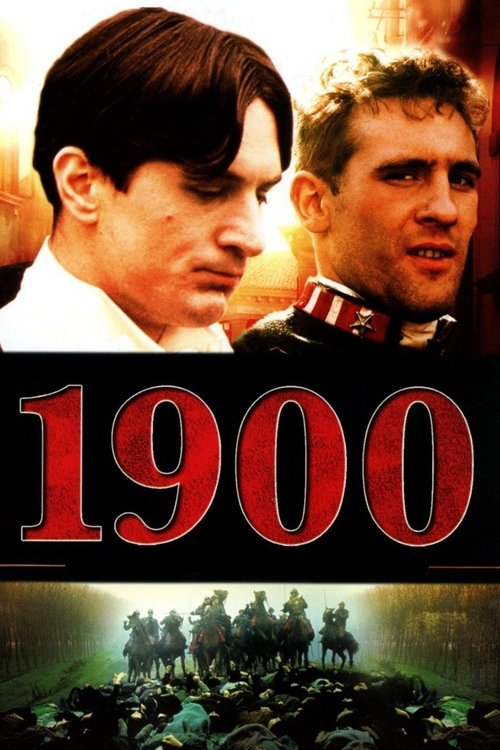
Novecento
"From the cradle to the grave - victims of history and change!"
1900 - Symbolism & Philosophy
Symbols & Motifs
The Names Alfredo and Olmo
The names signify their social origins. 'Alfredo' is a noble name, while 'Olmo' means 'elm tree' in Italian, symbolizing a natural, grounded connection to the earth and the peasant's resilience.
Throughout the film, the names emphasize the fixed nature of their social roles despite their personal growth.
The Seasonal Cycles
The four sections of the film correspond to seasons that mirror the political climate: Summer (childhood innocence), Fall (the rise of Fascism), Winter (the depths of WWII), and Spring (liberation and hope).
The cinematography shifts in color palette to reflect these emotional and historical shifts.
The Railroad Tracks
Represents the path of destiny and the dangerous game of existence. Lying on the tracks as a child is a test of courage; doing so as an old man signifies a return to the start of the cycle.
A recurring motif from the boys' childhood that appears again in the final sequence of the film.
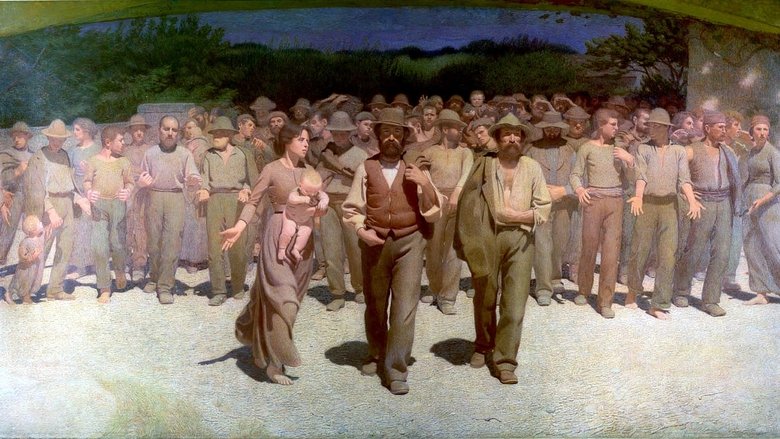
The 'Il Quarto Stato' Painting
Symbolizes the unstoppable march of the working class toward justice and visibility in history.
The film opens with a slow zoom-out of Giuseppe Pellizza da Volpedo's iconic painting, setting the ideological stage.
Philosophical Questions
Can personal friendship survive the demands of political ideology?
The film explores this by showing Alfredo and Olmo's bond surviving decades of betrayal, yet ultimately suggesting that their social classes make them inherent enemies.
Is the cycle of history inescapable?
The recurring imagery of the train tracks and the final elderly scuffle suggest that while political names change, the underlying human struggle for dominance remains constant.
Core Meaning
The core meaning of 1900 is the inescapable nature of class identity and the cyclic struggle of history. Bertolucci uses the friendship between Alfredo and Olmo to argue that individuals are primarily archetypes of their social class, trapped in a dialectical conflict that transcends personal affection. The film suggests that while political regimes may fall, the fundamental tension between the 'master' and the 'slave' remains a permanent fixture of human society. Ultimately, it is a 'people's epic' that attempts to forge a collective memory for the Italian peasantry, romanticizing the struggle for revolution while acknowledging the enduring persistence of power structures.