1900
Novecento
"From the cradle to the grave - victims of history and change!"
Overview
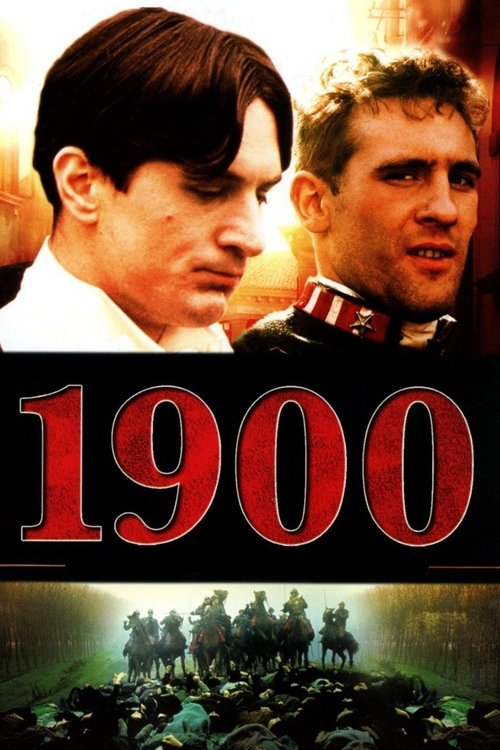
Bernardo Bertolucci's 1900 (Novecento) is a monumental epic that chronicles the first half of the 20th century in Italy through the lifelong friendship and rivalry of two men born on the same day in 1901. Alfredo Berlinghieri (Robert De Niro) is the scion of a wealthy landowning family, while Olmo Dalcò (Gérard Depardieu) is the illegitimate son of a peasant woman working on the Berlinghieri estate. Their parallel lives serve as a microcosm for the larger socio-political upheavals of the nation, from the decline of feudalism to the rise of socialism and the subsequent darkness of Mussolini's fascism.
As the narrative unfolds over five hours, the film captures the shifting seasons of Italian history, moving from the idyllic childhood of the two boys to their divergent paths as adults. Olmo becomes a radical socialist leader for the workers, while Alfredo, though personally sympathetic to his friend, becomes a passive padrone who inadvertently enables the rise of fascist violence, personified by the sadistic estate manager Attila (Donald Sutherland). The film culminates in the chaotic liberation of 1945, where personal scores and historical injustices finally reach a fever pitch of reckoning.
Core Meaning
The core meaning of 1900 is the inescapable nature of class identity and the cyclic struggle of history. Bertolucci uses the friendship between Alfredo and Olmo to argue that individuals are primarily archetypes of their social class, trapped in a dialectical conflict that transcends personal affection. The film suggests that while political regimes may fall, the fundamental tension between the 'master' and the 'slave' remains a permanent fixture of human society. Ultimately, it is a 'people's epic' that attempts to forge a collective memory for the Italian peasantry, romanticizing the struggle for revolution while acknowledging the enduring persistence of power structures.
Thematic DNA
Class Struggle and Social Evolution
The film meticulously depicts the transition from feudal agrarian life to industrial modernity. It reveals how the arrival of machinery changed class relations, turning 'draught horses into steam horses' and exacerbating the divide between the bourgeoisie and the proletariat.
Fascism vs. Communism
The ideological war for Italy's future is personified through the characters. Olmo represents the utopian, communal hope of Communism, while the landowners' passivity and Attila's psychopathic cruelty illustrate the dehumanizing rise of Fascism.
The Burden of Heritage
Both Alfredo and Olmo are shaped by their grandfathers. Alfredo struggles with the guilt and expectations of his aristocratic lineage, while Olmo carries the collective weight of the peasants' struggle for dignity and land rights.
Friendship and Loyalty
The bond between the two leads is a fragile thread throughout the film. Despite being on opposite sides of a revolutionary divide, their childhood connection prevents them from fully destroying each other, even when history demands it.
Character Analysis
Alfredo Berlinghieri
Robert De Niro
Motivation
Driven by a desire for personal comfort and a lingering love for Olmo, though he lacks the strength to defy his class interests.
Character Arc
Born into extreme privilege, Alfredo moves from a rebellious child to an impotent adult who cannot stand against the atrocities of the regime he inadvertently funds.
Olmo Dalcò
Gérard Depardieu
Motivation
Total commitment to the liberation of the peasantry and the survival of his community against the landowning class.
Character Arc
From an illegitimate peasant boy to a battle-hardened soldier and socialist leader, Olmo becomes the unwavering voice of the workers' movement.
Attila Mellanchini
Donald Sutherland
Motivation
Pure domination and the cruel exercise of power over those he considers inferior.
Character Arc
A petty estate manager who uses the rise of Fascism to enact his sadistic and psychopathic impulses, becoming the film's ultimate embodiment of evil.
Leo Dalcò
Sterling Hayden
Motivation
To ensure the continuity of the peasant line and maintain their dignity in the face of exploitation.
Character Arc
The patriarch of the peasant family who represents the old, pre-modern agrarian wisdom and communal strength.
Symbols & Motifs
The Names Alfredo and Olmo
The names signify their social origins. 'Alfredo' is a noble name, while 'Olmo' means 'elm tree' in Italian, symbolizing a natural, grounded connection to the earth and the peasant's resilience.
Throughout the film, the names emphasize the fixed nature of their social roles despite their personal growth.
The Seasonal Cycles
The four sections of the film correspond to seasons that mirror the political climate: Summer (childhood innocence), Fall (the rise of Fascism), Winter (the depths of WWII), and Spring (liberation and hope).
The cinematography shifts in color palette to reflect these emotional and historical shifts.
The Railroad Tracks
Represents the path of destiny and the dangerous game of existence. Lying on the tracks as a child is a test of courage; doing so as an old man signifies a return to the start of the cycle.
A recurring motif from the boys' childhood that appears again in the final sequence of the film.
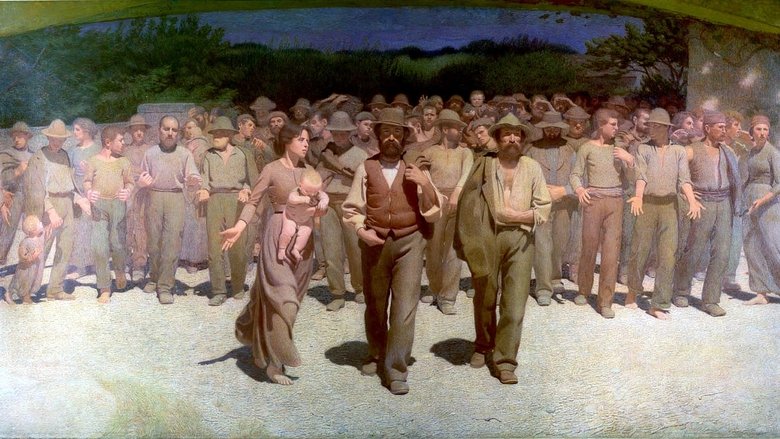
The 'Il Quarto Stato' Painting
Symbolizes the unstoppable march of the working class toward justice and visibility in history.
The film opens with a slow zoom-out of Giuseppe Pellizza da Volpedo's iconic painting, setting the ideological stage.
Memorable Quotes
First came the peasants of this world, and then came the padrone.
— Leo Dalcò
Context:
Spoken at the birth of the two boys, establishing the central conflict of the film.
Meaning:
A statement on the foundational importance of labor and the secondary, parasitic nature of the landowning class.
There are no more masters!
— Olmo Dalcò
Context:
Shouted during the liberation festivities on April 25, 1945.
Meaning:
A revolutionary declaration signifying the end of the old feudal order and the dawn of a new, egalitarian era.
Born together. Must mean something. Probably means we die together.
— Olmo Dalcò
Context:
A reflection on their shared destiny during a quiet moment in their youth.
Meaning:
An expression of the inescapable bond between the two men, despite their political enmity.
Philosophical Questions
Can personal friendship survive the demands of political ideology?
The film explores this by showing Alfredo and Olmo's bond surviving decades of betrayal, yet ultimately suggesting that their social classes make them inherent enemies.
Is the cycle of history inescapable?
The recurring imagery of the train tracks and the final elderly scuffle suggest that while political names change, the underlying human struggle for dominance remains constant.
Alternative Interpretations
One prevalent interpretation of the ending—where the elderly Alfredo and Olmo scuffle in the dirt—suggests that the revolution was ultimately performative. While the 'padrone' is declared dead, the class system persists in a new form, and the two men are doomed to repeat their conflict for eternity. Another reading posits that the film is actually more about psychoanalysis than politics, with the characters representing different facets of Bertolucci's own internal struggle between his bourgeois upbringing and his Marxist ideals. Some critics also argue that the character of Attila is not a realistic depiction of a fascist, but a psychological manifestation of 'pure evil' meant to heighten the film's mythic qualities.
Cultural Impact
1900 remains a seminal work in the 'historical epic' genre, known for its uncompromising Marxist perspective and visual grandeur. It represents a peak of 1970s 'prestige' filmmaking where international Hollywood stars like De Niro and Lancaster were cast in explicitly radical European art house cinema. Its use of the 'Il Quarto Stato' painting popularized the image globally as a symbol of labor rights. However, its reception was highly polarized; while some hailed it as a masterpiece of socialist realism, others like Roger Ebert criticized it as 'a film out of control.' Despite the controversy, it remains a vital document of Italian collective memory and a masterclass in Vittorio Storaro's cinematography.
Audience Reception
Audience and critical reaction was deeply divided. Fans of the film praise its 'visual opulence' and Ennio Morricone's haunting score, viewing it as a poetic triumph. Conversely, critics often attack the film for being 'bloated,' 'simplistic,' and 'didactic,' specifically noting that the characters sometimes feel like ciphers for political ideas rather than real people. The explicit sexual and violent scenes, including those involving animals and children, remain controversial and continue to spark debate about the limits of artistic expression in political cinema.
Interesting Facts
- At 317 minutes (over 5 hours), it is one of the longest commercially released films in history.
- Robert De Niro was so dedicated to his craft that he reportedly spent his weekends during filming driving a taxi in New York City to prepare for his next role in 'Taxi Driver'.
- Donald Sutherland's performance as Attila was so disturbing that it shocked audiences; he has stated it was the most difficult role of his career.
- Burt Lancaster reportedly agreed to work for free just to have the experience of working with the young Bernardo Bertolucci.
- The film was heavily censored in several countries due to its graphic sexual content and violence.
- The opening credits feature a zoom-out of the painting 'Il Quarto Stato' (The Fourth Estate) by Giuseppe Pellizza da Volpedo.
Easter Eggs
Mirroring Italian History
The film's timeline precisely mirrors real Italian history from 1900 to 1945, with key scenes like the death of Verdi and the strike of 1908 serving as historical anchors.
Universal's Title Rejection
Universal Pictures initially rejected Steven Spielberg's title '1941' because they feared it too closely resembled '1900', which had been a commercial disappointment in the U.S.
⚠️ Spoiler Analysis
Click to reveal detailed analysis with spoilers
Frequently Asked Questions
Explore More About This Movie
Dive deeper into specific aspects of the movie with our detailed analysis pages
Comments (0)
No comments yet. Be the first to share your thoughts!