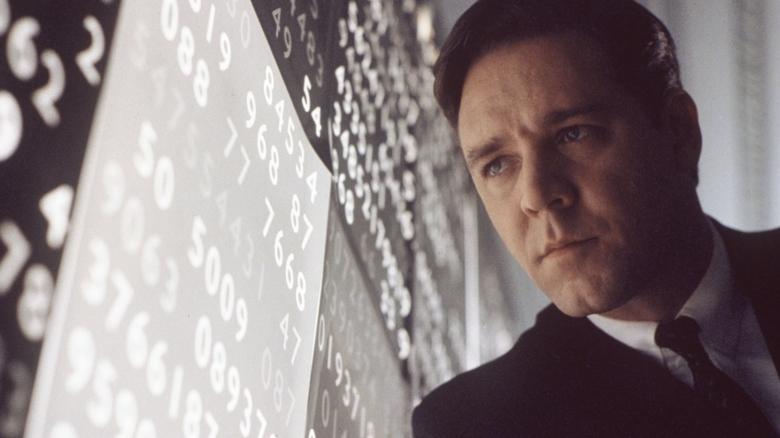
The central twist of "A Beautiful Mind" is the revelation that John Nash has paranoid schizophrenia and that three key characters are hallucinations. His cheerful Princeton roommate, Charles Herman (Paul Bettany), Charles's young niece Marcee, and the menacing Department of Defense agent William Parcher (Ed Harris) do not exist. The entire Cold War spy subplot, which sees Nash breaking Soviet codes and engaging in shootouts, is a delusion. This is revealed after Nash is forcibly committed to a psychiatric facility, and his wife Alicia is told by Dr. Rosen that her husband has been ill for some time.
Upon a second viewing, the clues become apparent. Charles, Parcher, and Marcee never interact with any other character directly. Marcee never ages over the years. When Parcher and Nash are seemingly in a shootout, no one else reacts. Director Ron Howard intentionally introduced these characters audibly before they appeared visually, a subtle clue to their hallucinatory nature from Nash's point of view. The film's ending shows Nash as an old man, having achieved a fragile peace. He has not cured his schizophrenia but has learned to consciously ignore his hallucinations, who are still present but have lost their power over him. He wins the Nobel Prize, acknowledging that his wife Alicia's love was the foundation of his survival and success, the only thing that gave his life reason.