A Brighter Summer Day
A melancholic teen epic painting a portrait of post-civil war Taiwan, where youthful angst and the search for identity collide under the dim, flickering lights of a society adrift.
A Brighter Summer Day

牯嶺街少年殺人事件

27 July 1991 Taiwan 237 min ⭐ 8.3 (358)
Director: Edward Yang
Cast: Chang Chen, Lisa Yang, Chang Kuo-Chu, Elaine Jin Yan-Ling, Chuan Wang
Drama Crime Romance
Loss of Innocence and Moral Decay Search for Identity in a Displaced Society Failure of Authority and Paternal Crisis Light, Darkness, and Obscured Vision

A Brighter Summer Day - Ending Explained

⚠️ Spoiler Analysis

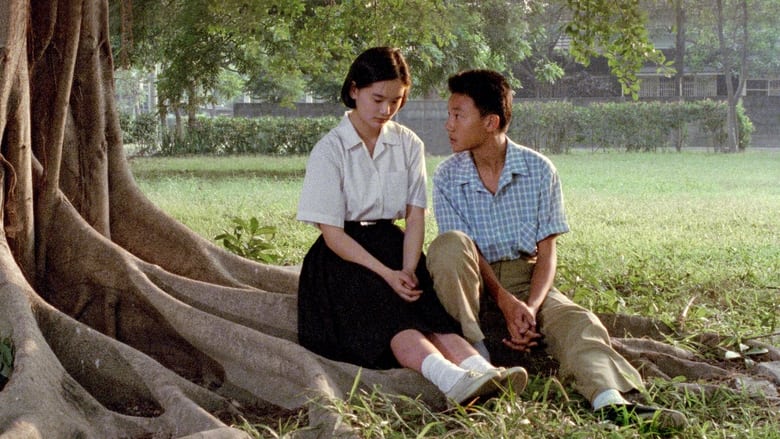
"A Brighter Summer Day" meticulously details the social and psychological pressures that lead to its violent climax. The plot follows Xiao Si'r, a bright student relegated to night school, as he befriends members of the Little Park Boys gang and falls for Ming, the girlfriend of their absent leader, Honey. After Honey's brief, charismatic return ends in his murder by a rival gang, the Little Park Boys, led by their new leader Sly, ally with a tougher Taiwanese gang to seek revenge. In a dark and chaotic battle during a typhoon, they massacre the rival 217 gang.

Parallel to the gang warfare, Si'r's father is taken by the secret police for a brutal interrogation that leaves him a broken man, shattering Si'r's moral foundation. Increasingly disillusioned, Si'r becomes possessive of Ming. He discovers that she is not the idealized figure he imagined; for her, relationships are a means of survival, and she continues to see other boys, including a rich young doctor and Si'r's friend, Xiao Ma. Feeling betrayed by everyone and everything he once believed in—his father's integrity, the honor among friends, and Ming's purity—Si'r's idealism collapses into rage. In the devastating final scene, he confronts Ming in the street. He begs her to give him hope and to not be like the corrupt world around them. When she coolly dismisses him, telling him "I'm just like this world," he stabs her to death in a fit of passion. The film ends with his arrest and a radio broadcast announcing the list of accepted students for day school—a list that, ironically, includes him. His friend Cat sends him a tape of the Elvis song he recorded, but the guard refuses to give it to him, saying "What's this crap?", underscoring the final, complete crushing of his generation's spirit and dreams.

Alternative Interpretations

One significant alternative interpretation of the film revolves around an allegorical reading of its main characters, particularly in relation to Taiwan's political history. In this view, the key female characters, Ming and Jade, and the gang leader Honey, symbolize different phases of Taiwan's post-1949 identity. Honey can be seen as representing the initial, hopeful but ultimately doomed, dream of the mainlanders returning to China. Ming, in her ambiguity and shifting loyalties, represents the Taiwan of the martial law era—a period of survival where ideals were compromised and the future was uncertain. Her statement to Xiao Si'r, "I'm like this world; I will never change," can be interpreted as the unchanging, harsh reality of the political situation that Si'r's idealism cannot accept.

The ending itself can be interpreted in different ways. On one level, it's a straightforward tragic climax to a coming-of-age story. On another, Xiao Si'r's violent act is a symbolic lashing out against a world that has failed him, a rejection of the compromised reality that Ming represents. His murder of Ming can be seen as an allegorical attempt to destroy the corrupt and disappointing world he has come to know, a final, desperate act to assert his own will in a society that has crushed his spirit and that of his father. The film thus becomes less a story about a specific crime and more a political allegory about a generation's violent response to historical disillusionment.