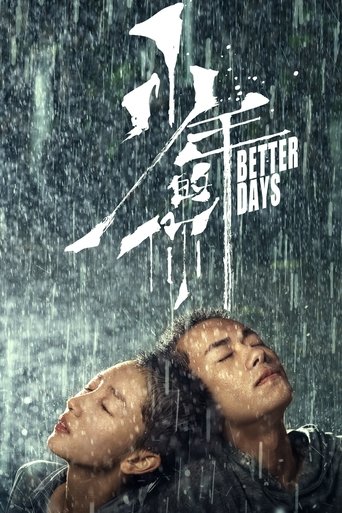

A Brighter Summer Day
A melancholic teen epic painting a portrait of post-civil war Taiwan, where youthful angst and the search for identity collide under the dim, flickering lights of a society adrift.
A Brighter Summer Day

A Brighter Summer Day

牯嶺街少年殺人事件

27 July 1991 Taiwan 237 min ⭐ 8.3 (358)
Director: Edward Yang
Cast: Chang Chen, Lisa Yang, Chang Kuo-Chu, Elaine Jin Yan-Ling, Chuan Wang
Drama Crime Romance
Loss of Innocence and Moral Decay Search for Identity in a Displaced Society Failure of Authority and Paternal Crisis Light, Darkness, and Obscured Vision

Overview

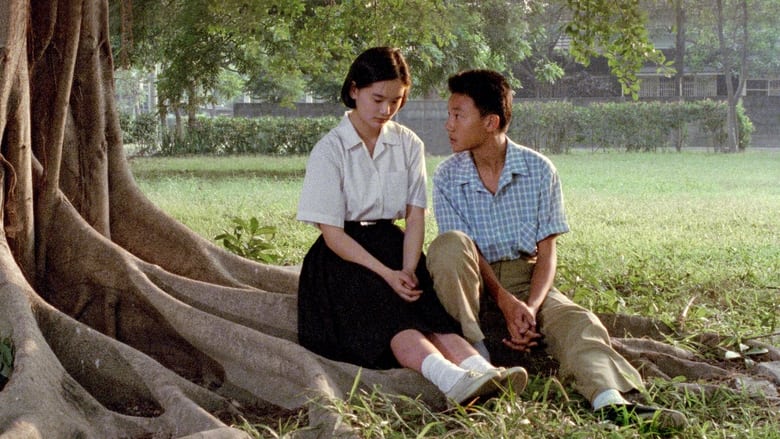
"A Brighter Summer Day" is a sprawling epic that chronicles the life of a young boy, Xiao Si'r (Chang Chen), growing up in Taipei in the early 1960s. The son of mainland Chinese immigrants who fled to Taiwan after the 1949 Communist revolution, Si'r navigates a complex world of family pressure, academic struggles, and the burgeoning youth gang culture that provides a sense of identity for a displaced generation. His life becomes further complicated when he meets Ming (Lisa Yang), the girlfriend of a charismatic gang leader named Honey.

As Si'r is drawn deeper into the orbit of the "Little Park Boys" gang and their rivalry with the "217s," the film paints a vast, detailed canvas of a society in flux. The narrative weaves together the personal struggles of Si'r's coming-of-age—his first love, friendships, and moral conflicts—with the broader anxieties of his parents' generation, who live with the uncertainty of their future and the political paranoia of Taiwan's martial law era, known as the White Terror. The film explores the subtle and overt violence that permeates daily life, stemming from both teenage turf wars and the oppressive state apparatus, leading Si'r down a tragic path.


Core Meaning

The core meaning of "A Brighter Summer Day" is an exploration of how a repressive and uncertain social environment can erode individual morality and lead to tragedy. Director Edward Yang suggests that the violent act at the heart of the film is not merely the fault of one individual, but a symptom of a sick society. The film examines a generation of uprooted youths in 1960s Taiwan, children of mainland refugees, who form gangs to find a sense of security and identity that their parents and the state cannot provide. Through the protagonist Xiao Si'r's journey from a principled student to a perpetrator of violence, Yang critiques the failure of authority figures—parents, teachers, and the government—to offer guidance and hope. The film serves as a powerful allegory for Taiwan's search for its own identity, caught between lingering Japanese cultural influence, the imposition of traditional Chinese values by the Kuomintang, and the seductive allure of Western pop culture, all under a cloud of political fear.

Thematic DNA

Loss of Innocence and Moral Decay 35%
Search for Identity in a Displaced Society 30%
Failure of Authority and Paternal Crisis 20%
Light, Darkness, and Obscured Vision 15%

Loss of Innocence and Moral Decay

The central theme is the tragic trajectory of the protagonist, Xiao Si'r, from a conscientious, if troubled, student to a murderer. His personal journey reflects the broader societal decay. The pressures of gang loyalty, the disillusionment with his father's compromised integrity after being interrogated by the secret police, and his idealized love for Ming all contribute to the erosion of his moral compass. The film meticulously documents how the environment of casual violence, political fear, and lack of guidance strips away his youthful idealism.

Search for Identity in a Displaced Society

Set a decade after the Kuomintang's retreat to Taiwan, the film portrays a generation of mainlanders' children growing up in an "uneasy atmosphere" of uncertainty. These youths form street gangs like the "Little Park Boys" and the "217s" not just for delinquency, but to forge a sense of identity and security their parents cannot offer. The film explores this national identity crisis through the characters' cultural confusion, caught between their parents' Chinese heritage, the remnants of Japanese colonial rule, and the powerful influx of American pop culture, symbolized by Elvis Presley's music.

Failure of Authority and Paternal Crisis

The film consistently portrays a world where authority has been undermined. Si'r's father, a civil servant, represents traditional Confucian values of integrity and honor. However, after he is arrested and interrogated by the secret police, he returns a broken and compromised man, losing his moral authority in his son's eyes. This collapse of the father figure mirrors the failure of the larger patriarchal structure of the government and school system to provide a stable and just world for the youth, leaving them to create their own violent order.

Light, Darkness, and Obscured Vision

A recurring visual and thematic motif is the interplay between light and darkness. Yang often uses chiaroscuro lighting and frames scenes in poorly lit spaces, reflecting the moral ambiguity and confusion of the characters. Si'r's worsening eyesight is a metaphor for his inability to see the world and the people in it clearly. The flashlight he steals at the beginning of the film becomes a key symbol, used to peer into the dark and reveal hidden truths, but its beam is narrow and incomplete, symbolizing a flawed and partial understanding.

Character Analysis

Chang Chen (Xiao Si'r)

Chang Chen

Archetype: Tragic Hero / Anti-hero
Key Trait: Idealistic but Volatile

Motivation

Initially motivated by a desire to live up to his father's principles and maintain his own sense of honor, his motivation shifts towards protecting Ming and carving out a place of integrity for himself amidst the chaos of the gangs. Ultimately, his actions are driven by a desperate, misguided attempt to reject a world that he feels has betrayed him and everyone he looks up to.

Character Arc

Xiao Si'r begins as a principled and decent boy who believes in fairness and integrity, values instilled by his father. However, being forced into the delinquent environment of night school, his involvement with the Little Park gang, his father's humiliation at the hands of the state, and his tumultuous relationship with Ming lead to his gradual disillusionment. He tries to impose his own moral order on a world he sees as chaotic and corrupt, but his idealism curdles into possessiveness and rage, culminating in a shocking act of violence that seals his tragic fate.

Ming

Lisa Yang

Archetype: Femme Fatale / Victim
Key Trait: Pragmatic Survivor

Motivation

Ming's primary motivation is survival and finding stability in a precarious world. Her father is dead and her mother is ill, forcing her to rely on the protection of various boys. She seeks security and affection but is also a pragmatist, understanding the transactional nature of relationships in her environment, which Si'r fails to grasp.

Character Arc

Ming is a complex and tragic figure. She is passed between boys and gangs, using her attractiveness as a means of survival in a world that offers her little security. She is initially the girlfriend of the gang leader Honey. While she forms a genuine connection with Si'r, her pragmatism and flirtations with other boys clash with his rigid idealism. She reflects the world's inherent instability, telling Si'r, "I'm just like this world, I will never change," a statement he cannot accept. Her arc is one of survival, but she ultimately becomes the victim of the very instability she embodies.

Xiao Si'r's Father (Mr. Chang)

Chang Kuo-Chu

Archetype: The Mentor / The Fallen Idol
Key Trait: Principled but Fragile

Motivation

His motivation is to provide a stable, moral upbringing for his children in an unstable new country. He is driven by a strong sense of personal integrity and a belief in the importance of education and honor. After his interrogation, his motivation shifts to mere survival and avoiding any further trouble.

Character Arc

Mr. Chang starts as the film's moral center, a principled civil servant who believes in integrity and discipline. He is the one character who tries to uphold a strong moral code. However, his world is shattered when he is taken by the secret police for a brutal, lengthy interrogation about his past on the mainland. He returns a broken, fearful man, stripped of his dignity and authority. His fall from grace is a pivotal moment for Si'r, symbolizing the death of principle in an oppressive society and leaving his son morally adrift.

Honey

Lin Hung-ming

Archetype: The Mythic Leader
Key Trait: Charismatic and Honorable

Motivation

Honey is motivated by his own distinct code of honor and leadership. He is fiercely loyal to his gang and his girlfriend, Ming. He returns from hiding not to reclaim power, but to set things right according to his own principles, an action that proves fatal in the treacherous gang landscape.

Character Arc

Honey, the leader of the Little Park Boys, is a legendary figure for the first half of the film, spoken of with reverence. He is in hiding after killing a rival gang member. When he finally appears, he is revealed to be a thoughtful, charismatic, and almost philosophical youth who lives by his own code of honor, comparing his life to Tolstoy's War and Peace. His brief return brings a moment of clarity and authority, but his swift and brutal murder by a rival creates a power vacuum and precipitates the escalating violence that consumes the other characters.

Symbols & Motifs

The Flashlight

Meaning:

The flashlight symbolizes a quest for clarity and truth in a dark and confusing world. It represents a fragile, inadequate tool to illuminate the moral ambiguity and hidden realities of society. Its limited beam suggests a partial, often misleading, vision, mirroring Xiao Si'r's own struggles to understand the world and the people around him.

Context:

Xiao Si'r steals the flashlight from a movie studio guard at the beginning of the film. He carries it throughout, using it to spy on lovers, navigate dark spaces, and as a defensive weapon. The act of repeatedly turning it on and off before the film's climax signifies his mental turmoil and confused state. Ultimately, he leaves it behind, abandoning his search for clarity before committing his final, tragic act.

American Rock and Roll (Elvis Presley)

Meaning:

Western pop culture, particularly Elvis Presley's music, represents a form of escapism and an alternative identity for the youth. It's a connection to a seemingly freer, more glamorous world, starkly contrasting with the repressive, uncertain reality of 1960s Taiwan. The film's English title itself is a misheard lyric from Elvis's "Are You Lonesome Tonight?," highlighting the cultural distance and yearning.

Context:

Si'r's friend, Cat, is obsessed with Elvis and struggles to translate the lyrics to "Are You Lonesome Tonight?". The gangs organize a rock and roll concert, which becomes a focal point for their conflicts. The music serves as the soundtrack to their rebellion and their attempt to carve out their own cultural space.

The Japanese Katana

Meaning:

The Japanese sword (katana or wakizashi) found in a traditional Japanese house symbolizes the lingering influence of Taiwan's colonial past and a connection to a code of honor and violence that the youth adopt. It represents a more decisive, albeit brutal, alternative to the compromised morality of their parents' generation. For the boys, it is a tangible link to a different kind of power and identity, separate from both the Chinese authorities and Western culture.

Context:

The blade is first discovered by the boys in an old Japanese-style house. It is later used by the Little Park Boys' allies in a bloody typhoon-shrouded massacre of the rival 217 gang. Si'r eventually acquires a similar blade, and it is this weapon he uses in the film's tragic climax, linking his personal violence to a broader historical inheritance.

School Uniforms

Meaning:

The school uniforms represent the oppressive conformity and institutional control that the students are subjected to. However, the way the students wear them—often sloppily or customized—shows their rebellion and attempts to assert individuality within a rigid system. The distinction between the day school and the more delinquent night school is a key element of the social hierarchy.

Context:

The film opens with Si'r's father pleading with a school administrator after Si'r's poor grades land him in the less prestigious night school. The school is the primary setting for much of the film's social drama and gang conflicts. Si'r's various infractions at school lead to escalating punishments, pushing him further away from the path of conformity and academic success.

Philosophical Questions

Is individual morality possible in a corrupt and oppressive society?

The film explores this question through the tragic arc of Xiao Si'r and his father. Si'r's father begins as a man of unwavering principle, but the state's interrogation breaks him, forcing him to compromise his integrity for the sake of survival. Si'r witnesses this collapse and tries to uphold his own rigid code of honor, but his environment—the gang violence, the failing school system, and the social instability—constantly challenges his ideals. His eventual violent outburst suggests that in a world devoid of moral guidance and rife with systemic injustice, an individual's attempt to maintain personal integrity can become distorted into something monstrous and self-destructive.

How do individuals forge identity when disconnected from history and place?

"A Brighter Summer Day" is fundamentally about a generation's search for identity. The children of mainland Chinese refugees are adrift; they lack their parents' memories of China but are not fully integrated into Taiwanese society. The film shows them trying to construct an identity from disparate cultural fragments: the remnants of Japanese colonialism (the houses, the katana), their parents' fractured Chinese traditions, the oppressive nationalism of the KMT government, and, most powerfully, imported American pop culture. The formation of street gangs is a direct response to this identity vacuum, an attempt to create a sense of belonging, purpose, and security in a world that offers none.

To what extent is an individual responsible for their actions versus the society that shaped them?

While the Chinese title of the film translates to "The Youth Killing Incident on Guling Street," pointing to an individual act, Yang's entire four-hour epic serves as an investigation into the societal forces that led to that moment. The film meticulously builds a case that Xiao Si'r, while ultimately responsible for his actions, is a product of his environment. Yang seems to suggest that everyone is a culprit: the parents living in fear, the failing education system, the arbitrary cruelty of the state, and the pervasive culture of violence. The film poses the question of whether the boy is solely a murderer or if he is also a victim of a society that killed his spirit first.

Alternative Interpretations

One significant alternative interpretation of the film revolves around an allegorical reading of its main characters, particularly in relation to Taiwan's political history. In this view, the key female characters, Ming and Jade, and the gang leader Honey, symbolize different phases of Taiwan's post-1949 identity. Honey can be seen as representing the initial, hopeful but ultimately doomed, dream of the mainlanders returning to China. Ming, in her ambiguity and shifting loyalties, represents the Taiwan of the martial law era—a period of survival where ideals were compromised and the future was uncertain. Her statement to Xiao Si'r, "I'm like this world; I will never change," can be interpreted as the unchanging, harsh reality of the political situation that Si'r's idealism cannot accept.

The ending itself can be interpreted in different ways. On one level, it's a straightforward tragic climax to a coming-of-age story. On another, Xiao Si'r's violent act is a symbolic lashing out against a world that has failed him, a rejection of the compromised reality that Ming represents. His murder of Ming can be seen as an allegorical attempt to destroy the corrupt and disappointing world he has come to know, a final, desperate act to assert his own will in a society that has crushed his spirit and that of his father. The film thus becomes less a story about a specific crime and more a political allegory about a generation's violent response to historical disillusionment.

Cultural Impact

"A Brighter Summer Day" is a landmark of Taiwanese New Wave cinema and is widely regarded as one of the greatest films ever made. Created after the lifting of martial law in Taiwan, the film was one of the first to frankly address the historical trauma and political anxieties of the "White Terror" period and the complex identity of the "waishengren" (mainlanders who came to Taiwan in 1949). It broke the silence on a difficult chapter of Taiwanese history, exploring the profound sense of displacement and uncertainty felt by a generation born in exile.

Its influence on cinema is significant. Yang's meticulous visual style, characterized by long takes, deep focus, and complex compositions that often dwarf the characters in their environment, has been influential for many filmmakers. The film's novelistic approach to storytelling, with its huge cast of characters and sprawling, four-hour narrative, pushed the boundaries of cinematic convention. Critically, it was hailed as a masterpiece upon release and has only grown in stature over time, praised for its emotional depth, historical richness, and formal brilliance. For audiences, it provided a deeply humanistic lens through which to understand a pivotal period in Taiwanese history, and its themes of teenage alienation, moral confusion, and the search for identity remain universally resonant.

Audience Reception

Audiences generally regard "A Brighter Summer Day" as a profound and immersive masterpiece, though its four-hour runtime is often noted as a significant challenge. Viewers who embrace the length praise the film's incredible depth, detailed world-building, and the patient development of its vast array of characters. Many are deeply moved by the film's emotional weight and its tragic portrayal of lost innocence against a rich historical backdrop. The performances, especially by the young and often non-professional cast, are frequently singled out for their naturalism and authenticity.

The main point of criticism, if any, is directed at the film's complexity and deliberate pacing, which can be overwhelming. Some viewers find it difficult to keep track of the large number of characters and the intricate web of gang rivalries and relationships. However, for most, the epic scope is seen as essential to the film's power, allowing Yang to create a complete, novelistic portrait of a society in turmoil. The overall verdict from audiences is that it is a demanding but deeply rewarding cinematic experience, a timeless and universal story of youth and disillusionment.

Interesting Facts

  • The film is based on a real-life murder incident that occurred in Taiwan in 1961, which director Edward Yang remembered from his childhood.
  • The film's English title, "A Brighter Summer Day," is derived from a misheard lyric in Elvis Presley's song "Are You Lonesome Tonight?". The actual lyric is "Does your memory stray to a bright summer day."
  • The lead actor, Chang Chen, was only 13 years old when he was cast as Xiao Si'r. It was his film debut, and he would go on to become a major star in Asian cinema.
  • The film features a large cast of over 100 speaking parts, the majority of whom were non-professional actors, which adds to the film's realistic tone.
  • Chang Chen's real-life father, Chang Kuo-Chu, who is also a famous actor, plays his on-screen father in the film.
  • Due to its epic four-hour runtime, the film was largely unavailable and difficult to see for many years after its initial release, gaining a legendary reputation before a 4K restoration in the 2010s made it accessible to a wider audience.
  • Director Edward Yang dedicated the film to his father, stating his generation "suffered so much for my generation to suffer less." Yang's own father was subjected to a humiliating interrogation similar to the one depicted in the film.
  • The film is considered a masterpiece of the Taiwanese New Wave cinema movement, alongside the works of directors like Hou Hsiao-hsien.

⚠️ Spoiler Analysis

Click to reveal detailed analysis with spoilers

Frequently Asked Questions

Explore More About This Movie

Dive deeper into specific aspects of the movie with our detailed analysis pages

Comments (0)

Leave a comment

No comments yet. Be the first to share your thoughts!