
牯嶺街少年殺人事件
A Brighter Summer Day - Symbolism & Philosophy
Symbols & Motifs
The Flashlight
The flashlight symbolizes a quest for clarity and truth in a dark and confusing world. It represents a fragile, inadequate tool to illuminate the moral ambiguity and hidden realities of society. Its limited beam suggests a partial, often misleading, vision, mirroring Xiao Si'r's own struggles to understand the world and the people around him.
Xiao Si'r steals the flashlight from a movie studio guard at the beginning of the film. He carries it throughout, using it to spy on lovers, navigate dark spaces, and as a defensive weapon. The act of repeatedly turning it on and off before the film's climax signifies his mental turmoil and confused state. Ultimately, he leaves it behind, abandoning his search for clarity before committing his final, tragic act.
American Rock and Roll (Elvis Presley)
Western pop culture, particularly Elvis Presley's music, represents a form of escapism and an alternative identity for the youth. It's a connection to a seemingly freer, more glamorous world, starkly contrasting with the repressive, uncertain reality of 1960s Taiwan. The film's English title itself is a misheard lyric from Elvis's "Are You Lonesome Tonight?," highlighting the cultural distance and yearning.
Si'r's friend, Cat, is obsessed with Elvis and struggles to translate the lyrics to "Are You Lonesome Tonight?". The gangs organize a rock and roll concert, which becomes a focal point for their conflicts. The music serves as the soundtrack to their rebellion and their attempt to carve out their own cultural space.
The Japanese Katana
The Japanese sword (katana or wakizashi) found in a traditional Japanese house symbolizes the lingering influence of Taiwan's colonial past and a connection to a code of honor and violence that the youth adopt. It represents a more decisive, albeit brutal, alternative to the compromised morality of their parents' generation. For the boys, it is a tangible link to a different kind of power and identity, separate from both the Chinese authorities and Western culture.
The blade is first discovered by the boys in an old Japanese-style house. It is later used by the Little Park Boys' allies in a bloody typhoon-shrouded massacre of the rival 217 gang. Si'r eventually acquires a similar blade, and it is this weapon he uses in the film's tragic climax, linking his personal violence to a broader historical inheritance.
School Uniforms
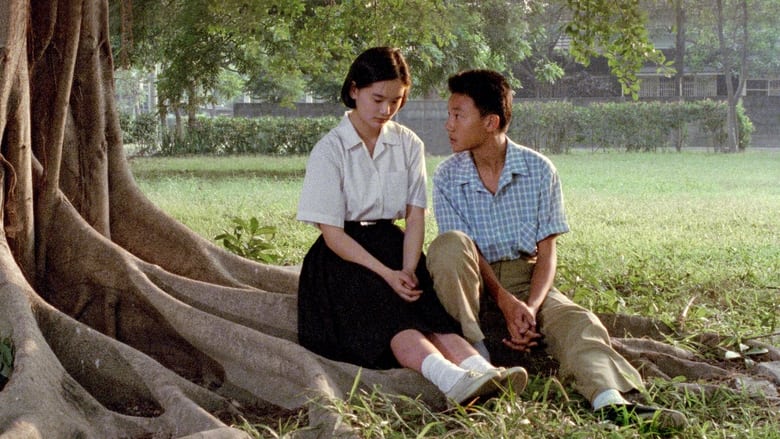
The school uniforms represent the oppressive conformity and institutional control that the students are subjected to. However, the way the students wear them—often sloppily or customized—shows their rebellion and attempts to assert individuality within a rigid system. The distinction between the day school and the more delinquent night school is a key element of the social hierarchy.
The film opens with Si'r's father pleading with a school administrator after Si'r's poor grades land him in the less prestigious night school. The school is the primary setting for much of the film's social drama and gang conflicts. Si'r's various infractions at school lead to escalating punishments, pushing him further away from the path of conformity and academic success.
Philosophical Questions
Is individual morality possible in a corrupt and oppressive society?
The film explores this question through the tragic arc of Xiao Si'r and his father. Si'r's father begins as a man of unwavering principle, but the state's interrogation breaks him, forcing him to compromise his integrity for the sake of survival. Si'r witnesses this collapse and tries to uphold his own rigid code of honor, but his environment—the gang violence, the failing school system, and the social instability—constantly challenges his ideals. His eventual violent outburst suggests that in a world devoid of moral guidance and rife with systemic injustice, an individual's attempt to maintain personal integrity can become distorted into something monstrous and self-destructive.
How do individuals forge identity when disconnected from history and place?
"A Brighter Summer Day" is fundamentally about a generation's search for identity. The children of mainland Chinese refugees are adrift; they lack their parents' memories of China but are not fully integrated into Taiwanese society. The film shows them trying to construct an identity from disparate cultural fragments: the remnants of Japanese colonialism (the houses, the katana), their parents' fractured Chinese traditions, the oppressive nationalism of the KMT government, and, most powerfully, imported American pop culture. The formation of street gangs is a direct response to this identity vacuum, an attempt to create a sense of belonging, purpose, and security in a world that offers none.
To what extent is an individual responsible for their actions versus the society that shaped them?
While the Chinese title of the film translates to "The Youth Killing Incident on Guling Street," pointing to an individual act, Yang's entire four-hour epic serves as an investigation into the societal forces that led to that moment. The film meticulously builds a case that Xiao Si'r, while ultimately responsible for his actions, is a product of his environment. Yang seems to suggest that everyone is a culprit: the parents living in fear, the failing education system, the arbitrary cruelty of the state, and the pervasive culture of violence. The film poses the question of whether the boy is solely a murderer or if he is also a victim of a society that killed his spirit first.
Core Meaning
The core meaning of "A Brighter Summer Day" is an exploration of how a repressive and uncertain social environment can erode individual morality and lead to tragedy. Director Edward Yang suggests that the violent act at the heart of the film is not merely the fault of one individual, but a symptom of a sick society. The film examines a generation of uprooted youths in 1960s Taiwan, children of mainland refugees, who form gangs to find a sense of security and identity that their parents and the state cannot provide. Through the protagonist Xiao Si'r's journey from a principled student to a perpetrator of violence, Yang critiques the failure of authority figures—parents, teachers, and the government—to offer guidance and hope. The film serves as a powerful allegory for Taiwan's search for its own identity, caught between lingering Japanese cultural influence, the imposition of traditional Chinese values by the Kuomintang, and the seductive allure of Western pop culture, all under a cloud of political fear.