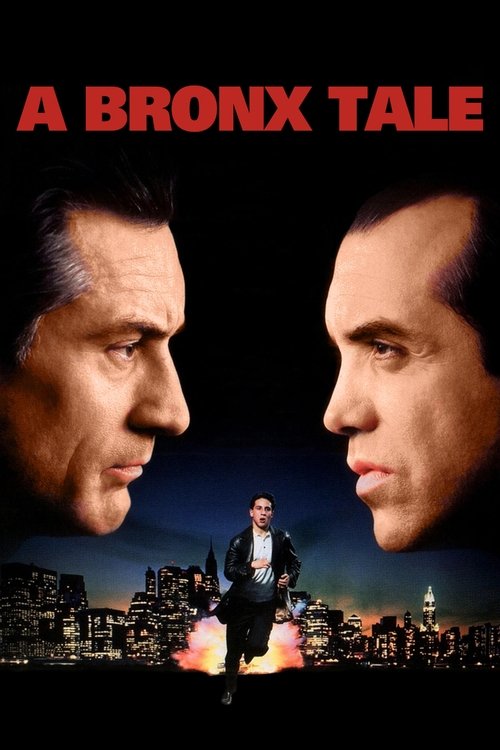
"One man lives in the neighborhood, another man owns it. A devoted father battles the local crime boss for the life of his son."
A Bronx Tale - Symbolism & Philosophy
Symbols & Motifs
The Door Test
The "door test" is a piece of street wisdom Sonny imparts to Calogero. It symbolizes a test of a woman's character and selflessness. According to Sonny, if a man locks the car doors and his date reaches over to unlock his door for him after he gets out, she's a considerate person—a "keeper." If she only waits for him to walk around and open her door, she is selfish.
Sonny explains this test to Calogero when giving him advice about dating. Calogero later uses it on his date with Jane. When he gets out of the car to open her door, she leans over and unlocks it for him, passing the symbolic test and reinforcing her good nature in his eyes. It represents Sonny's practical, if cynical, way of judging people's true character.
The Bus
Lorenzo's bus symbolizes the working-class life, honesty, and integrity. It represents a life of routine, hard work for modest pay, and dignity. It is a stark contrast to Sonny's flashy cars, which represent a life of crime, quick money, and danger.
The bus is Lorenzo's domain, where he is respected by his community and provides for his family. It is on this bus that Calogero first sees Jane, initiating a key subplot. Lorenzo's identity is intrinsically linked to his job as a driver, a symbol of the honorable path he wants for his son.
Belmont Avenue vs. Webster Avenue
The two avenues represent the stark racial and cultural divide of the 1960s Bronx. Belmont Avenue is the Italian-American enclave, a tight-knit community with its own rules and prejudices. Webster Avenue is the neighboring African-American community. The physical and social barrier between them symbolizes the broader societal segregation and racism of the era.
The conflict between the youth of both neighborhoods is a recurring plot point. Calogero crossing from Belmont to Webster to date Jane is a significant transgression in the eyes of his peers. The violent climax of the film occurs when Calogero's friends drive to Webster Avenue to attack the black community, representing the tragic consequences of this divide.
Philosophical Questions
Is it better to be loved or feared?
The film directly poses this Machiavellian question through Sonny, who champions fear as a more durable tool for loyalty. Lorenzo, by contrast, lives a life built on love and quiet respect from his family and community. The film explores this by showing the immediate power that fear grants Sonny, but also its ultimate emptiness. At his funeral, few people seem to genuinely mourn him. Lorenzo, who chose love, ultimately retains the unwavering loyalty and love of his son. The film suggests that while fear can grant control, a life without love is a hollow victory.
What defines a 'good' man?
"A Bronx Tale" challenges simplistic notions of good and evil. Sonny is a murderer and a criminal, yet he displays wisdom, kindness, and a strong moral code in his mentorship of Calogero. He encourages Calogero to get an education and promotes racial tolerance. Lorenzo is the epitome of a good, law-abiding citizen, yet he holds prejudiced views common to his time and place. The film forces the audience to consider whether a person's character is defined by their actions, their principles, or their impact on others, suggesting that goodness can be found in flawed individuals.
To what extent does our environment shape our identity?
Calogero is a product of the Bronx, a world of intense tribal loyalty and racial division. The film examines how this environment molds him and his friends. His friends become tragic products of their ingrained hatred and lack of opportunity. Calogero, however, is able to transcend the worst aspects of his environment because he is exposed to two powerful, opposing viewpoints from his mentors. The film argues that while one's environment provides the context and the pressures, it is ultimately individual choice and critical thinking that forge one's true identity.
Core Meaning
The core meaning of "A Bronx Tale" revolves around the idea that one's character is shaped by the choices they make, not the circumstances they are born into. It is a profound exploration of the complexities of morality, loyalty, and identity. The film posits that true manhood is not defined by being feared or loved, but by finding one's own path, synthesizing the wisdom from different mentors, and having the courage to not waste one's potential. Lorenzo's recurring advice, "The saddest thing in life is wasted talent," serves as the film's central thesis, urging that the greatest tragedy is failing to live up to one's own capabilities, regardless of the path chosen.