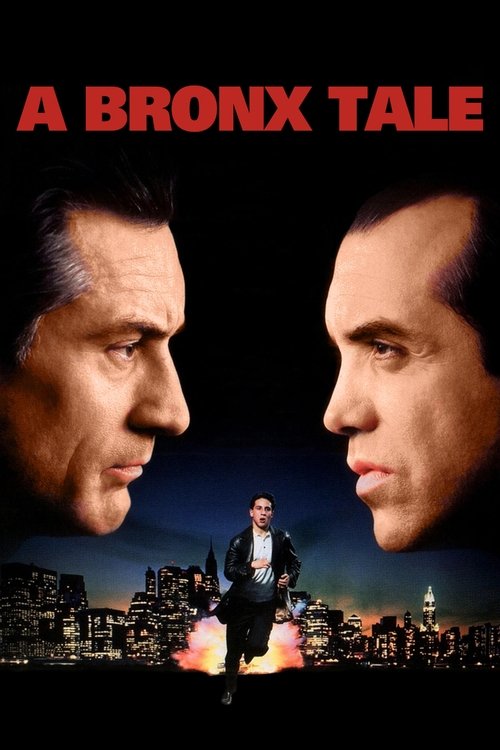
A Bronx Tale
"One man lives in the neighborhood, another man owns it. A devoted father battles the local crime boss for the life of his son."
Overview
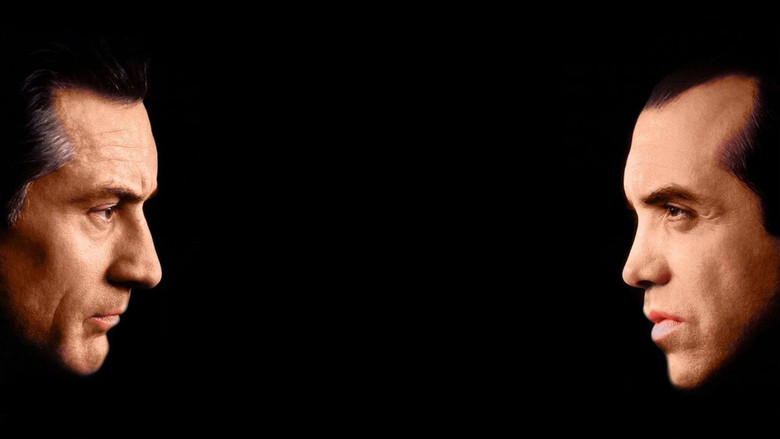
"A Bronx Tale" (1993), Robert De Niro's directorial debut, is a poignant coming-of-age story set against the turbulent backdrop of the 1960s Bronx. The film centers on Calogero Anello, an Italian-American boy who becomes fascinated by the world of organized crime. At the age of nine, he witnesses a murder committed by the local mob boss, Sonny LoSpecchio (Chazz Palminteri). When Calogero refuses to identify Sonny to the police, a bond is forged between them.
As Calogero grows into a teenager (played by Lillo Brancato), he finds himself living a double life. He is torn between two father figures: his own hardworking and morally upright father, Lorenzo (Robert De Niro), a bus driver who preaches the value of an honest life, and Sonny, who offers a life of power, respect, and fear. This duality forms the central conflict of the film, as Calogero navigates the temptations of the mob world, neighborhood racial tensions, and his first love with an African-American girl named Jane (Taral Hicks), all while trying to heed the conflicting lessons from the two men he admires most.
Core Meaning
The core meaning of "A Bronx Tale" revolves around the idea that one's character is shaped by the choices they make, not the circumstances they are born into. It is a profound exploration of the complexities of morality, loyalty, and identity. The film posits that true manhood is not defined by being feared or loved, but by finding one's own path, synthesizing the wisdom from different mentors, and having the courage to not waste one's potential. Lorenzo's recurring advice, "The saddest thing in life is wasted talent," serves as the film's central thesis, urging that the greatest tragedy is failing to live up to one's own capabilities, regardless of the path chosen.
Thematic DNA
Dueling Father Figures / Mentorship
The emotional heart of the film is Calogero's struggle between his two mentors: his biological father, Lorenzo, and the mob boss, Sonny. Lorenzo represents the path of the righteous, hardworking man who believes in integrity and earning an honest living. Sonny embodies the allure of power, street smarts, and a lifestyle where fear commands respect. Both men genuinely care for Calogero and offer him invaluable, albeit conflicting, life lessons. This theme explores the idea that a person can be shaped by multiple, even contradictory, influences, and must ultimately synthesize these lessons to form their own identity.
Choice vs. Destiny
"A Bronx Tale" constantly questions whether an individual's life is predetermined by their environment or defined by their personal choices. Calogero is born into a working-class family but is presented with the tempting alternative of organized crime. Sonny, despite his power, cannot escape the violent consequences of his own choices. The film emphasizes that every decision, from a child's lie to protect a gangster to a teenager's choice of friends, has profound and lasting consequences that ultimately shape one's destiny.
Racism and Tribalism
Set in the racially charged 1960s, the film explores the deep-seated tensions between the Italian-American community of Belmont Avenue and the African-American community of Webster Avenue. Calogero's romance with Jane forces him to confront the prejudice of his friends and the ingrained racism of his own neighborhood. Ironically, it is the mobster Sonny who preaches tolerance and encourages Calogero to follow his heart, while his law-abiding father expresses concern born from the era's prejudices. This theme highlights the arbitrary and destructive nature of tribalism.
The Nature of Love and Fear
A central philosophical debate in the film is posed by Sonny: "Is it better to be loved or feared?" Sonny operates on the principle that fear ensures loyalty and lasts longer than love. In contrast, Lorenzo is a man who is loved and respected by his family and community for his quiet dignity and hard work. The film does not offer a simple answer but explores the merits and pitfalls of both philosophies through the lives of its characters, ultimately suggesting that a life devoid of genuine love is empty, as evidenced by Sonny's sparsely attended funeral.
Character Analysis
Calogero 'C' Anello
Lillo Brancato (as a teen), Francis Capra (as a child)
Motivation
Calogero is motivated by a desire for respect, belonging, and understanding his place in the world. He seeks the excitement and power he sees in Sonny, but also craves the love and approval of his father, Lorenzo. His journey is driven by the fundamental need to choose what kind of man he wants to become.
Character Arc
Calogero's arc is a classic coming-of-age journey. He begins as an impressionable boy, captivated by the glamor of the mob. As he matures, he is caught in a moral tug-of-war between his two father figures, Lorenzo and Sonny. He internalizes lessons from both men—Lorenzo's integrity and Sonny's street smarts. Initially drawn to the easy power of Sonny's world, he ultimately survives the tragedy that befalls his friends and Sonny by synthesizing the wisdom of both mentors, choosing his own path, and understanding the value of not wasting his talent.
Sonny LoSpecchio
Chazz Palminteri
Motivation
Sonny is motivated by a desire for control and survival in a dangerous world. He follows a Machiavellian philosophy that it is better to be feared than loved. However, his motivation regarding Calogero is paternal; he sees the boy's potential and wishes to guide him toward a better life than his own, seeing in him a chance at a legacy beyond crime.
Character Arc
Sonny is a complex, multi-layered character who defies the typical gangster stereotype. He begins as a fearsome and powerful mob boss who rules through intimidation. His relationship with Calogero reveals a different side; he becomes a protective, genuine mentor who offers pragmatic, often cynical, life advice. He genuinely wants Calogero to avoid the mob life and get an education. Sonny's arc is ultimately tragic. Despite his intelligence and control, he cannot escape the violent cycle he perpetuates and is ultimately killed, a victim of his past actions. His perspective changes slightly as he experiences Calogero's genuine affection, challenging his own belief that fear is better than love.
Lorenzo Anello
Robert De Niro
Motivation
Lorenzo's primary motivation is the well-being and future of his son. He works a modest job to provide for his family and wants nothing more than for Calogero to live an honest life and not waste his potential. He is driven by a powerful love for his family and a firm belief in the dignity of the working man.
Character Arc
Lorenzo is the film's moral bedrock, a hardworking bus driver who embodies integrity and family values. He remains steadfast in his principles throughout the film, consistently trying to steer Calogero away from Sonny's corrupting influence. His arc is one of subtle change in perspective. While he never approves of Sonny's lifestyle, by the end of the film, particularly at Sonny's funeral, he acknowledges that the mobster genuinely cared for his son and played a role in saving him. He moves from outright rejection of Sonny to a grudging acceptance of the complex positive influence Sonny had on Calogero's life.
Symbols & Motifs
The Door Test
The "door test" is a piece of street wisdom Sonny imparts to Calogero. It symbolizes a test of a woman's character and selflessness. According to Sonny, if a man locks the car doors and his date reaches over to unlock his door for him after he gets out, she's a considerate person—a "keeper." If she only waits for him to walk around and open her door, she is selfish.
Sonny explains this test to Calogero when giving him advice about dating. Calogero later uses it on his date with Jane. When he gets out of the car to open her door, she leans over and unlocks it for him, passing the symbolic test and reinforcing her good nature in his eyes. It represents Sonny's practical, if cynical, way of judging people's true character.
The Bus
Lorenzo's bus symbolizes the working-class life, honesty, and integrity. It represents a life of routine, hard work for modest pay, and dignity. It is a stark contrast to Sonny's flashy cars, which represent a life of crime, quick money, and danger.
The bus is Lorenzo's domain, where he is respected by his community and provides for his family. It is on this bus that Calogero first sees Jane, initiating a key subplot. Lorenzo's identity is intrinsically linked to his job as a driver, a symbol of the honorable path he wants for his son.
Belmont Avenue vs. Webster Avenue
The two avenues represent the stark racial and cultural divide of the 1960s Bronx. Belmont Avenue is the Italian-American enclave, a tight-knit community with its own rules and prejudices. Webster Avenue is the neighboring African-American community. The physical and social barrier between them symbolizes the broader societal segregation and racism of the era.
The conflict between the youth of both neighborhoods is a recurring plot point. Calogero crossing from Belmont to Webster to date Jane is a significant transgression in the eyes of his peers. The violent climax of the film occurs when Calogero's friends drive to Webster Avenue to attack the black community, representing the tragic consequences of this divide.
Memorable Quotes
The saddest thing in life is wasted talent.
— Lorenzo Anello
Context:
Lorenzo says this to a young Calogero to instill in him the importance of hard work and making the right choices. The line is repeated throughout the film, serving as a moral touchstone for Calogero as he navigates the different paths presented to him.
Meaning:
This is the central theme of the film. It encapsulates Lorenzo's belief that the greatest tragedy is not poverty or lack of opportunity, but failing to use the innate gifts one possesses. It's his plea for his son to make something of himself through honest means.
Now youse can't leave.
— Sonny LoSpecchio
Context:
Sonny says this to a group of bikers who have entered his bar and refuse to leave peacefully. After they disrespect him and his place, Sonny has his men lock the doors. He delivers this line just before he and his crew brutally beat the bikers, establishing his dominance in the neighborhood.
Meaning:
This iconic line signifies Sonny's absolute control and authority. It's a calm but chilling declaration that once you've crossed a line in his world, you are subject to his rules and his justice. It demonstrates how he maintains order through intimidation rather than overt aggression.
Is it better to be loved or feared? That's a good question. It's nice to be both, but it's very difficult. But if I had my choice, I would rather be feared. Fear lasts longer than love.
— Sonny LoSpecchio
Context:
Sonny poses this question to Calogero as part of his mentorship. He explains his worldview, contrasting it with the life of love and respect that Lorenzo leads. This philosophical question becomes a central conflict for Calogero to grapple with.
Meaning:
This quote reveals Sonny's core philosophy, borrowed from Machiavelli. He believes that respect and loyalty born from fear are more reliable and enduring than those born from affection, which he sees as fickle. It is the principle upon which he has built his criminal empire.
Nobody really cares. You're wasting your time.
— Sonny LoSpecchio
Context:
Sonny gives this advice to Calogero in several contexts, notably when Calogero is worried about what his friends will think of him dating Jane. Sonny's point is that Calogero's happiness is paramount, and the opinions of his dead-end friends are worthless.
Meaning:
This is a cynical but practical lesson from Sonny about self-reliance. He teaches Calogero that worrying about the opinions of others or expecting loyalty from everyone is a fool's errand. The only person you can truly count on is yourself.
Philosophical Questions
Is it better to be loved or feared?
The film directly poses this Machiavellian question through Sonny, who champions fear as a more durable tool for loyalty. Lorenzo, by contrast, lives a life built on love and quiet respect from his family and community. The film explores this by showing the immediate power that fear grants Sonny, but also its ultimate emptiness. At his funeral, few people seem to genuinely mourn him. Lorenzo, who chose love, ultimately retains the unwavering loyalty and love of his son. The film suggests that while fear can grant control, a life without love is a hollow victory.
What defines a 'good' man?
"A Bronx Tale" challenges simplistic notions of good and evil. Sonny is a murderer and a criminal, yet he displays wisdom, kindness, and a strong moral code in his mentorship of Calogero. He encourages Calogero to get an education and promotes racial tolerance. Lorenzo is the epitome of a good, law-abiding citizen, yet he holds prejudiced views common to his time and place. The film forces the audience to consider whether a person's character is defined by their actions, their principles, or their impact on others, suggesting that goodness can be found in flawed individuals.
To what extent does our environment shape our identity?
Calogero is a product of the Bronx, a world of intense tribal loyalty and racial division. The film examines how this environment molds him and his friends. His friends become tragic products of their ingrained hatred and lack of opportunity. Calogero, however, is able to transcend the worst aspects of his environment because he is exposed to two powerful, opposing viewpoints from his mentors. The film argues that while one's environment provides the context and the pressures, it is ultimately individual choice and critical thinking that forge one's true identity.
Alternative Interpretations
While "A Bronx Tale" is largely seen as a straightforward narrative, some alternative interpretations focus on the character of Sonny. One perspective is that Sonny is not just a mentor but a strategic manipulator. He sees a younger version of himself in Calogero and grooms him, not necessarily for a life of crime, but to have an educated, loyal ally outside the mob world who understands his code. His actions, like keeping Calogero from the car bomb, can be seen as protecting an asset as much as protecting a surrogate son.
Another interpretation views the film as a critique of the American Dream itself. Lorenzo represents the traditional, legitimate path to success through hard work, which yields only a modest living. Sonny represents a corrupted, alternate version of the dream, achieving wealth and power through illicit means. Calogero's position between them is a commentary on the limited and often morally compromised choices available to working-class youth. The film can be read as suggesting that neither path is perfect and that true success lies in navigating the gray area between them.
Cultural Impact
"A Bronx Tale" made a significant cultural impact upon its release in 1993, solidifying its place as a classic in the coming-of-age and crime drama genres. It served as Robert De Niro's directorial debut, showcasing a more nuanced and character-driven approach compared to the gangster films he was famous for acting in. The film was praised for its authenticity, largely because it was adapted from Chazz Palminteri's own life experiences growing up in the Bronx, which lent it a sense of realism and heart that resonated with audiences.
Critics acclaimed the film for its powerful performances, particularly from Palminteri and De Niro, and its intelligent screenplay that explored complex moral questions without providing easy answers. It moved beyond the typical glorification of the mafia lifestyle, instead presenting a story about fatherhood, community, and the difficult choices that define a person. The film's core themes, especially the line "the saddest thing in life is wasted talent," have become ingrained in pop culture. Over the years, its reputation has grown, and it is now considered a beloved classic. The story's enduring appeal led to its adaptation into a successful Broadway musical in 2016, co-directed by De Niro, further cementing its legacy.
Audience Reception
Audiences have overwhelmingly praised "A Bronx Tale" since its release, and it has since achieved the status of a beloved cult classic. Viewers frequently commend the film's powerful emotional core, focusing on the complex father-son dynamics between Calogero and both Lorenzo and Sonny. The screenplay, written by Chazz Palminteri based on his own life, is celebrated for its authenticity, memorable dialogue, and timeless life lessons. The performances of De Niro and Palminteri are consistently highlighted as standout portrayals of mentorship and morality from two opposing worlds. Many viewers find the film's central message about not wasting one's talent to be deeply resonant and inspiring. While some minor criticism is occasionally aimed at the conventional nature of the coming-of-age plot, the overall verdict is that it is a heartfelt, wise, and profoundly human story that transcends the gangster genre.
Interesting Facts
- The film is based on Chazz Palminteri's autobiographical one-man stage play of the same name, in which he played all 18 characters.
- Palminteri was a struggling actor and wrote the play after being fired from his job as a bouncer for refusing entry to super-agent Swifty Lazar.
- Multiple studios offered to buy the film rights, with one offering up to $1 million, but Palminteri refused unless he could write the screenplay and play the role of Sonny.
- Robert De Niro saw the play and approached Palminteri, agreeing to his conditions in exchange for the right to direct the film, making it his directorial debut.
- The story is semi-autobiographical; as a child, Chazz Palminteri (whose real first name is Calogero) did witness a mob killing.
- Robert De Niro warned the young actor Lillo Brancato about the dangers of fame and getting caught up in the wrong lifestyle. Tragically, Brancato was later convicted for his role in a burglary that led to the death of an off-duty police officer and served years in prison.
- The character Eddie Mush, known for his bad luck, was played by the real Eddie Montanaro, the man who inspired the character. True to form, on his first day of filming, it rained.
- De Niro, known for his intense preparation, had to get a commercial driver's license to realistically portray his character driving the city bus.
⚠️ Spoiler Analysis
Click to reveal detailed analysis with spoilers
Frequently Asked Questions
Explore More About This Movie
Dive deeper into specific aspects of the movie with our detailed analysis pages
Comments (0)
No comments yet. Be the first to share your thoughts!