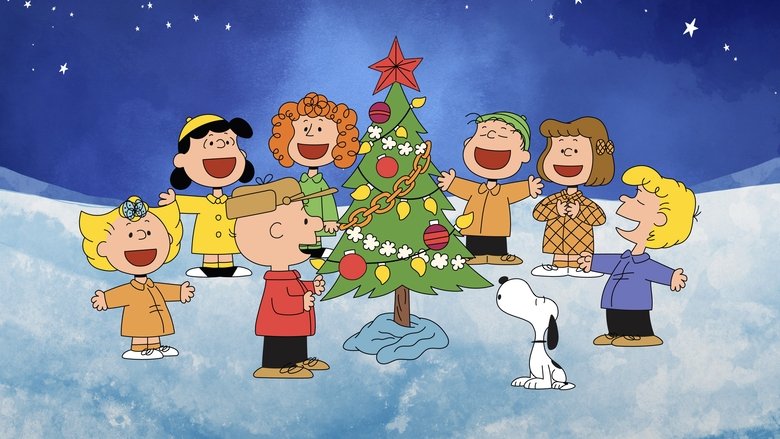
The narrative builds to a moment of apparent failure: Charlie Brown brings the pathetic tree home, hangs one heavy red ornament on it, and the tree bends all the way to the ground. Believing he has killed the tree and ruined Christmas, he walks away in despair. However, the 'twist' is a moment of collective redemption. The other children, led by Linus, arrive and see the potential in the tree. They use the lights and decorations from Snoopy's doghouse to adorn it. When Charlie Brown returns, he finds the tree stands upright and glorious. The gang shouts 'Merry Christmas, Charlie Brown!' and begins singing, revealing that the tree only needed the 'love' Linus spoke of—manifested as the care of his community.
A melancholic yet heartwarming meditation on the holiday spirit, blending mid-century jazz, childhood innocence, and a poignant critique of consumerism. A lonely boy's search for authenticity culminates in a fragile sapling that symbolizes the transformative power of love.
A Charlie Brown Christmas
"That's what Christmas is all about, Charlie Brown!"
09 December 1965
United States of America
25 min
7.7
(757)
Director: Bill Melendez
Cast: Peter Robbins, Christopher Shea, Tracy Stratford, Cathy Steinberg, Chris Doran
Animation
Family
Comedy
TV Movie
Commercialism vs. Authenticity
Spiritual Redemption
Depression and Alienation
The Power of Community
Budget:
$96,000
A Charlie Brown Christmas — Ending Explained
⚠️ Spoiler Analysis
Alternative Interpretations
The Clinical Reading: Some modern critics view Charlie Brown's condition not just as 'holiday blues' but as a depiction of clinical depression, noting how his peers gaslight him ('You're the Charlie Browniest') rather than offer support.
The Secular vs. Religious Tension: While explicitly Christian in its climax, the film is also read by secular audiences as a humanist fable where 'God' is replaced by 'Community'—the tree is saved by human hands and love, not a miracle.
The 'Death of Childhood' Metaphor: The aluminum trees and the demand for a 'professional' play represent the adult world encroaching on the children's innocence, with Charlie Brown fighting to preserve a childlike wonder.
Explore More About This Movie
Dive deeper into specific aspects of the movie with our detailed analysis pages