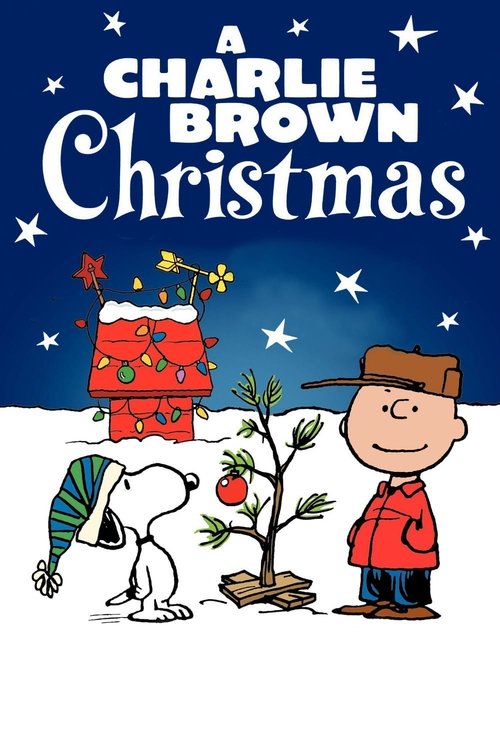
A Charlie Brown Christmas
"That's what Christmas is all about, Charlie Brown!"
Overview
In this animated television special, Charlie Brown finds himself feeling downcast despite the onset of the holiday season. While his friends enact the usual festive rituals of letter-writing and gift-buying, Charlie Brown is overwhelmed by the commercialization he sees everywhere, from his little sister Sally's greedy wish list to his dog Snoopy's participation in a lights and display contest. Seeking a way to overcome his depression, he visits Lucy's psychiatric booth and accepts her advice to direct the neighborhood Christmas play.
The production of the play proves disastrous, as the other children are uncooperative, preferring dancing to modern jazz over serious rehearsal. In an attempt to set the proper mood, Charlie Brown and Linus set out to find a Christmas tree. Ignoring the flashy, artificial aluminum trees that everyone expects, Charlie Brown selects the only real tree on the lot—a small, pathetic sapling that sheds needles at the slightest touch. His choice invites scorn and ridicule from his peers, deepening his despair.
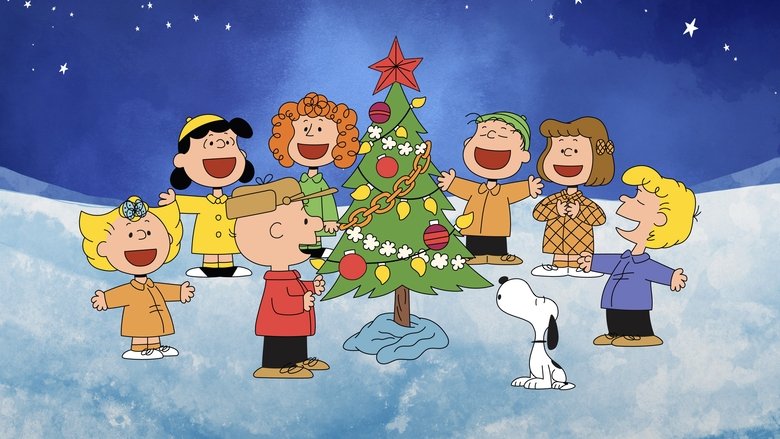
The turning point arrives when Linus quietly recites the story of the Nativity from the Gospel of Luke to answer Charlie Brown's cry for the true meaning of Christmas. Inspired, Charlie Brown takes the tree home to decorate it, but initially fails. However, his friends follow him, and in a gesture of reconciliation and goodwill, they use the decorations from Snoopy's prize-winning doghouse to transform the meager tree into something beautiful, ending the night by singing a carol together.
Core Meaning
The director Bill Melendez and creator Charles M. Schulz intended to strip away the glitter of American consumerism to reveal the humble, spiritual heart of Christmas. The film argues that the true meaning of the holiday is not found in spectacle, aluminum trees, or material gain, but in the simplicity of faith and the warmth of community. By championing a broken, unloved tree, the story suggests that love has the power to redeem and beautify the imperfect.
Thematic DNA
Commercialism vs. Authenticity
The film aggressively critiques the capitalist takeover of the holiday. This is evident in Snoopy decorating his doghouse for a cash prize, Sally asking for 'tens and twenties,' and the abundance of aluminum trees. Charlie Brown's refusal to conform to this artificiality drives the narrative.
Spiritual Redemption
Unique for a network cartoon, the film centers on a direct reading of the Bible. Linus's speech anchors the story in the religious origin of Christmas, providing the spiritual clarity that cures Charlie Brown's existential dread.
Depression and Alienation
Charlie Brown's 'holiday blues' are treated seriously, not as a joke. The film explores the valid psychological experience of feeling disconnected when society demands mandatory happiness, validating the feelings of those who struggle during the holidays.
The Power of Community
Despite their earlier mockery, the children ultimately come together to save the tree. This shift demonstrates that the 'Christmas spirit' is manifested through collective kindness and the setting aside of differences.
Character Analysis
Charlie Brown
Peter Robbins
Motivation
To find a genuine connection and understand why he feels empty during a season of supposed joy.
Character Arc
He starts as an outcast suffering from existential depression. Through his refusal to compromise his values and his defense of the tree, he moves from isolation to acceptance, ultimately becoming the catalyst for the group's spiritual awakening.
Linus Van Pelt
Christopher Shea
Motivation
To support his friend and preserve the integrity of the Christmas message.
Character Arc
He serves as the steady moral compass. While he is physically insecure (needing his blanket), he is spiritually the strongest, providing the answer Charlie Brown seeks without hesitation.
Lucy Van Pelt
Tracy Stratford
Motivation
Control, social status, and 'real estate'.
Character Arc
She embodies the rough, commercial world Charlie Brown opposes. She dominates the play and bullies others, yet even she is silenced by the film's conclusion, joining in the song.
Snoopy
Bill Melendez
Motivation
To have fun, win prizes, and mock the seriousness of the play.
Character Arc
He acts as a comic foil, engaging in the very commercialism (the decoration contest) that Charlie Brown detests. His mimicry and antics provide levity to the somber themes.
Symbols & Motifs
The Little Tree
It symbolizes humility, authenticity, and the human condition. Like Charlie Brown, it is flawed and rejected, but it possesses a raw reality that the fake trees lack. It represents the idea that love creates value.
Charlie Brown chooses it over the massive aluminum trees. It droops under the weight of a single ornament but stands tall when wrapped in the group's affection (and Linus's blanket).
Linus's Security Blanket
Usually a symbol of childish insecurity, it becomes a symbol of faith and letting go of fear during the climax.
In a deliberate animation choice, Linus drops his blanket to the floor specifically when he recites the words 'Fear not' from the Gospel, symbolizing that faith removes the need for material security.
Aluminum Christmas Trees
They represent the hollow, mass-produced nature of modern commercialism. They are shiny and perfect but cold and soulless.
Seen at the tree lot where they are sold in various colors (even pink) and when Lucy commands Charlie Brown to get a big, shiny aluminum tree.
Memorable Quotes
Isn't there anyone who knows what Christmas is all about?
— Charlie Brown
Context:
Shouted in frustration on the stage after the actors ignore him and dance to rock and roll music instead of rehearsing.
Meaning:
The central question of the film. It is a cry of desperation against the noise of the modern holiday, inviting the spiritual climax.
Fear not: for, behold, I bring you good tidings of great joy, which shall be to all people. For unto you is born this day in the city of David a Saviour, which is Christ the Lord.
— Linus Van Pelt
Context:
Linus stands alone on stage under a spotlight to answer Charlie Brown's question.
Meaning:
A direct quotation from Luke 2:10-11. It strips away the secular confusion to present the biblical definition of Christmas.
I never thought it was such a bad little tree. It's not bad at all, really. Maybe it just needs a little love.
— Linus Van Pelt
Context:
Spoken after the gang sees the tree adorned with Snoopy's decorations.
Meaning:
This line marks the shift from mockery to redemption. It reframes the tree not as 'trash' but as something worthy of care.
Look, Charlie, let's face it. We all know that Christmas is a big commercial racket. It's run by a big eastern syndicate, you know.
— Lucy Van Pelt
Context:
Lucy casually dismissing Charlie Brown's idealism during rehearsal.
Meaning:
Highlights Lucy's cynicism and serves as a satirical jab at the business side of the holiday.
Philosophical Questions
Can authenticity survive in a commercialized society?
The film contrasts the mass-produced aluminum trees with the singular, organic, falling-apart tree. It asks if value comes from market price (commercialism) or from the care and attention one bestows upon an object (love/authenticity).
Is happiness found in psychology or spirituality?
Charlie Brown first seeks help from Lucy's psychiatric booth (secular/scientific help), which costs a nickel and fails. He ultimately finds peace through Linus's scripture (spiritual/religious truth), suggesting that existential dread requires a spiritual rather than clinical solution.
Alternative Interpretations
The Clinical Reading: Some modern critics view Charlie Brown's condition not just as 'holiday blues' but as a depiction of clinical depression, noting how his peers gaslight him ('You're the Charlie Browniest') rather than offer support.
The Secular vs. Religious Tension: While explicitly Christian in its climax, the film is also read by secular audiences as a humanist fable where 'God' is replaced by 'Community'—the tree is saved by human hands and love, not a miracle.
The 'Death of Childhood' Metaphor: The aluminum trees and the demand for a 'professional' play represent the adult world encroaching on the children's innocence, with Charlie Brown fighting to preserve a childlike wonder.
Cultural Impact
A Charlie Brown Christmas is considered one of the most influential television specials in history. Historically, it challenged the norms of 1960s TV by using jazz, child actors, and scripture, setting a new standard for sophistication in children's programming. Culturally, it introduced the Peanuts characters to a mass audience beyond the comic strip and established the Vince Guaraldi Trio's soundtrack as a definitive component of the American Christmas soundscape. Critically, it is hailed as an 'anti-consumerist' masterpiece that remains relevant decades later, airing annually and holding a sacred place in the holiday traditions of millions.
Audience Reception
Upon its 1965 release, the film was an immediate smash hit, capturing nearly 50% of the viewing audience. Praised aspects included its gentle pacing, the honesty of the children's voices, and the sophisticated jazz score. Criticism was virtually non-existent from the public, though network executives initially feared the biblical reference would alienate viewers. Today, it holds a near-perfect rating, with audiences cherishing its nostalgic warmth and its bold refusal to talk down to children.
Interesting Facts
- CBS executives originally hated the special, believing it was too slow, too religious, and that the jazz music didn't fit.
- The use of actual children to voice the characters was revolutionary at the time; most cartoons used adult actors mimicking kids.
- Charles Schulz strictly forbade the use of a 'laugh track,' which was standard for TV comedies in the 1960s, to allow the audience to decide when to laugh.
- The famous jazz score was composed by Vince Guaraldi. The song 'Linus and Lucy' became the signature theme for the entire Peanuts franchise.
- Animator Bill Melendez provided the voice of Snoopy by speeding up a recording of himself speaking nonsense.
- The special was sponsored by Coca-Cola, and original broadcasts included title cards and brief animation segments featuring the product.
- Production was rushed and completed in just six months; the animators were still painting cels days before the broadcast.
- Peter Robbins, the voice of Charlie Brown, was only nine years old during recording.
- Despite network predictions of failure, it won both an Emmy and a Peabody Award.
Easter Eggs
Linus drops his blanket
When Linus says the words 'Fear not' during his scripture reading, he deliberately drops his security blanket. This is a subtle visual cue that faith replaces the need for worldly security.
Snoopy's Voice
Snoopy's distinct sound is actually director Bill Melendez. He barked and made noises into a microphone, which were then sped up to create the character's high-pitched emotive sounds.
Schroeder's Piano
Despite being a 'toy' piano, Schroeder plays complex Beethoven pieces. The animation of the black keys was painted on the cels, but the animators made sure the notes he played were somewhat accurate to the music heard.
⚠️ Spoiler Analysis
Click to reveal detailed analysis with spoilers
Frequently Asked Questions
Explore More About This Movie
Dive deeper into specific aspects of the movie with our detailed analysis pages
Comments (0)
No comments yet. Be the first to share your thoughts!