Un condamné à mort s'est échappé
"Robert Bresson's Prize Winning Film"
Director: Robert Bresson
Cast: François Leterrier, Charles Le Clainche, Maurice Beerblock, Roland Monod, Jacques Ertaud
A Man Escaped — Characters & Cast
Character Analysis
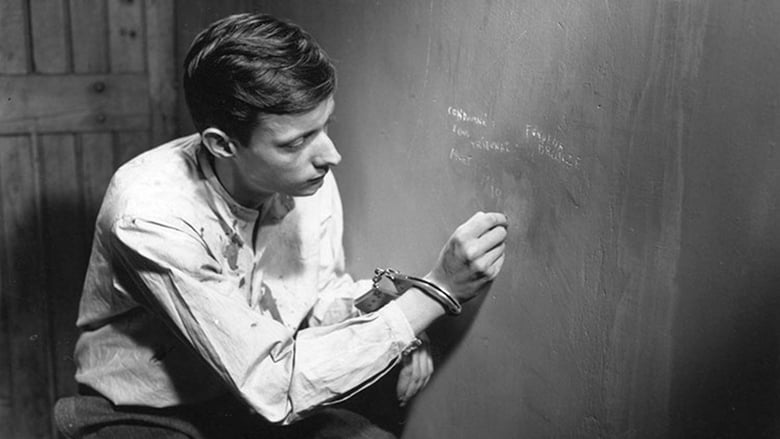
Lieutenant Fontaine
François Leterrier
Motivation
Fontaine is motivated by an elemental and unyielding desire for freedom. As a member of the French Resistance, his fight for personal liberty is also a continuation of his political and moral struggle against the Nazi occupation. He is driven by a pragmatic need to survive and a spiritual refusal to surrender to despair.
Character Arc
Fontaine's arc is not one of dramatic psychological change, but of unwavering resolve and execution. He begins the film with a singular goal—to escape—and every action he takes is in service of that goal. His journey is a testament to endurance. The primary development comes in his final moments before the escape, where his solitary struggle must open up to include another person, forcing him to make a profound choice between suspicion and trust.
François Jost
Charles Le Clainche
Motivation
Initially, Jost's motivation is simply survival. He is a young deserter caught between warring factions. When Fontaine reveals the escape plan, Jost's motivation becomes symbiotic with Fontaine's: he must participate to live, as the alternative is to be killed by Fontaine to ensure his silence. He ultimately embraces the goal of freedom.
Character Arc
Jost is introduced late in the film and has a very short but crucial arc. He enters the cell as a potential threat, a possible informant dressed in a German army tunic. His presence tests Fontaine's resolve and forces a crisis of trust. By the end, he becomes a willing, if initially reluctant, partner in the escape, his youthful fear giving way to a shared determination.
Blanchet
Maurice Beerblock
Motivation
Blanchet is initially motivated by a desire to be left alone in his despair. His transformation is motivated by the infectious and tangible hope that Fontaine represents. He sees in Fontaine's actions a possibility he had lost for himself.
Character Arc
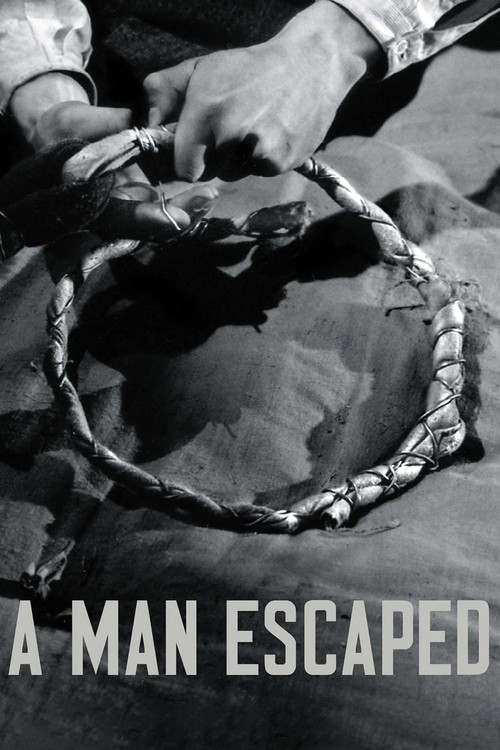
Blanchet is the elderly prisoner in the neighboring cell who initially represents despair. He is resigned to his fate and at first refuses to communicate with Fontaine. However, inspired by Fontaine's relentless efforts and words of encouragement, Blanchet's cynicism slowly gives way to a glimmer of hope. He ultimately aids Fontaine by donating his blanket for the rope, a small but significant act of solidarity.
Orsini
Jacques Ertaud
Motivation
Like Fontaine, Orsini is motivated by a desire for freedom. However, his approach is more rushed and less thought-out. Before his execution, he imparts a crucial piece of advice to Fontaine about making hooks from the lantern fixture, contributing to the eventual successful escape.
Character Arc
Orsini represents an alternative, more impulsive approach to escape. He has his own plan, but it is less meticulous than Fontaine's. His arc is short and tragic; his failed escape attempt leads to his execution. He serves as a stark reminder of the stakes and the necessity of Fontaine's careful, patient methodology.
Cast
Explore More About This Movie
Dive deeper into specific aspects of the movie with our detailed analysis pages