Un condamné à mort s'est échappé
"Robert Bresson's Prize Winning Film"
A Man Escaped - Symbolism & Philosophy
Symbols & Motifs
Fontaine's Hands
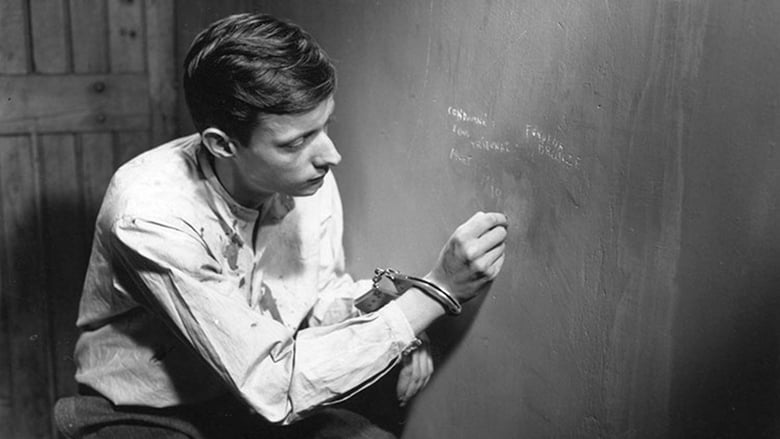
Fontaine's hands symbolize human agency, free will, and the capacity to enact change through tangible work. They are the instruments of his liberation, transforming ordinary objects into tools of escape. They represent the practical, physical effort required to complement faith and hope.
The film opens with a close-up of Fontaine's uncuffed hands in the back of a car as he contemplates his first escape attempt. Throughout the film, Bresson's camera repeatedly focuses on his hands as they meticulously scrape wood, twist wires, and tie knots. These close-ups emphasize that the escape is a feat of manual labor and ingenuity, a testament to what the human will, expressed through physical action, can achieve.
The Cell Door
The wooden cell door is the primary physical and symbolic obstacle between Fontaine and freedom. It represents the oppressive power of the prison and the seemingly insurmountable challenges he faces. The slow, methodical act of dismantling it symbolizes the chipping away at despair and the deconstruction of limitations through persistent effort.
A significant portion of the film is dedicated to Fontaine's relationship with his door. He spends countless hours scraping at its panels with his sharpened spoon. Critic Tony Pipolo notes that Bresson “converts Fontaine’s interactions with his cell door… into a struggle between protagonist and antagonist.” Conquering the door is the first major victory in his long process of escape.
Sound
Sound in the film symbolizes the unseen world beyond Fontaine's confinement and serves as a primary source of both information and tension. For Fontaine, who lives in enforced silence, every sound—a guard's key, a distant train, a cough—becomes a crucial piece of information that helps him map his environment and plan his actions.
Bresson masterfully uses off-screen sound to create a rich and suspenseful auditory landscape. The rattling of keys warns Fontaine of an approaching guard, forcing him to pause his work. The whistle of a train provides auditory cover for the final, riskiest part of the escape. Bresson believed that what is heard can be more powerful than what is seen, a principle demonstrated throughout the film.
The Spoon
The spoon is a powerful symbol of transformation and ingenuity. It is an ordinary, mundane object of sustenance that Fontaine, through sheer will and effort, transforms into the primary tool of his liberation—a chisel. It represents how the means for escape and freedom can be found in the most unlikely of places.
Fontaine manages to keep a spoon after a meal and laboriously sharpens it on the concrete floor of his cell. The repetitive, grating sound of him sharpening and then scraping the door's wood panels becomes a key part of the film's soundscape, representing the slow, arduous nature of his quest for freedom.
Philosophical Questions
What is the relationship between faith and action?
The film directly confronts this question through Fontaine's journey. While spiritual elements are present, the narrative relentlessly focuses on the physical, methodical labor of the escape. The dialogue between Fontaine and the pastor explicitly lays out the film's thesis: faith is not enough on its own. The film explores the idea that grace may exist, but it only manifests for those who are actively striving and working towards their own salvation. Freedom, both spiritual and physical, must be earned through painstaking effort.
Can the human spirit truly be imprisoned?
"A Man Escaped" suggests that while the body can be confined, the spirit of determination and hope cannot. Fontaine is physically trapped, but his mind is constantly working, planning, and resisting. His refusal to succumb to the despair that affects other prisoners demonstrates an internal freedom that precedes his physical escape. The film posits that the true prison is hopelessness, and that as long as one maintains the will to fight, one is never truly captive.
What is the nature of trust in extreme circumstances?
The sudden arrival of Jost presents Fontaine with a profound dilemma. In a world where survival depends on suspicion, he must make a radical leap of faith and trust a stranger with his life. The film explores trust not as a feeling, but as a necessary, pragmatic choice. Fontaine assesses Jost and ultimately decides that the risk of trust is preferable to the certainty of murder or the failure of his plan. The successful escape validates this choice, suggesting that interdependence and trust are essential for ultimate liberation.
Core Meaning
The core meaning of "A Man Escaped" revolves around the themes of faith, free will, and the indomitable nature of the human spirit in the face of overwhelming despair. Director Robert Bresson was interested in portraying the escape not merely as a physical act, but as a spiritual journey. The film's alternate title, "The Wind Bloweth Where It Listeth" (a reference to John 3:8), points to a divine or spiritual grace that assists Fontaine, but Bresson emphasizes that this grace only aids those who actively help themselves. Fontaine's meticulous, patient work is a testament to the idea that faith must be accompanied by action. The film suggests that true freedom is an internal state of being, a product of hope and unwavering resolve, which can exist even within the confines of a prison cell. It's a profound meditation on the power of individual agency and the possibility of transcendence through focused, purposeful action.