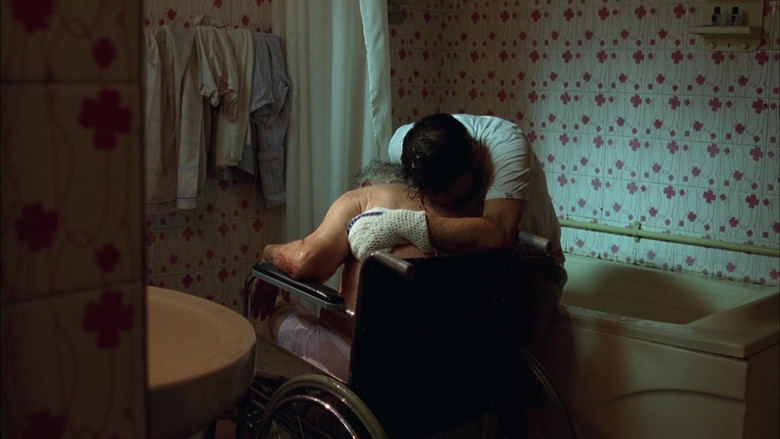
The central plot turns on a series of revelations that expose the lies of the main characters. Nader is accused of causing Razieh's miscarriage by pushing her down the stairs. He vehemently denies knowing she was pregnant. However, it is revealed late in the film that he did, in fact, know. He overhears his daughter Termeh and her tutor discussing Razieh's pregnancy but lies to the court and to his own family, claiming ignorance to avoid a murder charge.
The most significant twist, however, comes from Razieh. As Nader is about to pay a financial settlement ('blood money') to her and her husband Hodjat, he insists she swear on the Quran that his push was the sole cause of the miscarriage. In a moment of intense crisis, Razieh breaks down and confesses to Hodjat that she cannot take the oath. She reveals that on the day of the incident, before Nader pushed her, she had been struck by a car while chasing Nader's father who had wandered into the street. She is uncertain which event caused the miscarriage. This revelation shatters the foundation of her family's legal case and moral high ground. It confirms that while Nader was guilty of lying and assault, he may not have been guilty of causing the miscarriage.
The film's ending is famously ambiguous. Nader and Simin finalize their divorce. The judge asks their daughter, Termeh, to state which parent she has chosen to live with. The parents are asked to wait outside. The camera holds on Nader and Simin, sitting apart in a hallway, unable to even look at each other. We hear the sounds of Termeh crying from inside the office, but the film cuts to black before her decision is revealed. This deliberately unresolved conclusion underscores the central theme that there are no easy answers or clean resolutions. The 'separation' is complete and irreparable, and the emotional fallout, represented by Termeh's impossible choice, is the true tragedy.