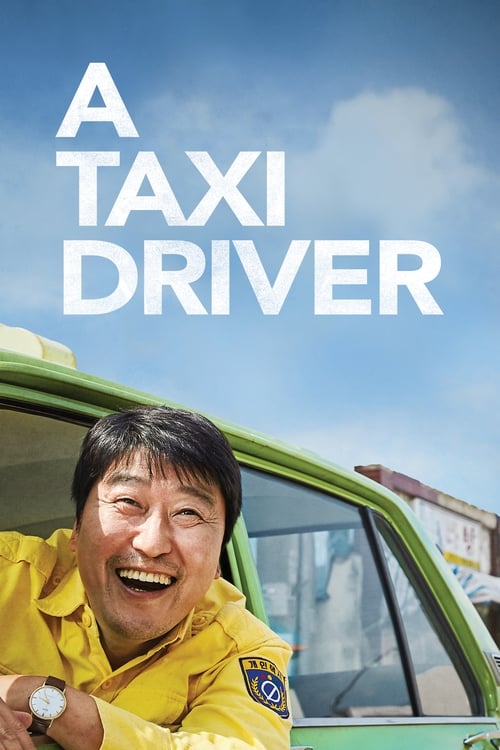
A Taxi Driver
A historical drama's gut-wrenching tension, capturing a single-minded taxi driver's awakening conscience, framed by the raw, chaotic canvas of a nation's brutal suppression of truth.
A Taxi Driver
A Taxi Driver

택시운전사

"Based on true events, an untold story of a taxi driver."

02 August 2017 South Korea 138 min ⭐ 8.0 (1,079)
Director: Jang Hoon
Cast: Song Kang-ho, Thomas Kretschmann, Yoo Hai-jin, Ryu Jun-yeol, Park Hyuk-kwon
Drama History Action
The Awakening of a Bystander Journalistic Responsibility and Truth Humanity and Solidarity in Crisis State Violence and Historical Trauma
Budget: $12,820,005
Box Office: $81,927,980

A Taxi Driver - Ending Explained

⚠️ Spoiler Analysis

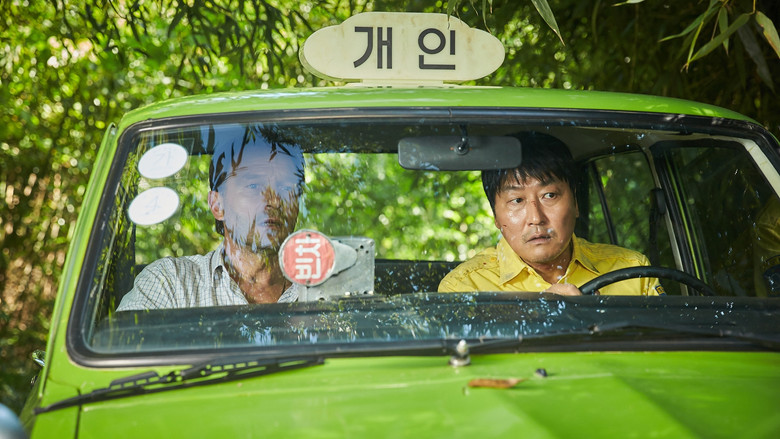
The plot of "A Taxi Driver" culminates in a series of life-altering decisions and sacrifices. A key turning point is the death of the student translator, Gu Jae-sik. He is captured by the secret police while helping Peter and Man-seob and is later found beaten to death. His death is a brutal shock that shatters any remaining naivety for Man-seob, making the conflict deeply personal and solidifying his resolve to help Peter.

After witnessing the army's horrific massacre of unarmed civilians at a provincial office, Man-seob finally commits fully to the mission. The film's climax is the escape from Gwangju. In a heavily fictionalized sequence, Man-seob's taxi is pursued by secret police. The local Gwangju taxi drivers, led by Hwang Tae-sool, heroically intervene, using their own vehicles to block the pursuers, sacrificing themselves so that the truth can get out. At a final military checkpoint, a sympathetic young sergeant, recognizing the terror in Man-seob's eyes and the Seoul license plates Hwang gave him, chooses to look the other way and lets them pass.

At the airport, Man-seob and Peter share a quiet, emotional farewell. Peter asks for Man-seob's name and number to stay in touch, but Man-seob, likely to protect himself and his daughter, writes down the false name "Kim Sa-bok" and a fake number. The ending flashes forward many years. Peter receives an award for his journalism and publicly expresses his gratitude to the brave driver he knew as Kim Sa-bok, whom he has never been able to find. In Seoul, Man-seob, still a taxi driver, reads an article about Peter's speech and quietly whispers his own thanks, missing his friend. The film concludes with footage of the real Jürgen Hinzpeter, who passed away in 2016, speaking of his wish to one day see his brave driver again.

Alternative Interpretations

While overwhelmingly praised, some critical analysis offers alternative interpretations, primarily focused on the film's use of genre conventions. One perspective is that by framing the story as a mainstream blockbuster, complete with a thrilling, fictionalized car chase and a clear emotional arc for its protagonist, the film softens the brutal, unresolved horror of the actual Gwangju Uprising. This "feel-good" approach, centered on the redemption of one man, could be seen as an overly sentimental or cathartic treatment of a national tragedy that, for many victims, has no neat resolution.

Another interpretation examines the narrative's choice to make the taxi driver initially apolitical and ignorant. While this creates a powerful character arc, it diverges from the reality of Kim Sa-bok, who was reportedly politically aware and fluent in English. This choice, while effective for storytelling, could be interpreted as a simplification of the complex realities of political consciousness at the time, suggesting that ordinary people were wholly ignorant rather than living under varying degrees of awareness and fear. The focus on the two central figures, at times, also risks overshadowing the collective agency of the thousands of Gwangju citizens who were the primary actors in the uprising.