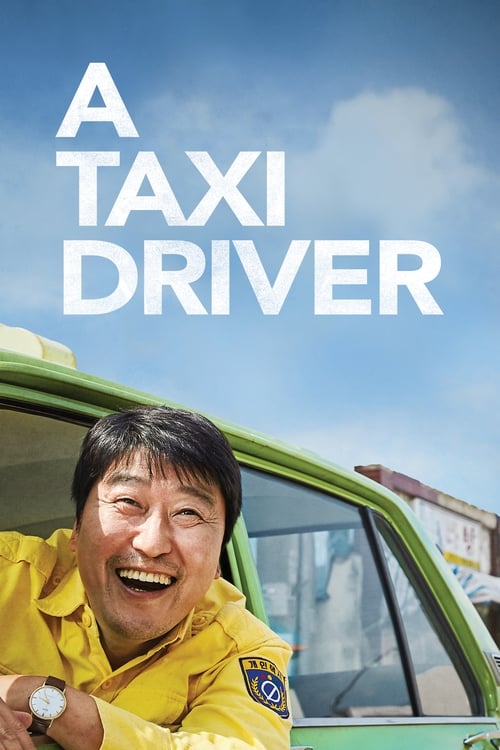
A Taxi Driver
A historical drama's gut-wrenching tension, capturing a single-minded taxi driver's awakening conscience, framed by the raw, chaotic canvas of a nation's brutal suppression of truth.
A Taxi Driver

A Taxi Driver

택시운전사

"Based on true events, an untold story of a taxi driver."

02 August 2017 South Korea 138 min ⭐ 8.0 (1,079)
Director: Jang Hoon
Cast: Song Kang-ho, Thomas Kretschmann, Yoo Hai-jin, Ryu Jun-yeol, Park Hyuk-kwon
Drama History Action
The Awakening of a Bystander Journalistic Responsibility and Truth Humanity and Solidarity in Crisis State Violence and Historical Trauma
Budget: $12,820,005
Box Office: $81,927,980

Overview

"A Taxi Driver" is based on the true story of Kim Man-seob (Song Kang-ho), a widowed taxi driver from Seoul who is struggling to raise his young daughter and make ends meet in 1980. Overhearing another driver brag about a lucrative fare, he intercepts the client: a German journalist, Jürgen "Peter" Hinzpeter (Thomas Kretschmann), who wants to be taken to the city of Gwangju for a day for 100,000 won. Man-seob, oblivious to the political turmoil, sees it only as a way to pay his overdue rent.

Upon reaching Gwangju, they find the city under a complete military blockade, with phone lines cut. What Man-seob thought was a simple fare turns into a harrowing journey into the heart of the Gwangju Uprising, a violent pro-democracy protest being brutally suppressed by the authoritarian government. Initially focused only on his own safety and getting paid, Man-seob's perspective begins to shift as he witnesses the atrocities committed by the military against unarmed civilians and students. Aided by compassionate Gwangju residents, including a local taxi driver Hwang Tae-sool (Yoo Hai-jin) and an English-speaking student Gu Jae-sik (Ryu Jun-yeol), Man-seob and Peter are drawn deeper into the conflict.

The film chronicles Man-seob's profound moral transformation from an apolitical, self-interested bystander to an active participant who risks his life to help the journalist document the truth and show it to the world. It is a story of ordinary people displaying extraordinary courage in the face of oppression.
Core Meaning

The core meaning of "A Taxi Driver" revolves around the profound transformation of an ordinary individual when confronted with extraordinary injustice. Director Jang Hoon sought to explore the awakening of civic consciousness and moral responsibility. The film's central message is that history is not shaped by heroes alone, but by the cumulative choices of everyday people who decide they can no longer be bystanders. It poses the question of what a person's duty is when faced with the suffering of others and a state-enforced campaign of lies. The director wanted to tell the story of the Gwangju citizens, whose sacrifices paved the way for South Korea's democracy, through the eyes of an outsider who eventually understands their struggle is also his own. The film powerfully argues for the necessity of journalistic integrity and bearing witness to history, emphasizing that truth, even when suppressed, has the power to inspire change.

Thematic DNA

The Awakening of a Bystander 35%
Journalistic Responsibility and Truth 30%
Humanity and Solidarity in Crisis 25%
State Violence and Historical Trauma 10%

The Awakening of a Bystander

The central theme is the evolution of Kim Man-seob from a cynical, apolitical working-class man into a morally conscious citizen. Initially, he dismisses student protestors in Seoul as "spoiled bastards" who should be working. His only motivation is the 100,000 won fare. However, after witnessing the military's brutality in Gwangju and experiencing the kindness and sacrifice of its citizens, he undergoes a profound change. This journey from selfish survival to selfless responsibility forms the emotional core of the film, highlighting that anyone, no matter how ordinary, can be moved to courageous action.

Journalistic Responsibility and Truth

The film is a tribute to the vital role of a free press in holding power accountable. Jürgen Hinzpeter represents the unwavering commitment to documenting and disseminating the truth, no matter the personal risk. The government's efforts to create a media blackout—cutting phone lines and spreading disinformation—are contrasted with Hinzpeter's determination to get his footage out to the world. The film posits that witnessing and reporting atrocities is a moral imperative, capable of challenging tyranny and informing global consciousness.

Humanity and Solidarity in Crisis

Amid the violence and chaos, the film emphasizes acts of kindness and solidarity. The citizens of Gwangju—the students, nurses, and especially the other taxi drivers led by Hwang Tae-sool—unite to help one another. They share food, offer shelter, and ultimately sacrifice their vehicles and lives to help Man-seob and Peter escape. This collective spirit stands in stark opposition to the dehumanizing violence of the state, suggesting that compassion and communal strength are the ultimate forms of resistance.

State Violence and Historical Trauma

The film does not shy away from depicting the brutal reality of the Gwangju Uprising. It portrays the military's indiscriminate violence against unarmed protestors, turning a civic space into a war zone. This serves as a powerful indictment of authoritarian rule and a memorial to the victims. The film was a cultural phenomenon in South Korea, reopening national conversations about this traumatic period and the unresolved quest for full accountability for the massacre.

Character Analysis

Kim Man-seob

Song Kang-ho

Archetype: The Reluctant Hero / Everyman
Key Trait: Pragmatic

Motivation

Initially, his motivation is purely financial: the 100,000 won fare. This gradually shifts to a desire for self-preservation and protecting his daughter. His final motivation becomes moral: a sense of duty to the people he has met and the responsibility to help expose the truth.

Character Arc

Man-seob begins as a cynical and apolitical widower, focused solely on earning money to pay his rent and care for his daughter. He sees student protestors as a nuisance. His journey to Gwangju is purely transactional. Witnessing the horrific violence and the profound humanity of the Gwangju citizens forces him to confront his own conscience. His turning point comes after he initially leaves Gwangju but is overcome with guilt, ultimately choosing to return and risk his life to help Peter. He evolves from a passive bystander into a man of principle who understands his role in a larger historical struggle.

Jürgen Hinzpeter (Peter)

Thomas Kretschmann

Archetype: The Mentor / The Truth-Seeker
Key Trait: Resolute

Motivation

His primary motivation is his professional and moral duty as a journalist to document and expose injustice. He believes the world must know what is happening in Gwangju and is willing to risk his life to ensure the story gets told.

Character Arc

Peter's character is relatively static, but his resolve is tested. He arrives with a clear, unwavering purpose: to report the truth. He acts as the film's moral compass, consistently pushing Man-seob to understand the gravity of the situation. While he starts as just a client, he develops a deep, unspoken bond with Man-seob, recognizing the taxi driver's inherent goodness. His arc is about fulfilling his journalistic duty while also coming to deeply respect the courage of the ordinary people, especially his driver, who make his work possible.

Hwang Tae-sool

Yoo Hai-jin

Archetype: The Helper / The Good Samaritan
Key Trait: Compassionate

Motivation

His motivation stems from a deep sense of community, empathy, and moral decency. He sees people in need and feels a natural obligation to help, reflecting the collective spirit of the Gwangju citizens during the uprising.

Character Arc

Hwang Tae-sool represents the spirit of the Gwangju people. He is a kind, warm-hearted local taxi driver who, from the moment he meets Man-seob and Peter, offers help without hesitation. He provides shelter, food, and crucial assistance. His defining moment comes when he leads the other Gwangju taxi drivers in a sacrificial act to block the military, allowing Man-seob's taxi to escape. He embodies the theme of solidarity, showing that resistance is a collective effort.

Gu Jae-sik

Ryu Jun-yeol

Archetype: The Innocent / The Martyr
Key Trait: Idealistic

Motivation

His motivation is a belief in a democratic future for his country. Despite his fear, he is driven by idealism and a sense of duty to his fellow students and citizens to fight for freedom. He wants the world to know their story.

Character Arc

Jae-sik is a cheerful university student who dreams of winning a song contest but finds himself on the front lines of the protest. His English skills make him a valuable, albeit amateur, translator for Peter. He represents the youth and hope of the pro-democracy movement. His tragic death at the hands of the secret police is a pivotal moment in the film, deeply affecting Man-seob and hardening his resolve. Jae-sik's sacrifice personalizes the immense human cost of the uprising.

Symbols & Motifs

The Green Taxi

Meaning:

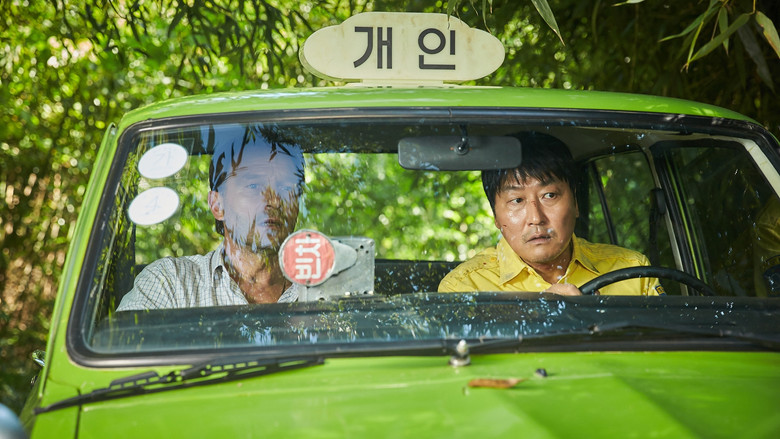
The lime-green taxi symbolizes Kim Man-seob himself: an ordinary, functional part of society. Initially, it is merely his tool for making a living. As the story progresses, it transforms into a vessel of witness, a sanctuary, an ambulance for the wounded, and ultimately, a vehicle for escaping with the truth. Its bright, civilian color stands in stark contrast to the drab, oppressive military jeeps and the gray, broken city streets of Gwangju, representing the resilience of everyday life against tyranny.

Context:

The taxi is present in nearly every scene with Man-seob. Its damage throughout the film mirrors the physical and emotional toll the events take on him. The climactic (though fictionalized) chase scene, where other Gwangju taxis sacrifice themselves to protect it, elevates the car to a symbol of collective resistance.

Peter's Camera

Meaning:

The camera represents the power of objective truth and the act of bearing witness. It is the reason for the journey and the object the military is desperate to stop. It is a fragile instrument that holds an immense, world-changing power: the ability to cut through government propaganda and expose reality. Its lens captures the humanity of the victims and the inhumanity of their oppressors, serving as an incorruptible eye in a sea of lies.

Context:

Peter protects his camera and film at all costs. He is constantly filming, even in moments of extreme danger. The climax of the film is not just about the characters' physical escape, but the escape of the footage captured by the camera.

Shared Food (Rice Balls & Kimchi)

Meaning:

The simple act of sharing food, such as the rice balls offered by protestors or the meal at Hwang Tae-sool's home, symbolizes hospitality, trust, and solidarity. In a situation of extreme duress and scarcity, offering food is a profound act of humanity. It breaks down the barriers between the outsiders (Man-seob and Peter) and the Gwangju citizens, integrating them into the community and making them part of the collective struggle.

Context:

Early in Gwangju, student protestors offer their meager rice balls to Man-seob and Peter. Later, Hwang Tae-sool and his wife prepare a full, hospitable meal for them, a moment of warmth and normalcy amidst the growing chaos, solidifying their bond.

Memorable Quotes

아빠가 손님을 두고 왔어 (Appaga sonnimeul dugo wasseo)

— Kim Man-seob

Context:

Spoken tearfully over the phone to his young daughter after he has safely left Gwangju, just before he turns his taxi around to go back into the city to find Peter.

Meaning:

Translating to "Dad left a customer behind," this is the film's most iconic line. It marks the climax of Man-seob's moral transformation. After escaping Gwangju, he calls his daughter and intends to go home, but is overwhelmed by guilt. The "customer" is no longer just a source of income but a person he has a profound human duty to protect. This simple phrase signifies his decision to return to danger for the sake of his conscience.

약속한다. 진실을 반드시 전하겠다 (Yaksokhanda. Jinsireul bandeusi jeonhagetda)

— Jürgen Hinzpeter (Peter)

Context:

Said to Gu Jae-sik and the other students as they plead with him to let the outside world know what is truly happening in Gwangju, as the domestic media is reporting only government propaganda.

Meaning:

"I promise. I will tell the truth to the world." This is Peter's pledge to the student protestors. It encapsulates his mission and the film's core theme about the power of journalism. It serves as a promise to the people of Gwangju that their suffering will not be in vain and will not go unseen.

손님이 가자면 택시는 어디든지 가는 거지 (Sonnimi gajamyeon taeksineun eodideunji ganeun geoji)

— Kim Man-seob

Context:

Said to another taxi driver at the beginning of the film to justify taking the high-paying fare to Gwangju.

Meaning:

"If a customer wants to go, a taxi will go anywhere." This line, said with bravado early in the film, is purely about business. It reflects Man-seob's professional code as a cabbie. By the end of the film, the line takes on a much deeper meaning, reflecting his newfound moral code: he will go anywhere and risk anything, not for money, but because it is the right thing to do.

머시가 미안혀라. 나쁜 놈들은 따로 있구만 (Meosiga mianhyeora. Nappeun nomdeureun ttaro itguman)

— Hwang Tae-sool

Context:

Spoken to Kim Man-seob when Man-seob apologizes after his taxi breaks down and they are offered shelter in Hwang's home.

Meaning:

"What is there to be sorry for? The bad guys are somewhere else." This line embodies the spirit of solidarity and forgiveness of the Gwangju citizens. Man-seob apologizes for bringing trouble, but Hwang Tae-sool immediately absolves him, placing the blame squarely on the oppressive regime. It shows their clear moral understanding of the conflict and their welcoming nature.

Philosophical Questions

What is the moral responsibility of an ordinary citizen in the face of state-sanctioned injustice?

The film explores this question through Kim Man-seob's entire arc. Initially, he believes his responsibility is solely to his family and that political matters are for others to deal with. The film argues that at a certain point, when confronted with undeniable evil, this detachment becomes morally untenable. It suggests that true civic duty isn't about grand gestures, but about the simple, human decision to help others and stand for the truth, even at great personal cost.

Can a single objective truth cut through overwhelming propaganda and lies?

This question is central to Peter's mission. The military regime in the film controls the entire narrative, broadcasting lies that paint the protestors as violent communist rioters. Peter's camera becomes the sole instrument of objective truth. The film places immense faith in the power of visual evidence, suggesting that if the world can only *see* what is happening, the edifice of lies will crumble. The entire plot hinges on the idea that the truth, if it can be preserved and shared, is the most powerful weapon against tyranny.

What defines true courage: the absence of fear or acting in spite of it?

The film clearly argues for the latter. Kim Man-seob is not fearless; he is terrified for most of the film, and his fear is rational. He is afraid of dying, but more importantly, he is afraid of leaving his daughter an orphan. His ultimate heroism is not in becoming a fearless warrior, but in making the choice to act despite his overwhelming fear. The Gwangju citizens, too, are shown as afraid, but they act collectively to support one another, demonstrating that courage is often a communal, rather than individual, virtue.

Alternative Interpretations

While overwhelmingly praised, some critical analysis offers alternative interpretations, primarily focused on the film's use of genre conventions. One perspective is that by framing the story as a mainstream blockbuster, complete with a thrilling, fictionalized car chase and a clear emotional arc for its protagonist, the film softens the brutal, unresolved horror of the actual Gwangju Uprising. This "feel-good" approach, centered on the redemption of one man, could be seen as an overly sentimental or cathartic treatment of a national tragedy that, for many victims, has no neat resolution.

Another interpretation examines the narrative's choice to make the taxi driver initially apolitical and ignorant. While this creates a powerful character arc, it diverges from the reality of Kim Sa-bok, who was reportedly politically aware and fluent in English. This choice, while effective for storytelling, could be interpreted as a simplification of the complex realities of political consciousness at the time, suggesting that ordinary people were wholly ignorant rather than living under varying degrees of awareness and fear. The focus on the two central figures, at times, also risks overshadowing the collective agency of the thousands of Gwangju citizens who were the primary actors in the uprising.

Cultural Impact

"A Taxi Driver" was a monumental success in South Korea, becoming the highest-grossing film of 2017 and, at the time, one of the most-watched films in Korean history. Its impact extended far beyond the box office. The film played a crucial role in re-igniting a national conversation about the Gwangju Uprising, a traumatic event that had been suppressed and distorted by authoritarian governments for decades. For younger generations with little memory of the event, the film was a powerful and accessible history lesson.

The movie's popularity led directly to the public identification of the real-life driver, Kim Sa-bok, solving a historical mystery. Politically, its release coincided with a new, more liberal administration in South Korea. President Moon Jae-in's viewing of the film was a significant symbolic act, endorsing its message and promising to pursue further truth and reconciliation for Gwangju. Critically, the film was praised for balancing a harrowing historical event with humor, humanity, and compelling character drama, making a difficult subject accessible to a mass audience without trivializing it. It was selected as South Korea's entry for the Best Foreign Language Film at the 90th Academy Awards and received wide acclaim for Song Kang-ho's powerful performance.

Audience Reception

Audience reception for "A Taxi Driver" was overwhelmingly positive, particularly within South Korea, where it became a cultural event. Viewers praised the film's ability to be both deeply moving and entertaining, effectively telling a painful historical story to a new generation. The performance of Song Kang-ho was universally acclaimed as the heart of the film, with audiences connecting to his portrayal of an ordinary man's reluctant heroism. Many viewers found the depiction of the Gwangju citizens' solidarity and sacrifice to be incredibly powerful and emotional. The main points of criticism, though minor, were often directed at the final car chase sequence, which some viewers felt was an overly dramatic, Hollywood-style embellishment that slightly undermined the film's otherwise realistic tone. Despite this, the overall verdict was that the film was a masterful and essential piece of Korean cinema that honored the memory of the Gwangju Uprising.

Interesting Facts

  • The film is based on the real-life interactions between German journalist Jürgen Hinzpeter and South Korean taxi driver Kim Sa-bok.
  • For decades, the identity and fate of the taxi driver were unknown. Hinzpeter tried to find him for years without success. Only after the film's massive success in 2017 did the driver's son, Kim Seung-pil, come forward and prove his father was indeed Kim Sa-bok.
  • The real Kim Sa-bok died of liver cancer in 1984, just four years after the events of the uprising, likely exacerbated by the trauma he witnessed.
  • Several key elements were fictionalized for dramatic effect. The climactic car chase involving multiple taxis never happened; Hinzpeter and Kim Sa-bok escaped Gwangju without such incident.
  • In reality, Kim Sa-bok was not an apolitical man just in it for the money; he was interested in the democracy movement and could speak fluent English, explaining the situation to Hinzpeter. The film altered his character to create a more dramatic arc of awakening.
  • Lead actor Song Kang-ho was on a government blacklist under the Park Geun-hye administration for his perceived liberal views, and initially hesitated to take the role.
  • Then-South Korean President Moon Jae-in attended a screening of the film with Hinzpeter's widow, stating that the film would help reveal the full truth of the Gwangju Uprising.
  • The iconic lime-green taxi, a Hyundai Pony, was meticulously recreated based on period photographs to ensure historical authenticity.

⚠️ Spoiler Analysis

Click to reveal detailed analysis with spoilers

Frequently Asked Questions

Explore More About This Movie

Dive deeper into specific aspects of the movie with our detailed analysis pages

Comments (0)

Leave a comment

No comments yet. Be the first to share your thoughts!