택시운전사
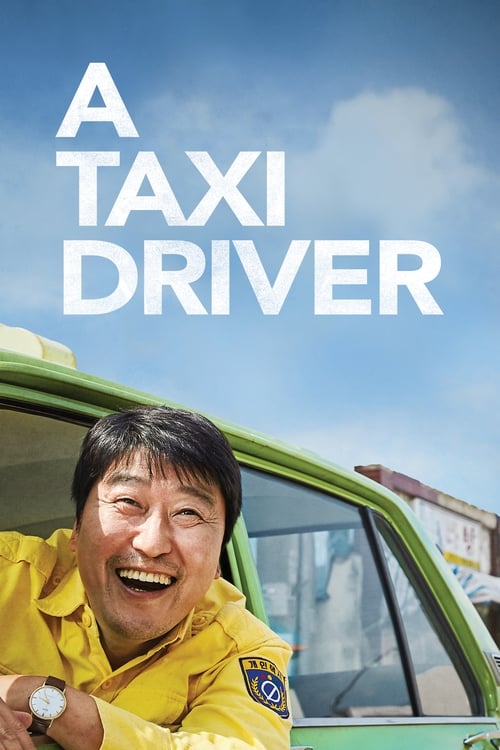
"Based on true events, an untold story of a taxi driver."
A Taxi Driver - Symbolism & Philosophy
Symbols & Motifs
The Green Taxi
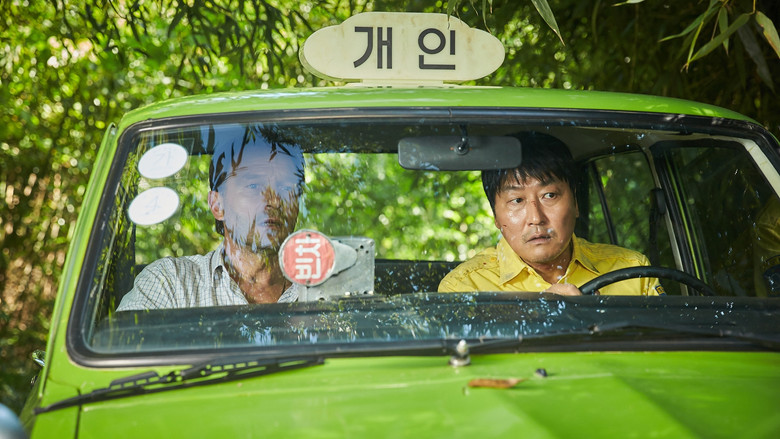
The lime-green taxi symbolizes Kim Man-seob himself: an ordinary, functional part of society. Initially, it is merely his tool for making a living. As the story progresses, it transforms into a vessel of witness, a sanctuary, an ambulance for the wounded, and ultimately, a vehicle for escaping with the truth. Its bright, civilian color stands in stark contrast to the drab, oppressive military jeeps and the gray, broken city streets of Gwangju, representing the resilience of everyday life against tyranny.
The taxi is present in nearly every scene with Man-seob. Its damage throughout the film mirrors the physical and emotional toll the events take on him. The climactic (though fictionalized) chase scene, where other Gwangju taxis sacrifice themselves to protect it, elevates the car to a symbol of collective resistance.
Peter's Camera
The camera represents the power of objective truth and the act of bearing witness. It is the reason for the journey and the object the military is desperate to stop. It is a fragile instrument that holds an immense, world-changing power: the ability to cut through government propaganda and expose reality. Its lens captures the humanity of the victims and the inhumanity of their oppressors, serving as an incorruptible eye in a sea of lies.
Peter protects his camera and film at all costs. He is constantly filming, even in moments of extreme danger. The climax of the film is not just about the characters' physical escape, but the escape of the footage captured by the camera.
Shared Food (Rice Balls & Kimchi)
The simple act of sharing food, such as the rice balls offered by protestors or the meal at Hwang Tae-sool's home, symbolizes hospitality, trust, and solidarity. In a situation of extreme duress and scarcity, offering food is a profound act of humanity. It breaks down the barriers between the outsiders (Man-seob and Peter) and the Gwangju citizens, integrating them into the community and making them part of the collective struggle.
Early in Gwangju, student protestors offer their meager rice balls to Man-seob and Peter. Later, Hwang Tae-sool and his wife prepare a full, hospitable meal for them, a moment of warmth and normalcy amidst the growing chaos, solidifying their bond.
Philosophical Questions
What is the moral responsibility of an ordinary citizen in the face of state-sanctioned injustice?
The film explores this question through Kim Man-seob's entire arc. Initially, he believes his responsibility is solely to his family and that political matters are for others to deal with. The film argues that at a certain point, when confronted with undeniable evil, this detachment becomes morally untenable. It suggests that true civic duty isn't about grand gestures, but about the simple, human decision to help others and stand for the truth, even at great personal cost.
Can a single objective truth cut through overwhelming propaganda and lies?
This question is central to Peter's mission. The military regime in the film controls the entire narrative, broadcasting lies that paint the protestors as violent communist rioters. Peter's camera becomes the sole instrument of objective truth. The film places immense faith in the power of visual evidence, suggesting that if the world can only *see* what is happening, the edifice of lies will crumble. The entire plot hinges on the idea that the truth, if it can be preserved and shared, is the most powerful weapon against tyranny.
What defines true courage: the absence of fear or acting in spite of it?
The film clearly argues for the latter. Kim Man-seob is not fearless; he is terrified for most of the film, and his fear is rational. He is afraid of dying, but more importantly, he is afraid of leaving his daughter an orphan. His ultimate heroism is not in becoming a fearless warrior, but in making the choice to act despite his overwhelming fear. The Gwangju citizens, too, are shown as afraid, but they act collectively to support one another, demonstrating that courage is often a communal, rather than individual, virtue.
Core Meaning
The core meaning of "A Taxi Driver" revolves around the profound transformation of an ordinary individual when confronted with extraordinary injustice. Director Jang Hoon sought to explore the awakening of civic consciousness and moral responsibility. The film's central message is that history is not shaped by heroes alone, but by the cumulative choices of everyday people who decide they can no longer be bystanders. It poses the question of what a person's duty is when faced with the suffering of others and a state-enforced campaign of lies. The director wanted to tell the story of the Gwangju citizens, whose sacrifices paved the way for South Korea's democracy, through the eyes of an outsider who eventually understands their struggle is also his own. The film powerfully argues for the necessity of journalistic integrity and bearing witness to history, emphasizing that truth, even when suppressed, has the power to inspire change.