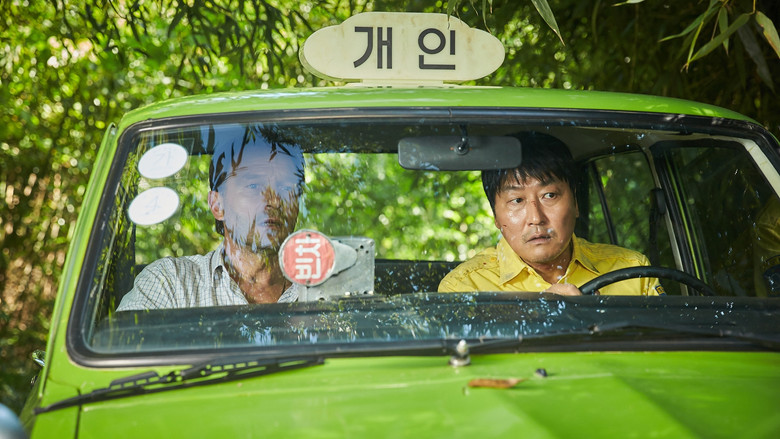

택시운전사
"Based on true events, an untold story of a taxi driver."
Director: Jang Hoon
Cast: Song Kang-ho, Thomas Kretschmann, Yoo Hai-jin, Ryu Jun-yeol, Park Hyuk-kwon
A Taxi Driver — Movie Quotes
Memorable Quotes
아빠가 손님을 두고 왔어 (Appaga sonnimeul dugo wasseo)
Context
Spoken tearfully over the phone to his young daughter after he has safely left Gwangju, just before he turns his taxi around to go back into the city to find Peter.
Meaning
Translating to "Dad left a customer behind," this is the film's most iconic line. It marks the climax of Man-seob's moral transformation. After escaping Gwangju, he calls his daughter and intends to go home, but is overwhelmed by guilt. The "customer" is no longer just a source of income but a person he has a profound human duty to protect. This simple phrase signifies his decision to return to danger for the sake of his conscience.
약속한다. 진실을 반드시 전하겠다 (Yaksokhanda. Jinsireul bandeusi jeonhagetda)
Context
Said to Gu Jae-sik and the other students as they plead with him to let the outside world know what is truly happening in Gwangju, as the domestic media is reporting only government propaganda.
Meaning
"I promise. I will tell the truth to the world." This is Peter's pledge to the student protestors. It encapsulates his mission and the film's core theme about the power of journalism. It serves as a promise to the people of Gwangju that their suffering will not be in vain and will not go unseen.
손님이 가자면 택시는 어디든지 가는 거지 (Sonnimi gajamyeon taeksineun eodideunji ganeun geoji)
Context
Said to another taxi driver at the beginning of the film to justify taking the high-paying fare to Gwangju.
Meaning
"If a customer wants to go, a taxi will go anywhere." This line, said with bravado early in the film, is purely about business. It reflects Man-seob's professional code as a cabbie. By the end of the film, the line takes on a much deeper meaning, reflecting his newfound moral code: he will go anywhere and risk anything, not for money, but because it is the right thing to do.
머시가 미안혀라. 나쁜 놈들은 따로 있구만 (Meosiga mianhyeora. Nappeun nomdeureun ttaro itguman)
Context
Spoken to Kim Man-seob when Man-seob apologizes after his taxi breaks down and they are offered shelter in Hwang's home.
Meaning
"What is there to be sorry for? The bad guys are somewhere else." This line embodies the spirit of solidarity and forgiveness of the Gwangju citizens. Man-seob apologizes for bringing trouble, but Hwang Tae-sool immediately absolves him, placing the blame squarely on the oppressive regime. It shows their clear moral understanding of the conflict and their welcoming nature.
Explore More About This Movie
Dive deeper into specific aspects of the movie with our detailed analysis pages