Le Voyage dans la Lune
A Trip to the Moon - Symbolism & Philosophy
Symbols & Motifs
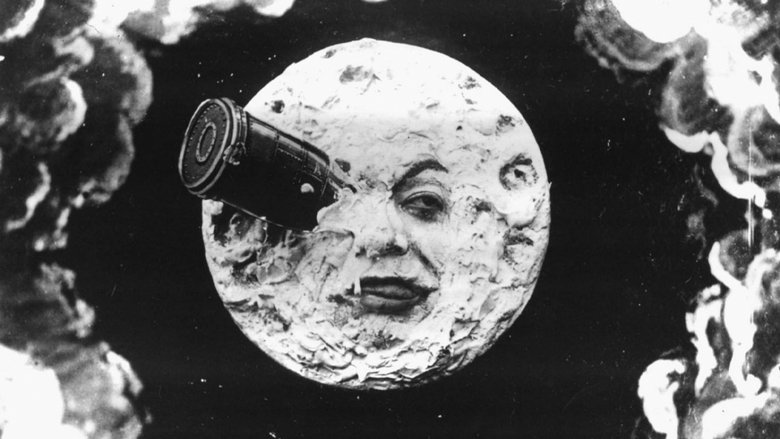
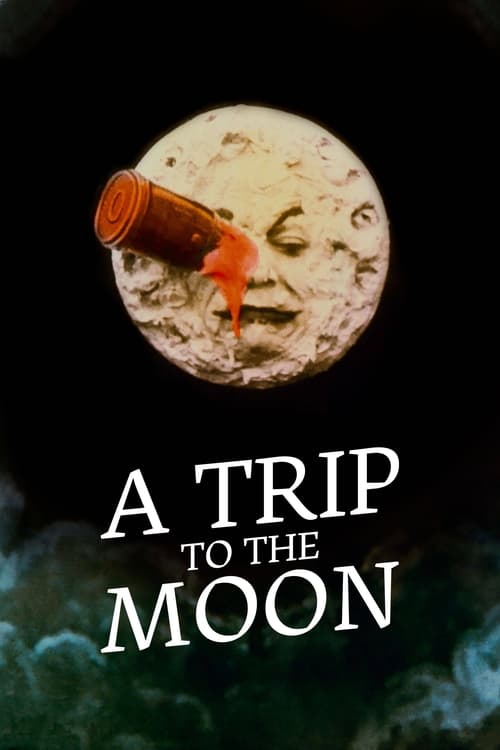
The Man in the Moon's Eye
This iconic image symbolizes the aggressive, almost violent, penetration of the unknown by human ambition. It also serves as a comedic and surreal visual gag that immediately establishes the film's non-scientific, fantastical tone. It represents a direct, almost impertinent, confrontation with the cosmos, turning a celestial body into a cartoonish character.
The bullet-shaped rocket, fired from a cannon on Earth, travels through space and lands directly in the right eye of the anthropomorphic Man in the Moon, causing him to grimace in pain.
Umbrellas
The umbrellas symbolize the absurdity and unpreparedness of the explorers, who bring mundane, terrestrial objects to an alien world. The umbrella's magical transformation into a giant mushroom and its use as a surprisingly effective weapon against the Selenites highlights the film's satirical and illogical nature, mocking the tools of the supposed 'civilized' explorers.
Upon encountering giant mushrooms in a lunar cavern, an astronomer opens his umbrella, which then magically takes root and grows into a mushroom itself. Later, the astronomers discover that simply hitting the Selenites with their umbrellas causes the creatures to explode in a puff of smoke.
Giant Mushrooms
The giant mushrooms are a classic element of fantasy and folklore, signaling the explorers' entry into a magical, otherworldly realm. In mythology, mushroom rings were often associated with fairies and supernatural beings, reinforcing the idea that the Moon is a place of enchantment rather than a scientific reality.
Seeking shelter from a magical snowfall, the astronomers enter a grotto filled with enormous mushrooms. This is where they have their first encounter with a Selenite.
Selenites
The insect-like Selenites represent the 'other'—the inhabitants of a foreign land who are quickly and violently subdued by the explorers. Portrayed by acrobats, their chaotic movements contrast with the stiff demeanor of the scientists. Their easy defeat serves the film's satirical commentary on colonial conquest, where the native population is depicted as weak and easily overcome.
The Selenites are the native inhabitants of the Moon. They appear in the mushroom cavern and, after being provoked, capture the astronomers and take them to their king's palace. They are easily defeated by the astronomers' umbrellas.
Philosophical Questions
What is the relationship between science and imagination?
The film explores this question by blending scientific ambition with pure fantasy. The astronomers use the language and tools of science (telescopes, diagrams, a 'scientific' congress) to launch their journey, but the journey itself and the world they discover are governed by magic and dream logic. Méliès seems to suggest that the drive for scientific progress is fueled by the same imaginative wonder that creates myths and fairy tales.
How do we encounter the 'other'?
The film presents a cynical, if comical, take on this question. The astronomers' first impulse upon meeting the Selenites is not curiosity or communication, but violence. They treat the inhabitants of the Moon as mere obstacles to be eliminated. This reflects a critical view of how dominant cultures often interact with those they perceive as alien or primitive, responding with aggression rather than understanding.
Does the pursuit of knowledge justify the means?
Professor Barbenfouillis and his team are celebrated as heroes for their journey, which expands human knowledge. However, their 'discovery' involves the violent subjugation of an alien species. The film implicitly asks whether the glory of exploration and scientific achievement excuses the collateral damage inflicted upon others in its pursuit, a question central to critiques of colonialism.
Core Meaning
The core meaning of "A Trip to the Moon" lies in its celebration of imagination, innovation, and the dawn of a new technological and cinematic age. Director Georges Méliès, a former magician, did not aim for scientific accuracy but rather sought to evoke a sense of wonder and demonstrate the fantastical possibilities of the film medium. The film is a joyful, theatrical spectacle that satirizes the scientific ambitions of the 19th century while simultaneously championing the spirit of exploration and discovery. It suggests that the journey into the unknown is not just a scientific endeavor but a grand, imaginative adventure.