A Trip to the Moon
A whimsical sci-fi fantasy that captures the delightful absurdity of early cinema, visually portraying humanity's imaginative leap into the cosmos.
A Trip to the Moon

A Trip to the Moon

Le Voyage dans la Lune

15 June 1902 France 15 min ⭐ 7.9 (1,898)
Director: Georges Méliès
Cast: Georges Méliès, Bleuette Bernon, François Lallement, Henri Delannoy, Victor André
Adventure Science Fiction
Exploration and Discovery Satire and Imperialism The Magic of Cinema Science as Fantasy
Budget: $5,985

Overview

"A Trip to the Moon" (Le Voyage dans la Lune) is a pioneering 1902 French silent film by Georges Méliès. The story begins at a meeting of the Astronomic Club, where Professor Barbenfouillis passionately proposes an expedition to the Moon. After some initial comical dissent, five other astronomers agree to join him. A bullet-shaped space capsule and a colossal cannon are constructed to launch them into space.

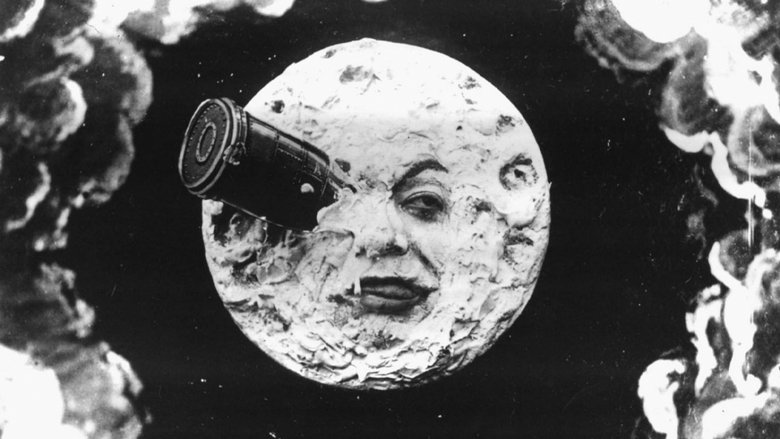
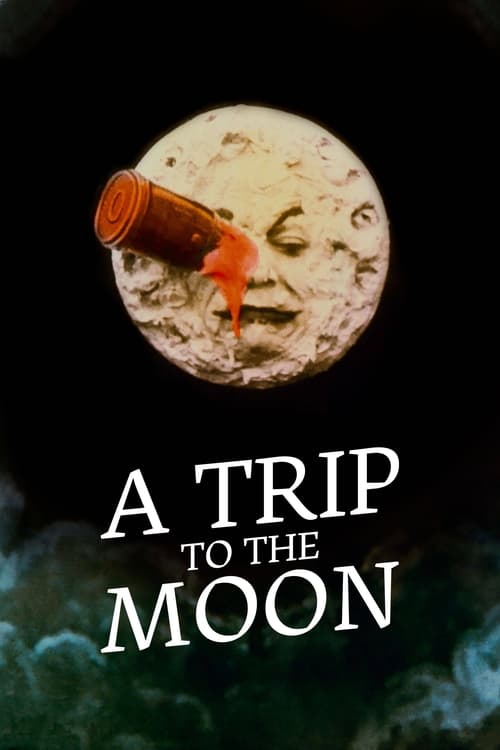
With the help of a group of 'marines' (mostly young women in sailors' outfits), the astronomers are fired towards the Moon. In one of cinema's most iconic images, the capsule lands directly in the eye of the Man in the Moon. The explorers disembark onto the lunar surface without the need for space suits and marvel at the alien landscape, including an 'earthrise'. After a brief rest where they dream of celestial bodies, a snowfall awakens them, prompting them to seek shelter in a cavern filled with giant mushrooms.

Inside the cavern, they encounter the Moon's inhabitants, the insect-like Selenites. A conflict ensues, leading to the astronomers' capture and presentation to the Selenite King. After a daring escape, they rush back to their capsule, tipping it off a lunar cliff and plummeting back to Earth, splashing down into the ocean. They are rescued and return home as heroes, celebrated with a grand parade.

Core Meaning

The core meaning of "A Trip to the Moon" lies in its celebration of imagination, innovation, and the dawn of a new technological and cinematic age. Director Georges Méliès, a former magician, did not aim for scientific accuracy but rather sought to evoke a sense of wonder and demonstrate the fantastical possibilities of the film medium. The film is a joyful, theatrical spectacle that satirizes the scientific ambitions of the 19th century while simultaneously championing the spirit of exploration and discovery. It suggests that the journey into the unknown is not just a scientific endeavor but a grand, imaginative adventure.

Thematic DNA

Exploration and Discovery 35%
Satire and Imperialism 30%
The Magic of Cinema 25%
Science as Fantasy 10%

Exploration and Discovery

The central theme is humanity's enduring fascination with exploring the unknown. The astronomers, driven by curiosity and ambition, embark on a perilous journey to a new world. The film captures the excitement and wonder of discovery, from the strange lunar landscape to the encounter with extraterrestrial life. Their triumphant return and celebration underscore the societal value placed on pioneering achievements.

Satire and Imperialism

Many scholars interpret the film as a satire of colonialism and imperialism. The astronomers arrive on the Moon, immediately confront its inhabitants, the Selenites, and violently dispatch them with umbrellas. They kill the Selenite King, capture one of the inhabitants, and are celebrated as heroes back on Earth, with a statue depicting Professor Barbenfouillis taming a Selenite. This narrative arc mirrors the colonialist attitudes of the era, presenting the explorers as bumbling yet violent conquerors of a foreign land, which Méliès likely intended as a critique.

The Magic of Cinema

As a work by a former illusionist, the film is a showcase for the 'magic' of filmmaking. Méliès used every special effect he had invented, including substitution splices, dissolves, and double exposures, to create a fantastical world. The film itself is a testament to the power of cinema to transport audiences to impossible realms, emphasizing spectacle and wonder over realism.

Science as Fantasy

The film portrays science not as a rigorous, logical discipline, but as a whimsical and fantastical pursuit. The astronomers are depicted as eccentric wizards in pointed hats, and their methods of space travel are absurdly impractical. This playful approach satirizes the sometimes-grandiose claims of 19th-century science, blending it with elements of myth and fairy tales, such as the anthropomorphic Moon and celestial goddesses.

Character Analysis

Professor Barbenfouillis

Georges Méliès

Archetype: The Visionary Explorer
Key Trait: Ambitious

Motivation

His primary motivation is the glory of scientific discovery and the desire to achieve the impossible. He is driven by an unwavering, almost fanatical, belief in his plan, seeking to push the boundaries of human endeavor and be recognized for his pioneering spirit.

Character Arc

Professor Barbenfouillis is a static character who remains a zealous and comically aggressive leader throughout the film. He proposes the seemingly insane idea of a trip to the moon, leads the expedition, initiates the violence against the Selenites by killing their king, and ultimately ensures their escape. His arc is not one of personal change, but of achieving his grand vision and being celebrated for it.

The Astronomers

Victor André, Delpierre, Farjaux, Kelm, Brunnet

Archetype: The Followers
Key Trait: Loyal

Motivation

They are motivated by a shared sense of scientific curiosity and adventure, inspired by their leader's bold plan. They seek to be part of a historic mission and explore a new world.

Character Arc

The fellow astronomers act as a collective character. They initially show some dissent but are quickly won over by Professor Barbenfouillis's enthusiasm. They follow his lead throughout the lunar adventure, participating in both the exploration and the conflict. They share in the triumphant return and are collectively hailed as heroes, showing no significant individual development.

The Selenites

Acrobats of the Folies Bergère

Archetype: The Alien Natives
Key Trait: Defensive

Motivation

Their motivation appears to be the defense of their home territory against the strange, violent intruders. They react to the astronomers' presence and aggression by capturing them.

Character Arc

The Selenites are portrayed as a primitive, somewhat chaotic alien race. They are initially curious about the invaders but turn hostile after being provoked. Their arc is one of victimization; they are easily defeated, their king is killed without ceremony, and one of them is taken back to Earth as a captive for display. They exist primarily to be overcome by the protagonists.

Phoebe, the Moon Goddess

Bleuette Bernon

Archetype: The Celestial Being
Key Trait: Mythical

Motivation

As a goddess of the Moon, her motivation is to interact with the sleeping explorers, causing a magical snowfall that drives the plot forward by forcing them into the mushroom cave.

Character Arc

Phoebe is a mythical figure who appears in a dream sequence. She is not a developing character but a symbolic representation of the magical and divine nature of the cosmos. Her brief appearance reinforces the film's fantasy genre over science fiction.

Symbols & Motifs

The Man in the Moon's Eye

Meaning:

This iconic image symbolizes the aggressive, almost violent, penetration of the unknown by human ambition. It also serves as a comedic and surreal visual gag that immediately establishes the film's non-scientific, fantastical tone. It represents a direct, almost impertinent, confrontation with the cosmos, turning a celestial body into a cartoonish character.

Context:

The bullet-shaped rocket, fired from a cannon on Earth, travels through space and lands directly in the right eye of the anthropomorphic Man in the Moon, causing him to grimace in pain.

Umbrellas

Meaning:

The umbrellas symbolize the absurdity and unpreparedness of the explorers, who bring mundane, terrestrial objects to an alien world. The umbrella's magical transformation into a giant mushroom and its use as a surprisingly effective weapon against the Selenites highlights the film's satirical and illogical nature, mocking the tools of the supposed 'civilized' explorers.

Context:

Upon encountering giant mushrooms in a lunar cavern, an astronomer opens his umbrella, which then magically takes root and grows into a mushroom itself. Later, the astronomers discover that simply hitting the Selenites with their umbrellas causes the creatures to explode in a puff of smoke.

Giant Mushrooms

Meaning:

The giant mushrooms are a classic element of fantasy and folklore, signaling the explorers' entry into a magical, otherworldly realm. In mythology, mushroom rings were often associated with fairies and supernatural beings, reinforcing the idea that the Moon is a place of enchantment rather than a scientific reality.

Context:

Seeking shelter from a magical snowfall, the astronomers enter a grotto filled with enormous mushrooms. This is where they have their first encounter with a Selenite.

Selenites

Meaning:

The insect-like Selenites represent the 'other'—the inhabitants of a foreign land who are quickly and violently subdued by the explorers. Portrayed by acrobats, their chaotic movements contrast with the stiff demeanor of the scientists. Their easy defeat serves the film's satirical commentary on colonial conquest, where the native population is depicted as weak and easily overcome.

Context:

The Selenites are the native inhabitants of the Moon. They appear in the mushroom cavern and, after being provoked, capture the astronomers and take them to their king's palace. They are easily defeated by the astronomers' umbrellas.

Philosophical Questions

What is the relationship between science and imagination?

The film explores this question by blending scientific ambition with pure fantasy. The astronomers use the language and tools of science (telescopes, diagrams, a 'scientific' congress) to launch their journey, but the journey itself and the world they discover are governed by magic and dream logic. Méliès seems to suggest that the drive for scientific progress is fueled by the same imaginative wonder that creates myths and fairy tales.

How do we encounter the 'other'?

The film presents a cynical, if comical, take on this question. The astronomers' first impulse upon meeting the Selenites is not curiosity or communication, but violence. They treat the inhabitants of the Moon as mere obstacles to be eliminated. This reflects a critical view of how dominant cultures often interact with those they perceive as alien or primitive, responding with aggression rather than understanding.

Does the pursuit of knowledge justify the means?

Professor Barbenfouillis and his team are celebrated as heroes for their journey, which expands human knowledge. However, their 'discovery' involves the violent subjugation of an alien species. The film implicitly asks whether the glory of exploration and scientific achievement excuses the collateral damage inflicted upon others in its pursuit, a question central to critiques of colonialism.

Alternative Interpretations

The most prominent alternative interpretation of "A Trip to the Moon" is its reading as an anti-imperialist satire. While on the surface it appears to be a whimsical adventure, the actions of the astronomers reflect the behavior of European colonial powers of the time. They invade a foreign territory, make no attempt at communication, and react with immediate violence to the native inhabitants, killing their leader and taking a captive. The triumphant celebration upon their return, complete with a statue commemorating their conquest, can be seen as a sharp critique of the self-congratulatory nature of imperial expansion. Another interpretation views the film through the lens of pataphysics, a philosophy dedicated to "the science of imaginary solutions." The film's absurd logic, disregard for physics, and surreal imagery can be seen as an exercise in pataphysical thought, aiming to show the illogicality of logical thinking.

Cultural Impact

"A Trip to the Moon" had a profound and lasting cultural impact. Released when cinema was still in its infancy and largely seen as a novelty, its narrative complexity, length, and groundbreaking special effects helped transition the medium towards storytelling. It codified many of the tropes that would become staples of the science fiction genre, including space travel, alien encounters, and otherworldly landscapes. The image of the rocket in the Man in the Moon's eye has become one of the most iconic and frequently referenced shots in cinematic history, symbolizing the magic and innovation of early film. The film was a massive international success, demonstrating the global appeal of narrative cinema. Its popularity, however, also led to it becoming one of the first major victims of film piracy, which ultimately contributed to Méliès's financial decline. Decades after it was made, the film was rediscovered and celebrated, cementing Méliès's legacy as the 'father of special effects'. Its influence can be seen in countless films and other media, and it was a central element in Brian Selznick's novel "The Invention of Hugo Cabret" and Martin Scorsese's 2011 film adaptation, "Hugo", which introduced Méliès's work to a new generation.

Audience Reception

Upon its release in 1902, "A Trip to the Moon" was an unprecedented success and met with uproarious enthusiasm from audiences worldwide. At a time when films were often short, single-shot novelties, its 14-minute runtime and elaborate, multi-scene narrative captivated viewers. Exhibitors who were initially hesitant about the film's high price and length found that audiences would stay to watch it over and over again until midnight. The film's imaginative story, whimsical tone, and spectacular special effects were unlike anything seen before, making it the first international blockbuster. Its immense popularity, however, also led to widespread piracy, particularly in the U.S., which significantly limited the financial returns for Méliès. Contemporary audiences simply enjoyed the fantastic adventure, even if the satirical elements were not widely discussed at the time.

Interesting Facts

  • The film is considered the first science fiction film in history.
  • At around 14 minutes, it was one of the longest and most expensive films of its time, costing 10,000 Francs to produce.
  • The Selenite costumes were one of the most expensive parts of the production; the characters were played by acrobats from the Folies Bergère music hall in Paris.
  • The film was an immense international success, but due to a lack of copyright protection, it was heavily pirated, especially in the United States by Thomas Edison's film studio. Méliès made very little money from its American distribution.
  • An original hand-colored print, long thought to be lost, was discovered in 1993 and underwent a massive restoration, being released in 2011.
  • Méliès not only directed, produced, and wrote the film, but also starred as the main character, Professor Barbenfouillis, and designed the sets and costumes.
  • The statue at the end of the film is inscribed with the Latin phrase "Labor omnia vincit," which means "Work conquers all."

⚠️ Spoiler Analysis

Click to reveal detailed analysis with spoilers

Frequently Asked Questions

Explore More About This Movie

Dive deeper into specific aspects of the movie with our detailed analysis pages

Comments (0)

Leave a comment

No comments yet. Be the first to share your thoughts!