The core meaning of "Adventure Time: Fionna & Cake" revolves around the difficult but necessary journey of self-acceptance and finding value in one's reality, no matter how mundane it may seem. The series posits that a "normal" life is not an inherently lesser one and that true contentment comes not from escaping to a fantasy, but from embracing one's own identity and world, flaws and all. It is a mature exploration of dealing with depression, regret, and the weight of the past. For Simon, it's about learning that his life has worth beyond his identity as the Ice King or his relationship with Betty. For Fionna, it's about realizing that the magical, adventurous life she craved cannot replace the genuine beauty and relationships she has in her own world. Ultimately, the series is a tribute to the creative process and the idea that every story, every person, and every world matters enough to be considered "canon."
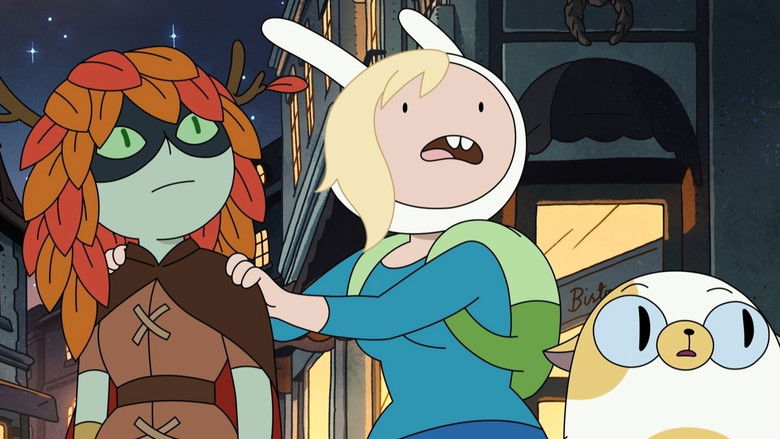
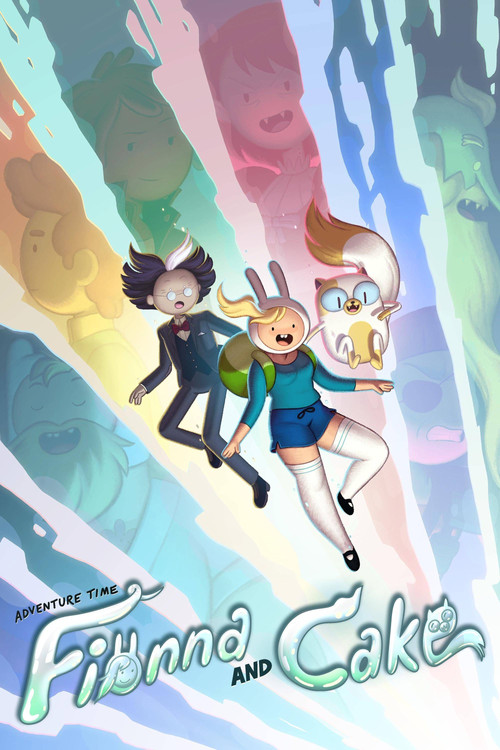
""I knew my life was supposed to be magic!""
Cast: Madeleine Martin, Roz Ryan, Tom Kenny, Dee Bradley Baker, Kayleigh McKee
Adventure Time: Fionna & Cake — Symbolism & Philosophy
Symbols & Motifs
The Ice Crown
The Ice Crown symbolizes madness, immense power, deep loss, and a painful past. For Simon, it represents a tempting escape from his current depression back into a persona, the Ice King, who, despite his insanity, had a defined purpose. His ultimate rejection of the crown signifies his acceptance of himself and his own difficult reality over a magical but sanity-stripping solution.
The crown is a recurring object of desire and fear. Simon contemplates using it to restore magic to Fionna's world. An alternate, sane version of Simon, the Winter King, shows the seductive danger of mastering the crown's power. Fionna finds a version of the crown in a Lich-destroyed world, and her decision to give it to Simon, and his to reject it, is the climax of their emotional arcs.
Magic vs. Normalcy
The contrast between the magical Land of Ooo and Fionna's mundane world represents the conflict between fantasy/escapism and reality. Initially, Fionna's world is depicted as drab and depressing, while magic is vibrant and exciting. The series eventually subverts this, arguing for the beauty and worth of the "normal" world, suggesting that magic isn't a solution to life's problems but simply a different context for them.
Fionna spends the beginning of the series dreaming of a magical life. The central quest is ostensibly to restore magic to her world. However, the finale sees Fionna fighting to save her world as it is, choosing its normalcy over an artificial, magical version. Her world is then canonized, becoming magical on its own terms, integrating the fantastic with the familiar.
Cheers (the TV show)
The sitcom "Cheers" symbolizes comfort, nostalgia, and a connection to Simon's past. For the Ice King, it was a link to his pre-crown life. For Simon, it's a melancholy reminder of a simpler time. In Fionna's world, it's perpetually stuck on her TV, representing her static, repetitive, and unfulfilling life.
The theme song and show appear in both Simon's and Fionna's lives. In a flashback, Simon performs the theme song for a young Marceline. In the present, Fionna's TV is inexplicably stuck on the show. The final episode is even titled "Cheers," tying all the character arcs together in a theme of finding a place where everybody knows your name—a place of belonging.
Philosophical Questions
What defines a 'real' existence?
The series constantly questions the line between fiction and reality. Fionna and Cake learn their entire world is an "unauthorized" creation, a story inside someone else's head. This prompts them, and the audience, to question what makes a life valid. Is it cosmic authorization? Is it being "canon"? The show ultimately argues that existence is validated by the conscious experience, emotions, and relationships within it. Fionna's world is real because she and its inhabitants experience love, pain, and joy, making it worthy of existence regardless of its origin.
Can you find meaning after profound loss and trauma?
Simon Petrikov's entire arc is dedicated to this question. For a thousand years, his identity was subsumed by the Ice King, and his post-cure life is defined by the loss of Betty. The series explores his deep depression and his belief that his life is meaningless without her. His journey suggests that meaning is not something to be rediscovered but something to be newly created. By accepting Betty's sacrifice and finding a new purpose in helping others and himself, he demonstrates that a worthwhile life is possible even after unimaginable trauma.
Is a mundane life inherently less valuable than an adventurous one?
The show presents a direct conflict between Fionna's desire for a magical, adventurous life and the reality of her mundane existence. Initially, her normal world is portrayed as a source of depression. However, as she travels through chaotic and dangerous magical worlds, she begins to appreciate the stability and relationships of her home. The series concludes that value is subjective and that a life of quiet connections, personal growth, and simple pleasures is just as valid and meaningful as a life of grand heroism.
Core Meaning
Explore More About This Movie
Dive deeper into specific aspects of the movie with our detailed analysis pages