Adventure Time: Fionna & Cake
""I knew my life was supposed to be magic!""
Overview
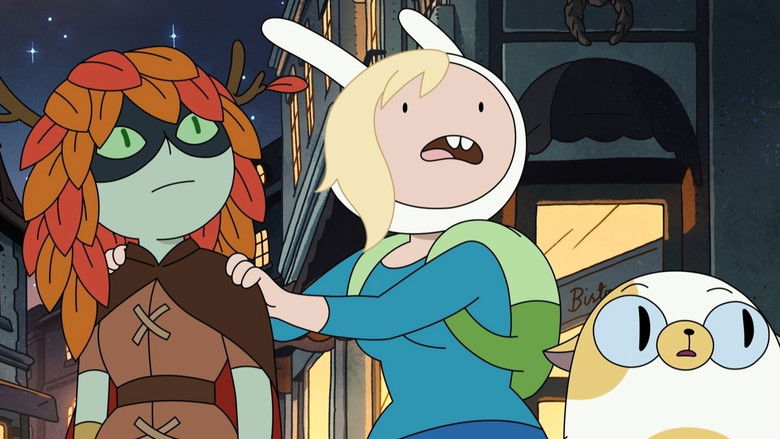
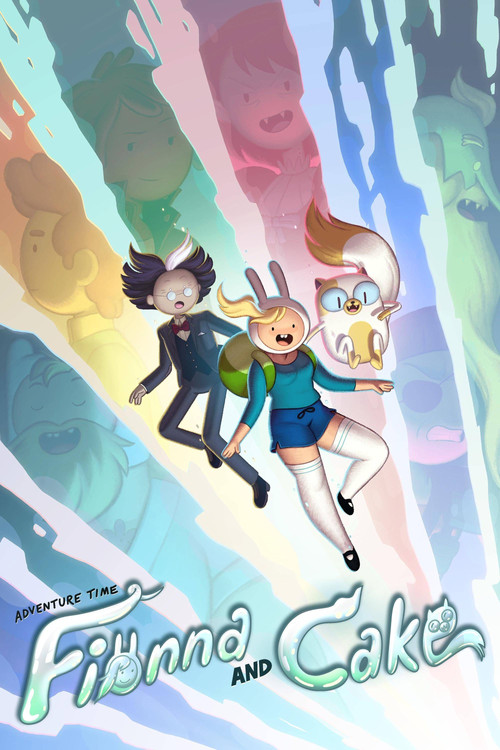
"Adventure Time: Fionna & Cake" follows the titular characters, who were once thought to be mere fanfiction creations of the Ice King. They now live in a mundane, magic-less world where Fionna struggles with a series of dead-end jobs and a sense of unfulfillment, while Cake is just an ordinary cat. Their world is drab and painfully normal, a stark contrast to the vibrant Land of Ooo they dream of at night.
Meanwhile, in the magical Land of Ooo, a cured Simon Petrikov (the former Ice King) lives a life of quiet depression, haunted by his past and the loss of his love, Betty. He works as a living exhibit of a bygone era, feeling disconnected and without purpose. A desperate magical ritual by Simon to contact Betty inadvertently opens a portal, pulling Cake, and then Fionna, into Ooo. This reunion grants Cake magical powers and the ability to speak, setting the trio on a journey across the multiverse. They are pursued by the Scarab, a cosmic auditor determined to erase their "unauthorized" universe, which was secretly created by Prismo the Wishmaster and hidden within Simon's mind.
Core Meaning
The core meaning of "Adventure Time: Fionna & Cake" revolves around the difficult but necessary journey of self-acceptance and finding value in one's reality, no matter how mundane it may seem. The series posits that a "normal" life is not an inherently lesser one and that true contentment comes not from escaping to a fantasy, but from embracing one's own identity and world, flaws and all. It is a mature exploration of dealing with depression, regret, and the weight of the past. For Simon, it's about learning that his life has worth beyond his identity as the Ice King or his relationship with Betty. For Fionna, it's about realizing that the magical, adventurous life she craved cannot replace the genuine beauty and relationships she has in her own world. Ultimately, the series is a tribute to the creative process and the idea that every story, every person, and every world matters enough to be considered "canon."
Thematic DNA
Depression and Self-Worth
This is arguably the central theme, primarily explored through Simon Petrikov. Cured of the Ice King's madness, he is crushingly depressed, unable to find his place in the world and defined by his past trauma and loss. His journey is a raw depiction of struggling with self-hatred and the belief that his life is worthless. The series shows his slow path toward realizing his life matters on its own terms, culminating in his decision to throw away the Ice Crown, choosing his own sanity over a magical fix. Fionna mirrors this theme, feeling her life is mundane and meaningless, only to discover its intrinsic value through her adventures.
The Search for Identity and Adulthood
The series is a coming-of-age story for a young adult audience. Fionna is in her late 20s, struggling with relatable anxieties: dead-end jobs, paying bills, and a gnawing feeling that she's meant for something more. Her arc is about moving past a desire for an idealized, magical life and accepting the complexities and responsibilities of her real one. The show explores the idea that growing up isn't about achieving a fantasy, but about finding meaning and contentment in reality.
Canon vs. Fan-Fiction (The Nature of Reality)
The series engages in a meta-commentary on its own existence. Fionna and Cake begin as literal fan-fiction created by the Ice King, later revealed to be an "unauthorized universe" created by Prismo. Their struggle against the Scarab, a cosmic auditor who wants to erase their non-canon world, becomes a metaphor for artistic validation and the legitimacy of derivative works. The finale, where their world is officially "canonized," celebrates the idea that all stories and perspectives have value and the right to exist.
Coping with Loss and The Past
Loss is a pervasive theme. Simon is grieving the loss of Betty, which fuels his depression. His arc is about learning to move forward without negating the importance of that loss. Prismo is also shown to be deeply depressed over the death of his best friend, Jake the Dog, using his powers to watch universes where Jake is still alive as a form of escapism. The series explores how characters cope, whether through unhealthy rituals, escapism, or finally, acceptance and finding a new purpose.
Character Analysis
Fionna Campbell
Madeleine Martin
Motivation
Initially, Fionna's motivation is pure escapism. She wants her life to be magical and exciting, believing that is the only way it can have meaning. As the series progresses, her motivation shifts to protecting her friend Cake and, later, Simon. By the end, her motivation is to preserve her own world and the lives of her friends within it, having found value in the life she once scorned.
Character Arc
Fionna begins as a disillusioned young woman trapped in a cycle of dead-end jobs, dreaming of the magical adventures she vaguely remembers. She feels powerless and deeply dissatisfied with her mundane life. Her journey through the multiverse forces her to confront danger and responsibility, reawakening her heroic instincts. However, her primary transformation is internal. She evolves from wanting to escape her life to wanting to save it. She learns that her world and the people in it—Gary, Marshall Lee, her community—have inherent worth. Her final act is not to wish for magic, but to fight for the survival of her non-magical home, demonstrating her acceptance of her own reality.
Simon Petrikov
Tom Kenny
Motivation
Simon's primary motivation at the start is a desperate, almost suicidal desire to reunite with Betty, even if it means summoning the destructive entity GOLB. This evolves into a sense of responsibility for Fionna and Cake, whose world exists inside his head. Ultimately, his motivation becomes self-preservation in the truest sense: preserving his sanity and finding a way to live a meaningful life for himself, not just as a monument to his lost love.
Character Arc
Simon's arc is a profound exploration of recovery and depression. Having been cured of the Ice King's madness, he is lost, isolated, and consumed by grief for Betty and guilt over his past actions. He views himself as a failure and a relic. His journey with Fionna and Cake forces him out of his isolation. He is repeatedly tempted to reclaim the power of the Ice Crown as an easy solution to his feelings of powerlessness. His breakthrough comes when he understands Betty's sacrifice not as something to fix, but as an act of love to be honored. This realization allows him to see his own worth. By choosing to discard the crown and embrace his difficult, magic-less life, he completes his transformation from the tragic Ice King to a man who has finally, painfully, found peace with himself.
Cake the Cat
Roz Ryan
Motivation
Cake's motivation is to live life to the fullest. Having experienced the limitations of being an ordinary cat, she is driven by a desire to remain magical, talkative, and adventurous. She wants to protect Fionna and help Simon, but her core drive is to embrace her new reality and never go back to the silent, powerless life she had before.
Character Arc
Cake begins as a normal, non-verbal cat, serving as Fionna's loyal companion. When she is transported to Ooo, she gains sapience and magical stretching powers, finally becoming her "true self." Her arc is one of self-realization and joy. Unlike Fionna and Simon, Cake revels in the chaos and adventure. She is the catalyst for the entire plot, as her jump into the portal pulls Fionna into the adventure. While she experiences some conflict with Fionna over returning to a non-magical world, she remains a steadfastly loyal and supportive friend. Her journey is less about overcoming internal turmoil and more about embracing a newfound, vibrant existence.
Symbols & Motifs
The Ice Crown
The Ice Crown symbolizes madness, immense power, deep loss, and a painful past. For Simon, it represents a tempting escape from his current depression back into a persona, the Ice King, who, despite his insanity, had a defined purpose. His ultimate rejection of the crown signifies his acceptance of himself and his own difficult reality over a magical but sanity-stripping solution.
The crown is a recurring object of desire and fear. Simon contemplates using it to restore magic to Fionna's world. An alternate, sane version of Simon, the Winter King, shows the seductive danger of mastering the crown's power. Fionna finds a version of the crown in a Lich-destroyed world, and her decision to give it to Simon, and his to reject it, is the climax of their emotional arcs.
Magic vs. Normalcy
The contrast between the magical Land of Ooo and Fionna's mundane world represents the conflict between fantasy/escapism and reality. Initially, Fionna's world is depicted as drab and depressing, while magic is vibrant and exciting. The series eventually subverts this, arguing for the beauty and worth of the "normal" world, suggesting that magic isn't a solution to life's problems but simply a different context for them.
Fionna spends the beginning of the series dreaming of a magical life. The central quest is ostensibly to restore magic to her world. However, the finale sees Fionna fighting to save her world as it is, choosing its normalcy over an artificial, magical version. Her world is then canonized, becoming magical on its own terms, integrating the fantastic with the familiar.
Cheers (the TV show)
The sitcom "Cheers" symbolizes comfort, nostalgia, and a connection to Simon's past. For the Ice King, it was a link to his pre-crown life. For Simon, it's a melancholy reminder of a simpler time. In Fionna's world, it's perpetually stuck on her TV, representing her static, repetitive, and unfulfilling life.
The theme song and show appear in both Simon's and Fionna's lives. In a flashback, Simon performs the theme song for a young Marceline. In the present, Fionna's TV is inexplicably stuck on the show. The final episode is even titled "Cheers," tying all the character arcs together in a theme of finding a place where everybody knows your name—a place of belonging.
Memorable Quotes
I'm not really feelin' like myself today... 'cause every day's the same, painfully mundane.
— Fionna (sung)
Context:
This is part of the song Fionna sings during a montage of her dreary life, getting fired from jobs and feeling alienated, in Season 1, Episode 1, "Fionna Campbell."
Meaning:
These lyrics from the opening song of the first episode perfectly encapsulate Fionna's initial state of mind. It establishes the show's mature, melancholic tone and the central theme of dissatisfaction with a mundane adult life, contrasting sharply with the upbeat adventurous tone of the original series.
I'm worried I'll forget that this will be a cycle of learning and forgetting and relearning and forgetting again.
— Simon Petrikov
Context:
Simon says this towards the end of the series, reflecting on his journey and newfound self-worth while talking to a therapist, in Season 1, Episode 10, "Cheers."
Meaning:
This quote captures the essence of Simon's struggle with depression and recovery. It speaks to the fear that personal growth is not permanent and that he might relapse into his despair. It's a painfully realistic and relatable sentiment about the non-linear nature of healing from trauma.
But I'm really no less worthy of life.
— Fionna
Context:
Fionna says this while confronting the Scarab and the potential erasure of her world, asserting her right to exist in the latter half of the season.
Meaning:
This is a powerful statement of self-acceptance. After being told her entire universe is an unauthorized "abomination," Fionna rejects that notion. It's a turning point where she begins to see the value in her own existence and her world, regardless of its magical status or cosmic legitimacy.
Episode Highlights
Fionna Campbell
This episode masterfully sets the new, mature tone of the series. It introduces Fionna's painfully relatable, non-magical life, filled with dead-end jobs and a deep sense of ennui. The contrast between her dreary reality and her vibrant, magical dreams establishes the central conflict of the season.
It immediately establishes that this is not the "Adventure Time" of old. By grounding the fantastical characters in a mundane reality, it connects with an older audience and sets up the core themes of identity, depression, and the search for meaning in adulthood.
Simon Petrikov
A poignant and melancholic character study, this episode delves deep into Simon's depression after being cured of the Ice King's madness. We see his isolation, his inability to connect with a world that has moved on, and his desperate attempts to contact Betty.
This episode is crucial for understanding Simon's arc, which is the emotional core of the series. It establishes the stakes of his journey—not just a physical adventure, but a battle for his own soul and will to live. It is often ranked as one of the best episodes of the season.
Prismo the Wishmaster
The episode that reveals the cosmic truth: Fionna and Cake's world is an unauthorized fanfiction created by a lonely Prismo and stored in the Ice King's mind. The trio is forced to flee from the Scarab, a cosmic auditor, turning their quest into a multiversal chase.
It lays out the central plot and stakes of the entire series. The meta-narrative of creation, canon, and fandom is made explicit, adding a new layer of depth to the Adventure Time universe and explaining why Fionna's world lost its magic.
The Winter King
The trio travels to a universe where Simon stayed sane after putting on the crown, becoming the charismatic Winter King. However, they discover he achieved this by magically transferring the crown's madness onto Princess Bubblegum. The episode is a dark exploration of what Simon could have become.
This episode powerfully illustrates the true horror of the crown's curse and reinforces the impossibility of a simple magical solution to Simon's problems. It's a pivotal moment of temptation and a stark reminder of what's at stake, ranked by fans as the best episode of the season.
Cheers
In the finale, Simon fully realizes Betty's sacrifice and finds his own self-worth, rejecting the Ice Crown. Fionna chooses to save her mundane world rather than wish for a magical one. Her world is then officially canonized by GOLBetty, becoming magical on its own terms as Simon finds peace.
It provides a deeply satisfying conclusion to the season's character arcs. It resolves the central conflict by celebrating self-acceptance over escapism, beautifully tying together the themes of identity, reality, and finding peace with one's life.
Philosophical Questions
What defines a 'real' existence?
The series constantly questions the line between fiction and reality. Fionna and Cake learn their entire world is an "unauthorized" creation, a story inside someone else's head. This prompts them, and the audience, to question what makes a life valid. Is it cosmic authorization? Is it being "canon"? The show ultimately argues that existence is validated by the conscious experience, emotions, and relationships within it. Fionna's world is real because she and its inhabitants experience love, pain, and joy, making it worthy of existence regardless of its origin.
Can you find meaning after profound loss and trauma?
Simon Petrikov's entire arc is dedicated to this question. For a thousand years, his identity was subsumed by the Ice King, and his post-cure life is defined by the loss of Betty. The series explores his deep depression and his belief that his life is meaningless without her. His journey suggests that meaning is not something to be rediscovered but something to be newly created. By accepting Betty's sacrifice and finding a new purpose in helping others and himself, he demonstrates that a worthwhile life is possible even after unimaginable trauma.
Is a mundane life inherently less valuable than an adventurous one?
The show presents a direct conflict between Fionna's desire for a magical, adventurous life and the reality of her mundane existence. Initially, her normal world is portrayed as a source of depression. However, as she travels through chaotic and dangerous magical worlds, she begins to appreciate the stability and relationships of her home. The series concludes that value is subjective and that a life of quiet connections, personal growth, and simple pleasures is just as valid and meaningful as a life of grand heroism.
Alternative Interpretations
One significant alternative interpretation views the entire series as an allegory for the creative process and creator burnout. Prismo, the Wishmaster, can be seen as a stand-in for the show's writers and creators. His depression following the loss of Jake (the end of the original series) and his creation of the "unauthorized" Fionna and Cake universe reflects a creator's desire to keep playing in a beloved sandbox, even after the main story is over. The Scarab, as the "God Auditor," represents external pressures—be it studio executives or a rigid fanbase—demanding that stories adhere to established canon and not deviate into unofficial territory. The finale, where Fionna's world is canonized and the Scarab is forced to become Prismo's creative partner, can be interpreted as a message about the importance of artistic freedom and how even derivative or fan-inspired ideas can eventually become a legitimate and beloved part of a franchise's tapestry.
Cultural Impact
"Adventure Time: Fionna & Cake" serves as a prime example of how a beloved franchise can mature alongside its original audience. Moving from Cartoon Network to the Max streaming service allowed for more adult themes, including frank discussions of depression, existential dread, and the mundanities of young adulthood. Critics and fans lauded the series for being a meaningful expansion of the lore rather than a simple nostalgia-driven cash grab. It engaged in a clever meta-commentary on the nature of reboots, sequels, and fan creations, using the very concept of Fionna and Cake's existence to explore what makes a story "real" or "canon." The show demonstrated a successful model for evolving a children's property into a thoughtful, emotionally resonant series for adults, proving that the whimsical Land of Ooo could be a vessel for profound and deeply human stories. Its positive reception led to its renewal for a second season, solidifying the franchise's continued relevance in the modern animation landscape.
Audience Reception
"Adventure Time: Fionna & Cake" was met with widespread acclaim from both critics and audiences, many of whom were original fans of "Adventure Time" who had grown up with the series. The show holds a 100% on Rotten Tomatoes from critics and a 96% audience score. Reviewers praised its mature tone, emotional depth, and thoughtful exploration of themes like depression, existentialism, and self-acceptance. The focus on Simon Petrikov's recovery was frequently singled out as a powerful and resonant storyline. Fans celebrated the series as a worthy successor that respected the original's legacy while forging its own identity. While some viewers found the pacing of certain multiverse adventures uneven, the overall consensus was overwhelmingly positive. The main point of praise was that the show managed to evolve with its audience, providing a narrative that felt both nostalgic and new, and proved the franchise's capacity for sophisticated, adult-oriented storytelling.
Interesting Facts
- The characters of Fionna and Cake originated as gender-swapped drawings posted online by 'Adventure Time' character designer Natasha Allegri. They became so popular with fans that they were officially introduced into the original series.
- Showrunner Adam Muto confirmed that the series was developed with the original show's aging fanbase in mind, aiming for a more mature, young-adult tone.
- Much of the series' production took place in 2021 and 2022 during the COVID-19 pandemic, with about 90% of the work being done remotely by the team at Cartoon Network Studios.
- Voice actor Tom Kenny has stated that his work as Simon Petrikov in this series was some of the most emotional voice acting he's ever done.
- The series features new songs from original 'Adventure Time' contributors Rebecca Sugar and Patrick McHale.
Easter Eggs
Fionna's last name is Campbell.
This is a direct reference to Finn's mother, Dr. Minerva Campbell. Since Fionna is Finn's alternate-universe counterpart, she was given his mother's surname instead of his father's (Mertens).
Simon's TV is always playing the 80s sitcom "Cheers."
This is a callback to the original series, where the Ice King mentioned it was his favorite show. It serves as a motif for both Simon's lingering connection to his past self and Fionna's feeling of being "stuck" in a monotonous life.
The Lich's hand from his original wish.
In Prismo's time room, the skeletal hand of the Lich can be seen. This is the very hand that made the wish to extinguish all life, which created a dead world that Fionna, Cake, and Simon later visit in the episode "Jerry."
Farmworld Finn makes an appearance.
The alternate, one-armed version of Finn from the original series' episode "Finn the Human" appears. This confirmed that Prismo's wishes create permanent alternate timelines, a concept that is central to the plot of "Fionna & Cake."
A grown-up, bearded Finn with a Jake tattoo.
The main-timeline Finn from the original series appears as a buff, bearded adult. He has a tattoo of Jake on his chest, a touching tribute to his late brother, whose death is also the cause of Prismo's depression in the series.
⚠️ Spoiler Analysis
Click to reveal detailed analysis with spoilers
Frequently Asked Questions
Explore More About This Movie
Dive deeper into specific aspects of the movie with our detailed analysis pages
Comments (0)
No comments yet. Be the first to share your thoughts!