AKIRA
"Neo-Tokyo is about to E.X.P.L.O.D.E."
Akira - Symbolism & Philosophy
Symbols & Motifs
Kaneda's Motorcycle
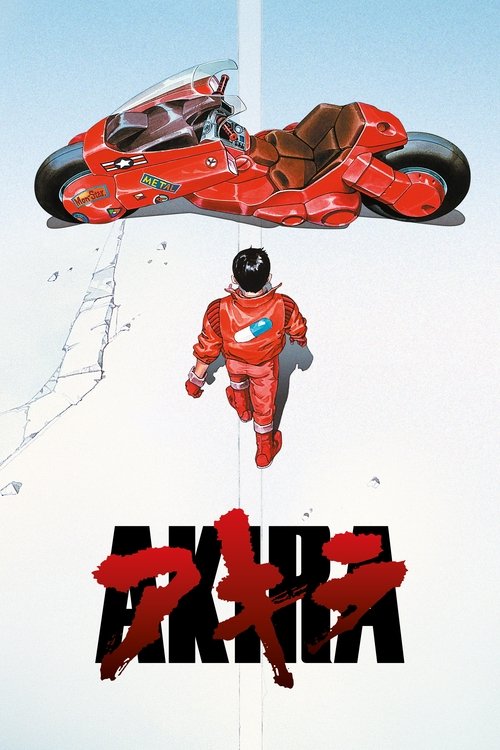
Kaneda's iconic red motorcycle symbolizes power, status, and freedom within the world of the biker gangs. It represents Kaneda's leadership and competence. For Tetsuo, the bike is an object of envy and a symbol of the power and respect he desperately craves but feels he cannot attain.
The film opens with dynamic scenes featuring the motorcycle, establishing its importance. Tetsuo's desire to ride and control the bike foreshadows his larger quest for power. After gaining his abilities, Tetsuo's theft and eventual destruction of the bike signifies his rejection of Kaneda's authority and his own ascent to a different kind of power.
Tetsuo's Red Cape
Tetsuo's makeshift red cape, which he dons after his powers fully manifest, is a symbol of his newfound arrogance and self-proclaimed godhood. It's a visual nod to classic superheroes, ironically twisted to represent his transformation into an antagonist. It highlights his childish and ego-driven perception of his immense power.
Tetsuo fashions the cape from a piece of red fabric and wears it during his climactic rampage through Neo-Tokyo. This imagery solidifies his break from his former identity and his embrace of a new, messianic, and ultimately destructive persona as he confronts the military and Kaneda.
The Olympic Stadium
The Olympic Stadium, under construction in Neo-Tokyo, symbolizes the city's attempts to project an image of recovery, progress, and a return to the world stage. However, its construction on the very site of Akira's cryogenic containment chamber represents the society's attempt to build a future by burying a dangerous and unresolved past. Its eventual destruction signifies that the past cannot be simply paved over and will inevitably erupt.
The stadium is the location of the film's final confrontation. Tetsuo is drawn to it in his search for Akira, and it becomes the epicenter of his catastrophic loss of control. The destruction of this symbol of a hopeful future by the very power it was meant to conceal underscores the film's theme of cyclical destruction.
The Espers (The Children)
The three espers—Takashi, Kiyoko, and Masaru—with their prematurely aged appearances and childlike bodies, symbolize the tragic consequences of humanity's attempts to control and weaponize a power it doesn't understand. They are both victims and powerful beings, representing a different path of accepting and managing great power, in contrast to Tetsuo's destructive approach.
The espers are central to the plot, from Takashi's initial encounter with Tetsuo to their role in the final confrontation. They act as a Greek chorus, offering cryptic prophecies and insights into the nature of Akira's power. Their intervention at the end is crucial in containing the catastrophe unleashed by Tetsuo.
Philosophical Questions
Are humans capable of responsibly wielding absolute power?
The film explores this question primarily through Tetsuo. His transformation from a powerless youth to a being of immense ability demonstrates the corrupting influence of power. The film suggests that without emotional maturity and a strong moral framework, such power inevitably leads to destruction. The espers, who have lived with their powers for longer, represent a more controlled, albeit tragic, existence with such abilities. The very existence of Akira, a child who destroyed a city, serves as the ultimate cautionary example. The film seems to argue that humanity, in its current state of emotional and social development, is not ready for such power.
What is the relationship between technological/scientific progress and societal well-being?
"Akira" presents a cynical view of scientific advancement. In Neo-Tokyo, technology has created a visually impressive but socially bankrupt society. The government's secret research into psychic powers, a pinnacle of scientific inquiry in the film's world, is the direct cause of the city's destruction, twice. The film critiques the pursuit of knowledge and power without considering the ethical implications, suggesting that scientific progress devoid of humanity can lead to catastrophe. This reflects a deep-seated anxiety about technology, particularly in a post-nuclear context.
Is destruction a necessary precursor to creation and rebirth?
The film is built on a cycle of destruction and rebirth. Tokyo is destroyed to make way for Neo-Tokyo, which is then destroyed at the film's climax. The ending, where Tetsuo becomes a new universe, explicitly links a cataclysmic event to an act of creation. This reflects philosophical and religious ideas about the cleansing nature of destruction and the idea that old, corrupt systems must be torn down for new, better ones to emerge. However, the film leaves it ambiguous whether this new creation will be an improvement or simply the start of another cycle.
Core Meaning
"Akira" is fundamentally a cautionary tale about power and the potential for self-destruction inherent in humanity. Director Katsuhiro Otomo explores what happens when absolute power is granted to an individual who is emotionally and mentally unprepared to wield it. Tetsuo's transformation from a resentful and insecure teenager into a god-like being with catastrophic abilities serves as a powerful metaphor for the dangers of unchecked ambition and the corrupting nature of power.
The film is also widely interpreted as a post-nuclear allegory, reflecting Japan's anxieties in the wake of the atomic bombings of Hiroshima and Nagasaki. The initial destruction of Tokyo and the subsequent apocalyptic events in Neo-Tokyo evoke the imagery and trauma of nuclear devastation. Furthermore, "Akira" delves into themes of societal decay, governmental corruption, and the rebellion of youth in a world that seems to offer them no future. It questions the relentless march of scientific progress without a strong moral compass and ultimately explores the cyclical nature of destruction and rebirth.