Akira
AKIRA
"Neo-Tokyo is about to E.X.P.L.O.D.E."
Overview
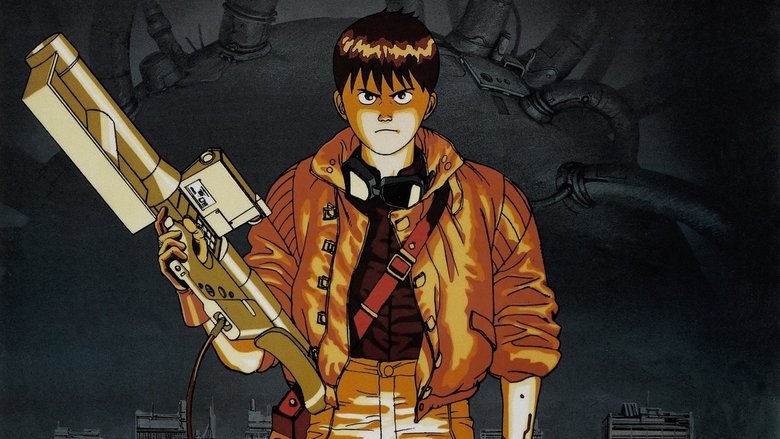
Set in the dystopian, sprawling metropolis of Neo-Tokyo in 2019, thirty-one years after a singularity destroyed the original city and triggered World War III, "Akira" follows the story of Shōtarō Kaneda, the leader of a brash teenage biker gang known as the Capsules. The city is a hotbed of civil unrest, plagued by anti-government protests, corruption, and gang violence.
The lives of Kaneda and his friends are irrevocably changed when his best friend, Tetsuo Shima, is involved in a motorcycle accident with a mysterious, child-like individual possessing psychic abilities (an esper). This encounter awakens latent, and immensely powerful, telekinetic abilities within Tetsuo. He is subsequently taken into custody by a clandestine government project, led by the pragmatic Colonel Shikishima, which has a history of experimenting on children with such powers.
As Tetsuo's powers grow exponentially and become dangerously unstable, he becomes a figure of worship for a cult that heralds the second coming of a powerful esper named Akira, who was responsible for Tokyo's initial destruction. Kaneda, along with Kei, a member of an anti-government resistance group, finds himself in a race against time to save his friend from the military's control and from Tetsuo's own destructive impulses that threaten to annihilate Neo-Tokyo once more.

Core Meaning
"Akira" is fundamentally a cautionary tale about power and the potential for self-destruction inherent in humanity. Director Katsuhiro Otomo explores what happens when absolute power is granted to an individual who is emotionally and mentally unprepared to wield it. Tetsuo's transformation from a resentful and insecure teenager into a god-like being with catastrophic abilities serves as a powerful metaphor for the dangers of unchecked ambition and the corrupting nature of power.
The film is also widely interpreted as a post-nuclear allegory, reflecting Japan's anxieties in the wake of the atomic bombings of Hiroshima and Nagasaki. The initial destruction of Tokyo and the subsequent apocalyptic events in Neo-Tokyo evoke the imagery and trauma of nuclear devastation. Furthermore, "Akira" delves into themes of societal decay, governmental corruption, and the rebellion of youth in a world that seems to offer them no future. It questions the relentless march of scientific progress without a strong moral compass and ultimately explores the cyclical nature of destruction and rebirth.
Thematic DNA
The Corruption of Power
This is the central theme, embodied by Tetsuo's character arc. Initially an underdog within his biker gang, his newfound psychic abilities amplify his deep-seated inferiority complex and resentment. He quickly becomes addicted to his power, using it for revenge and to assert dominance, which leads to his mental and physical degradation. The film graphically illustrates how absolute power, without the maturity and wisdom to control it, leads not to enlightenment but to monstrous transformation and destruction. His final, grotesque mutation is a literal manifestation of his inability to contain the power he craved.
Youth Alienation and Rebellion
The protagonists are disaffected youths, part of biker gangs that provide a sense of identity and belonging in a society that has marginalized them. Their rebellion is a response to the oppressive and corrupt adult world of Neo-Tokyo, represented by its politicians and military. Kaneda and his gang's hedonistic and violent lifestyle is a symptom of a generation left with no hope or future. The film portrays this youthful energy as both a creative and destructive force, capable of challenging the established order but also susceptible to its own internal conflicts and temptations of power.
Societal Decay and Government Control
Neo-Tokyo is a character in itself, a glittering but rotten metropolis. The gleaming skyscrapers mask deep-seated corruption, social inequality, and civil unrest. The government is portrayed as inept and duplicitous, while the military, under Colonel Shikishima, operates with ruthless pragmatism, seeing individuals as mere instruments for their objectives. The film critiques the failures of authority and the consequences of a society that has lost its moral compass, where scientific advancement is pursued without ethical considerations, leading to disastrous outcomes.
Destruction and Rebirth
The film is framed by two apocalyptic events: the destruction of Tokyo in 1988 and the subsequent destruction of Neo-Tokyo. This cyclical nature of destruction and creation is a recurring motif. The ending, in which Tetsuo transcends his physical form and creates a new universe, suggests that destruction can be a catalyst for new beginnings. However, the film leaves it ambiguous as to whether humanity will learn from its past mistakes or is doomed to repeat the cycle of self-annihilation. The final shot of a flooded Neo-Tokyo offers a glimmer of hope for a fresh start.
Character Analysis
Shōtarō Kaneda
Mitsuo Iwata
Motivation
Initially, Kaneda is motivated by a desire to maintain his status as the leader of the Capsules and his personal freedom. After Tetsuo gains his powers and kills one of their own, Kaneda's motivation shifts to a complex mix of revenge, a sense of responsibility for his friend, and a desire to stop the destruction Tetsuo is causing. His enduring, though strained, loyalty to Tetsuo is a key driver of his actions.
Character Arc
Kaneda begins as a cocky, carefree, and somewhat arrogant leader of a biker gang. His primary concerns are his motorcycle, his gang, and his rivalry with other bikers. Tetsuo's transformation forces Kaneda to mature and take on responsibilities beyond his self-centered world. His journey is one of loss and a reluctant acceptance of a larger role in the fate of Neo-Tokyo. He evolves from a reckless teenager into a determined, albeit still rebellious, figure fighting to save his friend and the city.
Tetsuo Shima
Nozomu Sasaki
Motivation
Tetsuo's primary motivation is a desperate need for power and recognition. He resents being seen as weak and constantly needing to be saved by Kaneda. His powers offer him a chance to reverse this dynamic and become the one who is feared and respected. This desire for empowerment, twisted by his instability, drives him to seek out Akira and confront anyone who stands in his way, including his former friends.
Character Arc
Tetsuo starts as the insecure and resentful underdog of the group, constantly in Kaneda's shadow. The awakening of his psychic powers is a catalyst for a drastic transformation. He initially struggles with the power but soon embraces it as a means to overcome his feelings of inadequacy. His arc is a tragic descent into madness and megalomania, fueled by his newfound abilities and deep-seated psychological issues. He becomes the film's primary antagonist, yet remains a sympathetic figure due to the origins of his rage and his ultimate, horrific loss of control.
Kei
Mami Koyama
Motivation
Kei is driven by a strong sense of justice and a desire to expose the corruption of the Neo-Tokyo government. She is willing to risk her life for her ideals and the people she fights alongside. Her motivations expand as she becomes aware of the psychic children and the threat posed by Tetsuo, aligning her fight with the need to prevent another apocalypse.
Character Arc
Kei is introduced as a capable and committed member of an anti-government resistance movement. She is initially distrustful of Kaneda and his gang, seeing them as aimless delinquents. As the story progresses and she is drawn into the conflict surrounding Tetsuo, she becomes a key ally to Kaneda. She also develops her own latent psychic abilities, becoming a channel for the other espers. Her arc sees her move from a purely political revolutionary to someone involved in a much larger, metaphysical struggle for the future of humanity.
Colonel Shikishima
Tarō Ishida
Motivation
The Colonel's overriding motivation is to prevent a repeat of the disaster that destroyed Tokyo 31 years prior. He is driven by a deep sense of duty and the belief that order must be maintained, even through extreme measures. He is not driven by personal gain but by a conviction that he is the only one who truly understands the threat and is willing to do what is necessary to stop it.
Character Arc
Colonel Shikishima is the head of the secret government project that manages the espers. He is portrayed as a stern, pragmatic, and ruthless military leader who believes that the immense power of individuals like Akira and Tetsuo must be controlled at any cost to prevent another catastrophe. While he is initially an antagonist to Kaneda, his character is revealed to have a sense of honor and a genuine, albeit extreme, concern for the safety of Neo-Tokyo. He eventually stages a coup d'état to take control of the chaotic situation, becoming a reluctant ally in the fight against Tetsuo.
Symbols & Motifs
Kaneda's Motorcycle
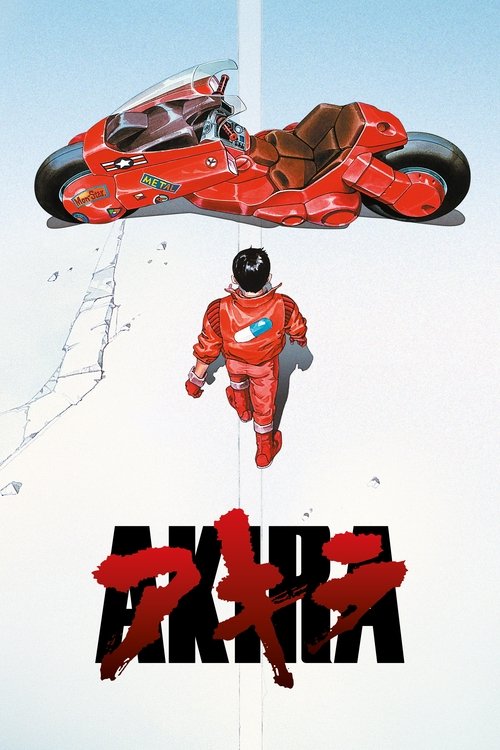
Kaneda's iconic red motorcycle symbolizes power, status, and freedom within the world of the biker gangs. It represents Kaneda's leadership and competence. For Tetsuo, the bike is an object of envy and a symbol of the power and respect he desperately craves but feels he cannot attain.
The film opens with dynamic scenes featuring the motorcycle, establishing its importance. Tetsuo's desire to ride and control the bike foreshadows his larger quest for power. After gaining his abilities, Tetsuo's theft and eventual destruction of the bike signifies his rejection of Kaneda's authority and his own ascent to a different kind of power.
Tetsuo's Red Cape
Tetsuo's makeshift red cape, which he dons after his powers fully manifest, is a symbol of his newfound arrogance and self-proclaimed godhood. It's a visual nod to classic superheroes, ironically twisted to represent his transformation into an antagonist. It highlights his childish and ego-driven perception of his immense power.
Tetsuo fashions the cape from a piece of red fabric and wears it during his climactic rampage through Neo-Tokyo. This imagery solidifies his break from his former identity and his embrace of a new, messianic, and ultimately destructive persona as he confronts the military and Kaneda.
The Olympic Stadium
The Olympic Stadium, under construction in Neo-Tokyo, symbolizes the city's attempts to project an image of recovery, progress, and a return to the world stage. However, its construction on the very site of Akira's cryogenic containment chamber represents the society's attempt to build a future by burying a dangerous and unresolved past. Its eventual destruction signifies that the past cannot be simply paved over and will inevitably erupt.
The stadium is the location of the film's final confrontation. Tetsuo is drawn to it in his search for Akira, and it becomes the epicenter of his catastrophic loss of control. The destruction of this symbol of a hopeful future by the very power it was meant to conceal underscores the film's theme of cyclical destruction.
The Espers (The Children)
The three espers—Takashi, Kiyoko, and Masaru—with their prematurely aged appearances and childlike bodies, symbolize the tragic consequences of humanity's attempts to control and weaponize a power it doesn't understand. They are both victims and powerful beings, representing a different path of accepting and managing great power, in contrast to Tetsuo's destructive approach.
The espers are central to the plot, from Takashi's initial encounter with Tetsuo to their role in the final confrontation. They act as a Greek chorus, offering cryptic prophecies and insights into the nature of Akira's power. Their intervention at the end is crucial in containing the catastrophe unleashed by Tetsuo.
Memorable Quotes
TETSUO!
— Kaneda
Context:
Kaneda shouts this numerous times throughout the film, often during their confrontations. Each utterance carries a different emotional weight, evolving from a simple call to a desperate plea and finally a battle cry.
Meaning:
This is less of a quote and more of a recurring, primal scream that encapsulates the central relationship and conflict of the film. It represents Kaneda's mixture of anger, frustration, and concern for his friend as Tetsuo slips further into madness and destruction. It underscores the personal tragedy at the heart of the epic-scale disaster.
That's Mister Kaneda to you, punk!
— Kaneda
Context:
Kaneda says this to Tetsuo during their confrontation at the Olympic stadium. Tetsuo has declared himself the new leader, and Kaneda's response is a classic comeback that defines their relationship dynamic.
Meaning:
This quote perfectly captures Kaneda's arrogant and defiant personality. It's a reassertion of his dominance and leadership in the face of Tetsuo's challenge, even after Tetsuo has become a being of immense power. It highlights the deeply personal and almost juvenile nature of their rivalry, which persists even as the fate of the city hangs in the balance.
I... am Tetsuo.
— Tetsuo Shima
Context:
This line is delivered in a voiceover as the film fades to black, after the cataclysmic explosion that destroys Neo-Tokyo. It's a haunting and ambiguous conclusion to his character arc.
Meaning:
This is the final line of the film, spoken after Tetsuo has been consumed by his own power and seemingly ceased to exist in a conventional sense. The line suggests a form of transcendence or rebirth. It can be interpreted as Tetsuo achieving a new state of consciousness, becoming the master of his own universe, or as a confirmation of his identity even after his physical form is gone.
Why do you always have to try and save me? I could handle it on my own... I won't always be on the receiving end, you hear that?!
— Tetsuo Shima
Context:
Tetsuo says this to Kaneda early in the film, after being rescued during a fight. It lays the groundwork for their fractured friendship and Tetsuo's subsequent actions once he gains his own power.
Meaning:
This quote reveals the core of Tetsuo's psychological turmoil and the source of his resentment towards Kaneda. It articulates his feeling of being patronized and his desperate desire for independence and strength. It's a poignant moment that foreshadows his dangerous pursuit of power as a means of proving his worth.
Philosophical Questions
Are humans capable of responsibly wielding absolute power?
The film explores this question primarily through Tetsuo. His transformation from a powerless youth to a being of immense ability demonstrates the corrupting influence of power. The film suggests that without emotional maturity and a strong moral framework, such power inevitably leads to destruction. The espers, who have lived with their powers for longer, represent a more controlled, albeit tragic, existence with such abilities. The very existence of Akira, a child who destroyed a city, serves as the ultimate cautionary example. The film seems to argue that humanity, in its current state of emotional and social development, is not ready for such power.
What is the relationship between technological/scientific progress and societal well-being?
"Akira" presents a cynical view of scientific advancement. In Neo-Tokyo, technology has created a visually impressive but socially bankrupt society. The government's secret research into psychic powers, a pinnacle of scientific inquiry in the film's world, is the direct cause of the city's destruction, twice. The film critiques the pursuit of knowledge and power without considering the ethical implications, suggesting that scientific progress devoid of humanity can lead to catastrophe. This reflects a deep-seated anxiety about technology, particularly in a post-nuclear context.
Is destruction a necessary precursor to creation and rebirth?
The film is built on a cycle of destruction and rebirth. Tokyo is destroyed to make way for Neo-Tokyo, which is then destroyed at the film's climax. The ending, where Tetsuo becomes a new universe, explicitly links a cataclysmic event to an act of creation. This reflects philosophical and religious ideas about the cleansing nature of destruction and the idea that old, corrupt systems must be torn down for new, better ones to emerge. However, the film leaves it ambiguous whether this new creation will be an improvement or simply the start of another cycle.
Alternative Interpretations
The ambiguous ending of "Akira" has led to various interpretations among critics and audiences. One common reading views Tetsuo's transformation and the creation of a new universe as a form of apotheosis or rebirth. In this interpretation, by transcending his physical and psychological limitations, Tetsuo achieves a god-like state, as suggested by his final line, "I am Tetsuo." This ending can be seen through a lens of Buddhist philosophy, with Tetsuo's journey representing a violent and chaotic path to a form of enlightenment, leaving the confines of the physical world to exist as pure energy or consciousness.
Another interpretation posits a more cyclical and pessimistic view. The destruction of Neo-Tokyo mirrors the original destruction of Tokyo, suggesting that humanity is trapped in a repeating cycle of creating and destroying, driven by its inability to manage the power it wields. Kaneda and the survivors are left not in a new paradise, but in the rubble of the old world, tasked with rebuilding once again. The question remains whether they have learned anything that will allow them to break this cycle.
A more metaphysical interpretation, influenced by Kei's dialogue about the origins of life and consciousness, suggests that the power of Akira is a fundamental force of the universe, akin to the Big Bang. Tetsuo, by tapping into this power, doesn't just gain telekinesis; he becomes a conduit for creation and destruction on a cosmic scale. His final act is not just an explosion but the birth of a new reality, making him a literal creator god.
Cultural Impact
"Akira" is a landmark film that had a profound and lasting impact on global popular culture. Upon its release, it was instrumental in sparking the wave of interest in anime in the Western world during the late 1980s and 1990s. Its mature themes, complex narrative, and stunningly detailed animation demonstrated to a global audience that animation was not just for children. The film shattered preconceived notions of the medium and paved the way for other adult-oriented anime like "Ghost in the Shell" to find international success.
Its influence on cinema is undeniable. The visual audacity and kinetic energy of "Akira" have inspired a generation of filmmakers, including the Wachowskis ("The Matrix"), Rian Johnson ("Looper"), and Christopher Nolan ("Inception"). The film's cyberpunk aesthetic, depicting a dystopian, neon-lit metropolis, has become a visual shorthand for the genre and can be seen in numerous films, television shows, and video games that followed. The iconic "Kaneda bike slide" has been homaged and parodied countless times in various media, cementing its place in the pop culture lexicon.
Critically, "Akira" was lauded for its technical achievements and ambitious storytelling, though some found its plot convoluted. It has since been recognized as a masterpiece of the science fiction and animation genres and is frequently cited as one of the greatest animated films ever made. Its exploration of themes like technological singularity, post-humanism, and social collapse continues to resonate with audiences and creators, making "Akira" a timeless and perpetually relevant work of art.
Audience Reception
Audience reception for "Akira" has been overwhelmingly positive over the years, cementing its status as a cult classic and a masterpiece of animation. Viewers consistently praise the film's stunning and meticulously detailed hand-drawn animation, which is often cited as a high watermark for the medium that still holds up decades later. The fluid action sequences, particularly the iconic motorcycle chases, and the epic scale of Neo-Tokyo are frequently highlighted as visual triumphs.
The main point of criticism, especially for first-time viewers, is the film's dense and often convoluted plot. Many find the narrative difficult to follow, particularly the metaphysical aspects of the ending, which can feel abrupt and confusing without the context of the much larger manga series. Despite this, many viewers find that the film's thematic depth and sheer visual spectacle reward multiple viewings, with new details and layers of meaning emerging each time. The film's mature themes, graphic violence, and complex characters are often lauded for pushing the boundaries of what animation could achieve, leaving a lasting impression on audiences worldwide.
Interesting Facts
- The film was one of the most expensive animated features of its time, with a budget of approximately ¥1.1 billion (around $9 million USD in 1988).
- To achieve a high level of detail and fluidity, the film was animated at 24 frames per second and used over 160,000 cels of animation.
- In a departure from standard Japanese animation production at the time, the dialogue for "Akira" was pre-recorded before the animation was completed, allowing for more natural lip-syncing.
- The film's intricate color palette consisted of 327 colors, 50 of which were created specifically for the movie, largely to accommodate the numerous and detailed night scenes.
- The film's director, Katsuhiro Otomo, also created the original manga. However, the film was released in 1988, two years before the manga was completed in 1990, resulting in a significantly different storyline and ending.
- Steven Spielberg and George Lucas reportedly turned down the opportunity to bring "Akira" to American audiences, deeming it unmarketable in the West.
- The city of Neo-Tokyo was depicted as preparing to host the 2020 Olympic Games, a prescient detail as Tokyo was later chosen to host the real-life 2020 Olympics.
- The names of several characters are homages to Mitsuteru Yokoyama's classic manga "Tetsujin 28-go" (known as "Gigantor" in the US).
Easter Eggs
A hidden message from a frustrated animator is visible on a piece of machinery.
In the scene where the 25th Esper's prophecy is being discussed, a caution label on a machine contains text in Romanized Japanese that translates to: "Why do I have to even draw this part! Give me a break! Geez." This humorous, hidden complaint was not widely noticed for decades after the film's release.
A character in a riot scene wears a T-shirt that says 'Young Magazine'.
This is a nod to 'Young Magazine,' the bi-monthly manga anthology where Katsuhiro Otomo's original "Akira" manga was serialized.
Logos of famous rock bands appear on a jukebox.
In a scene where Kaneda is at a jukebox, the logos for the rock bands Cream, Led Zeppelin, and The Doors can be seen, reflecting the film's Western cultural influences.
Computer sound effects are borrowed from the film 'Alien'.
The sound effects used for the computer during Tetsuo's medical scan are the same as those from the MU-TH-UR 6000 computer in Ridley Scott's 1979 film "Alien," a subtle tribute to another science fiction classic.
⚠️ Spoiler Analysis
Click to reveal detailed analysis with spoilers
Frequently Asked Questions
Explore More About This Movie
Dive deeper into specific aspects of the movie with our detailed analysis pages
Comments (0)
No comments yet. Be the first to share your thoughts!