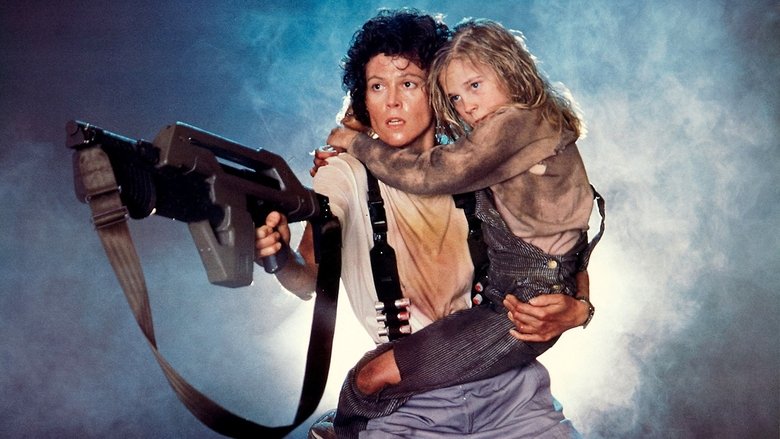
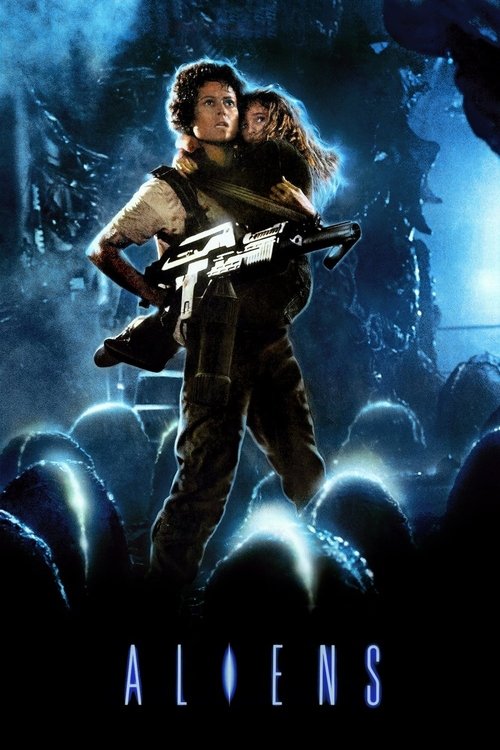
Aliens
A pulse-pounding symphony of sci-fi action and maternal terror, where the cold vacuum of space echoes with the screams of both humans and their monstrous, acid-blooded counterparts.
Aliens
Aliens

"This time it's war."

18 July 1986 United States of America 137 min ⭐ 8.0 (10,366)
Director: James Cameron
Cast: Sigourney Weaver, Carrie Henn, Michael Biehn, Paul Reiser, Lance Henriksen
Action Thriller Science Fiction
The Ferocity of Motherhood Critique of Corporate Greed The Vietnam War Allegory Humanity vs. The 'Other'
Budget: $18,500,000
Box Office: $183,316,455

Aliens - Ending Explained

⚠️ Spoiler Analysis

The central twist of Aliens is the revelation of the sheer scale of the Xenomorph infestation and the true, nefarious motives of Carter Burke. Initially, the mission is presented as an investigation into a loss of communication. The marines, and the audience, are unprepared for the discovery that all 158 colonists on LV-426 have been cocooned to serve as hosts for a massive alien hive, ruled by a colossal Alien Queen. This transforms the mission from a potential rescue to a desperate fight for survival against an army of aliens.

The film's most significant betrayal comes from Carter Burke. He is unmasked as a villain who deliberately sent the colonists to investigate the derelict ship Ripley had warned them about, hoping to profit from any resulting alien specimens. His villainy escalates when he attempts to smuggle facehugger specimens back to Earth by impregnating Ripley and Newt while they sleep. He disables Ripley's camera feed and releases the facehuggers in the medlab with them, a plot twist that fully exposes the depths of his corporate-driven depravity. Burke ultimately meets his end when he is cornered and presumably killed by a Xenomorph after the power is cut. A deleted scene, however, shows Ripley finding him cocooned in the hive, where she hands him a grenade to end his own life before a chestburster can emerge.

The film's ending features another major surprise. After Ripley heroically rescues Newt and seemingly destroys the alien hive and the Queen in a massive thermonuclear explosion, they escape to the Sulaco. However, the Queen is revealed to have stowed away on their dropship. This leads to a final, climactic battle aboard the Sulaco where Bishop is torn in half and Ripley, using the power loader, finally expels the Queen into the vacuum of space. The film concludes with the apparent survivors—Ripley, Newt, an injured Hicks, and the bisected but still-functional Bishop—entering cryosleep, creating a powerful image of a newly formed family finding peace. This peaceful ending is tragically and controversially undone in the opening moments of the sequel, Alien 3.

Alternative Interpretations

One of the most debated aspects of Aliens revolves around the theatrical cut versus the 1991 'Special Edition'. The Special Edition includes 17 minutes of restored footage, which significantly alters the film's pacing and character motivations. Key additions include scenes showing the Hadley's Hope colony before the infestation, including the moment Newt's family discovers the derelict alien ship, and a scene where Ripley learns her daughter died while she was in stasis. Some critics argue the Special Edition is the definitive version, adding emotional weight to Ripley's bond with Newt and providing a richer backstory. Others prefer the theatrical cut, contending that showing the colony beforehand diminishes the mystery and suspense of the marines' arrival.

The ending has also been subject to interpretation, especially in light of the subsequent film, Alien 3. Cameron's ending provides a sense of hopeful closure, with Ripley, Newt, Hicks, and Bishop forming a surrogate family and entering hypersleep for a peaceful journey home. However, a subtle sound effect of an alien egg opening can be heard at the very end of the closing credits. Some viewers interpret this as a deliberate foreshadowing by Cameron that the threat was not over, hinting at the presence of an egg on the Sulaco. This interpretation aligns with the controversial opening of Alien 3, although Cameron himself has expressed his disapproval of how the third film immediately killed off the surviving characters from his movie.