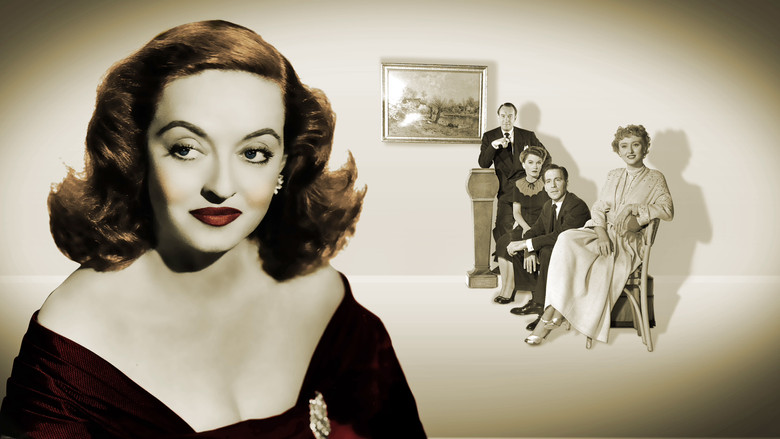
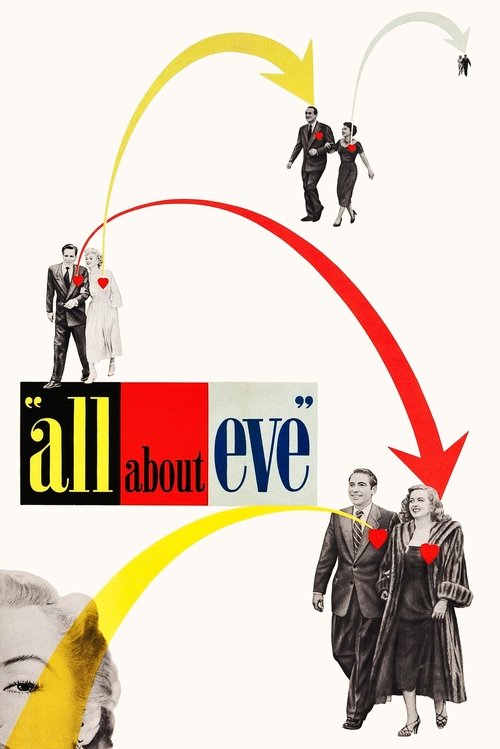
The central twist of "All About Eve" is the gradual revelation of Eve Harrington's true character. She is not the sweet, star-struck war widow she claims to be, but a calculating and ruthless liar named Gertrude Slescynski who was paid to leave her hometown after an affair with her married boss. This is revealed late in the film by Addison DeWitt, who uses this knowledge to blackmail and control her, stating that she now "belongs" to him.
Eve's plan unfolds methodically. She first becomes Margo's understudy without her knowledge. Then, with the unwitting help of Karen Richards, who arranges for Margo to miss a performance, Eve takes the stage to triumphant reviews. Her final major betrayals involve attempting to seduce Margo's fiancé, Bill, and blackmailing Karen to force Lloyd Richards to cast her in his new play, a role intended for Margo. However, Margo, in a moment of clarity about her own life's priorities, voluntarily gives up the part, unknowingly thwarting Eve's blackmail attempt but still handing her the role she covets.
The film's ending reveals that Eve's triumph is hollow. She wins the coveted Sarah Siddons award but is utterly alone, having alienated everyone who once supported her. The final scene provides the ultimate cynical twist: upon returning to her hotel room, Eve discovers a young, aspiring actress named Phoebe who has sneaked in. Phoebe professes her adoration for Eve, mirroring Eve's initial behavior toward Margo. The film closes with Phoebe holding Eve's award, wearing her cloak, and bowing to her own infinite reflections in a mirror, signifying that the vicious cycle of ambition and betrayal is poised to begin all over again, with Eve now in the role of the aging star to be usurped.