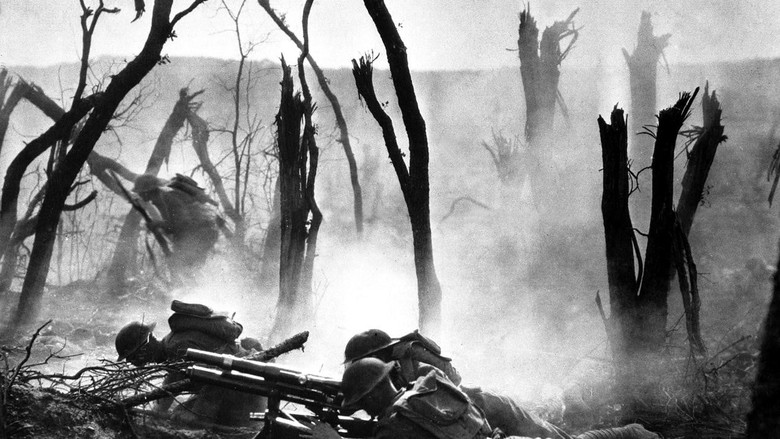
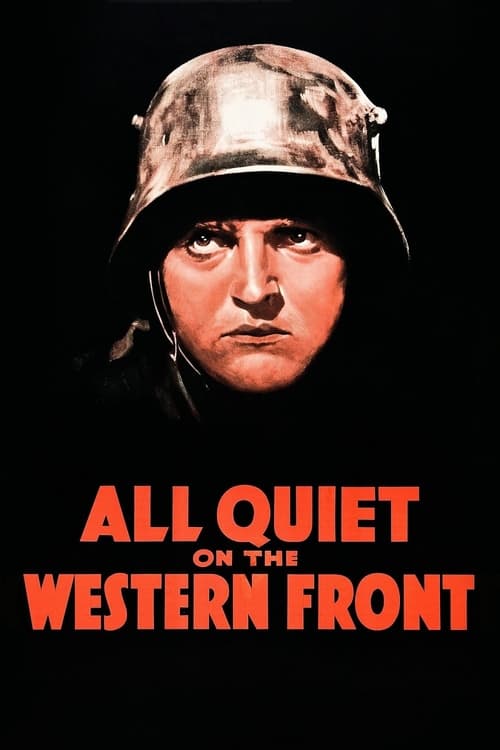
"They left for war as boys never to return as men."
All Quiet on the Western Front - Symbolism & Philosophy
Symbols & Motifs
Kemmerich's Boots
The cheapness and replaceability of human life versus the durability of material goods.
The fine leather boots are passed from the dying Kemmerich to Müller, and eventually to Paul. They survive while the men do not, symbolizing the pragmatic, unsentimental nature of survival at the front.
The Butterfly
The fragility of beauty, innocence, and life amidst the industrial destruction of war.
In the film's iconic final scene, Paul reaches out from the trench to touch a butterfly. This moment of reclaiming his gentle nature leads directly to his death by a sniper's bullet.
The School Door
The threshold between childhood innocence and the point of no return.
Early in the film, the boys march out of the school gates, looking back one last time. It marks the definitive end of their youth and the beginning of their doom.
Philosophical Questions
Does war destroy a generation even if they survive the shells?
The film explores the concept of the "Lost Generation." It asks whether young men who learn to kill before they learn to live can ever truly return to society. Paul's alienation when he visits home suggests that the psychological mutilation is permanent, rendering survival a different kind of death.
Is individual morality compatible with the machinery of war?
This is explored in the scene where Paul stabs the French soldier and then tries to save him, weeping and asking for forgiveness. The film questions how a moral individual can exist in a system that demands murder, showing that humanity must be suppressed to function as a soldier.
Core Meaning
The Lost Generation and the Betrayal of Youth. Lewis Milestone's adaptation of Remarque's novel is a searing indictment of the "old generation" who sent the young to die for hollow slogans. The film argues that war is not an adventure or a test of character, but a slaughterhouse that dehumanizes soldiers and renders their lives statistically insignificant. Its core message is the tragic futility of a conflict that wipes out an entire generation of men, leaving the survivors "weary, broken, burnt out, rootless, and without hope."