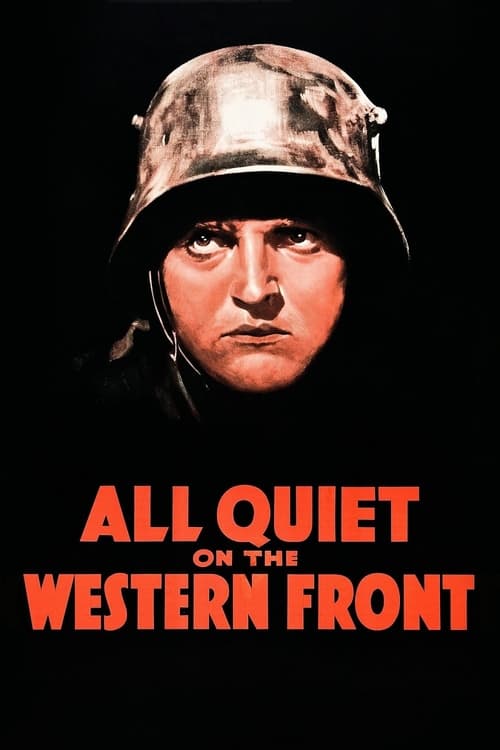
All Quiet on the Western Front
"They left for war as boys never to return as men."
Overview
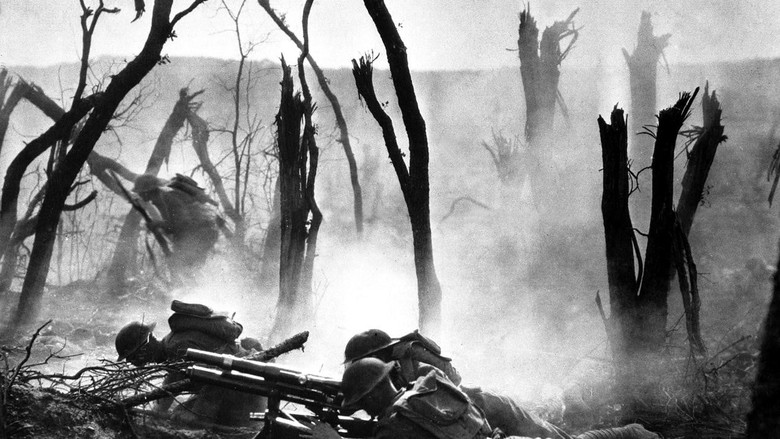
In 1914, urged on by their patriotic schoolteacher Kantorek, Paul Bäumer and his enthusiastic classmates enlist in the German army, dreaming of glory and heroism. Their romanticized visions are swiftly shattered during brutal training under the sadistic Corporal Himmelstoss and completely destroyed upon reaching the Western Front. There, amidst the filth, rats, and constant bombardment, they learn that the only thing that matters is survival.
As the war drags on, Paul watches his friends die one by one—some from horrific wounds, others from madness. He finds a father figure in the resourceful veteran Katczinsky, but even this bond cannot protect him from the psychological devastation of the conflict. Alienated from his family during leave and unable to reintegrate into society, Paul returns to the front, realizing he belongs only among his doomed comrades.
Core Meaning
The Lost Generation and the Betrayal of Youth. Lewis Milestone's adaptation of Remarque's novel is a searing indictment of the "old generation" who sent the young to die for hollow slogans. The film argues that war is not an adventure or a test of character, but a slaughterhouse that dehumanizes soldiers and renders their lives statistically insignificant. Its core message is the tragic futility of a conflict that wipes out an entire generation of men, leaving the survivors "weary, broken, burnt out, rootless, and without hope."
Thematic DNA
The Betrayal by the Older Generation
The film sharply contrasts the patriotic rhetoric of the older generation (represented by the teacher Kantorek) with the grim reality faced by the students. The elders speak of "Iron Youth" and duty, while the boys face gas, shells, and amputation. This theme highlights the disconnect between the decision-makers and those who pay the blood price.
The Loss of Innocence and Dehumanization
Paul and his friends start as innocent students but are rapidly transformed into hardened survivalists. The film depicts how the trauma of trench warfare strips away their empathy, social niceties, and connection to civilian life, effectively killing their spirits long before their bodies.
Comradeship as Survival
Amidst the horror, the only solace is the bond between soldiers. The relationship between Paul and the older Katczinsky illustrates that shared suffering creates a brotherhood deeper than family ties, serving as the only psychological anchor in a chaotic world.
The Futility and Randomness of Death
Death in the film is not heroic; it is sudden, ugly, and often random. Characters die from minor mistakes, bad luck, or for inches of land that are meaningless. The title itself underscores this theme—Paul's death is so militarily insignificant that the official report reads "All Quiet."
Character Analysis
Paul Bäumer
Lew Ayres
Motivation
Initially motivated by patriotism and peer pressure; later motivated solely by the instinct to survive and protect his comrades.
Character Arc
Starts as a sensitive, artistic student full of patriotic zeal. He hardens into a capable soldier but becomes progressively alienated from his past self and family. His journey ends in death, just as he momentarily reconnects with the beauty of the world.
Stanislaus 'Kat' Katczinsky
Louis Wolheim
Motivation
To survive the war and ensure his "boys" get enough food and stay alive.
Character Arc
A seasoned veteran who takes the new recruits under his wing. He remains a steady, resourceful presence until his tragic, accidental death by a stray piece of shrapnel while being carried to safety by Paul.
Professor Kantorek
Arnold Lucy
Motivation
To instill nationalist pride and duty in the youth, oblivious to the reality of his teachings.
Character Arc
He begins as the respected authority figure urging the boys to enlist. Later, he is drafted into the reserves and ends up under the command of his former students, exposed as a "wretched, little man" whose rhetoric holds no power in the trenches.
Symbols & Motifs
Kemmerich's Boots
The cheapness and replaceability of human life versus the durability of material goods.
The fine leather boots are passed from the dying Kemmerich to Müller, and eventually to Paul. They survive while the men do not, symbolizing the pragmatic, unsentimental nature of survival at the front.
The Butterfly
The fragility of beauty, innocence, and life amidst the industrial destruction of war.
In the film's iconic final scene, Paul reaches out from the trench to touch a butterfly. This moment of reclaiming his gentle nature leads directly to his death by a sniper's bullet.
The School Door
The threshold between childhood innocence and the point of no return.
Early in the film, the boys march out of the school gates, looking back one last time. It marks the definitive end of their youth and the beginning of their doom.
Memorable Quotes
We live in the trenches out there. We fight. We try not to be killed. Sometimes we are. That's all.
— Paul Bäumer
Context:
Paul returns to his old school while on leave and confronts the teacher who is still feeding the same lies to a new generation of students.
Meaning:
Paul rejects the Professor's request to speak of "heroism" to the new class, summarizing the grim, unheroic reality of their existence.
It is dirty and painful to die for your country. When it comes to dying for your country, it's better not to die at all.
— Paul Bäumer
Context:
Spoken during a moment of reflection, countering the patriotic slogans he was fed.
Meaning:
A direct deconstruction of the "Dulce et Decorum Est" myth. Paul realizes that the glory promised in classrooms is a lie when faced with the physical reality of death.
And our bodies are earth. And our thoughts are clay. And we sleep and eat with death.
— Paul Bäumer
Context:
Voiceover or internal monologue reflecting on the transformative nature of the front line experience.
Meaning:
A poetic expression of how the soldiers have merged with the landscape of the trenches, losing their human identity to become part of the mud and death.
Philosophical Questions
Does war destroy a generation even if they survive the shells?
The film explores the concept of the "Lost Generation." It asks whether young men who learn to kill before they learn to live can ever truly return to society. Paul's alienation when he visits home suggests that the psychological mutilation is permanent, rendering survival a different kind of death.
Is individual morality compatible with the machinery of war?
This is explored in the scene where Paul stabs the French soldier and then tries to save him, weeping and asking for forgiveness. The film questions how a moral individual can exist in a system that demands murder, showing that humanity must be suppressed to function as a soldier.
Alternative Interpretations
The Irony of the Title: The ending can be read in two ways. First, as a bitter irony where the death of the protagonist—a universe of experience and suffering to the viewer—is considered "quiet" and irrelevant to the military command. Second, it can be interpreted as a moment of final peace for Paul; the "quiet" is his release from the noise and horror of war, suggesting that death was the only escape left.
Cultural Impact
All Quiet on the Western Front is widely regarded as the definitive anti-war film. Released just over a decade after WWI, it shocked audiences with its refusal to glorify combat, influencing every war movie that followed, from Paths of Glory to Saving Private Ryan. Historically, it became a political flashpoint; the Nazi party's violent reaction to it in Germany foreshadowed their suppression of dissent. It remains a crucial historical document, preserved in the National Film Registry for its "culturally, historically, or aesthetically significant" depiction of the "Lost Generation."
Audience Reception
Upon its 1930 release, the film was a massive critical and commercial success in the US, praised for its technical innovation and emotional raw power. Variety called it a "harrowing, gruesome, morbid tale of war." However, in Germany and other European nations, it was extremely polarizing. Pacifists and veterans praised its honesty, while nationalists and Nazis condemned it as "judenfilm" and defeatist propaganda. Modern audiences continue to hold it in the highest regard, often ranking it superior to subsequent remakes due to its lack of sentimentality.
Interesting Facts
- The famous final shot of the hand reaching for the butterfly does not feature actor Lew Ayres, but the director Lewis Milestone himself. The scene was shot during editing when Ayres was unavailable.
- The film uses almost no musical score, a deliberate choice by Milestone to enhance the stark realism. Music is only heard during the opening and closing credits and marching scenes.
- Nazi agitators, led by Joseph Goebbels, disrupted the film's premiere in Berlin by releasing rats into the theater and setting off stink bombs to drive audiences out.
- Approximately 2,000 extras were used for the battle scenes, many of whom were actual German veterans of World War I living in Los Angeles.
- Future legendary director Fred Zinnemann (High Noon) worked as an extra and was reportedly fired for 'acting' too much during a scene.
- It was the first film to win both the Academy Award for Best Picture and Best Director.
- The film was banned in countries like Germany, Italy, and Poland for decades due to its 'anti-war' and perceived anti-nationalist message.
- The Greek phrase written on the blackboard in the classroom scene is the beginning of 'The Odyssey', referencing a long journey home, which is ironic as most boys never return.
Easter Eggs
Blackboard Text
The blackboard in Kantorek's classroom features the opening line of Homer's Odyssey in Greek ('Tell me, O Muse, of the man of many devices...'). This ironically foreshadows a long, perilous journey from which many will not return, contrasting the epic hero Odysseus with the doomed schoolboys.
Milestone's Hand
The hand reaching for the butterfly in the final shot belongs to director Lewis Milestone, not the main actor. This unintentional 'cameo' became one of the most famous shots in cinema history.
⚠️ Spoiler Analysis
Click to reveal detailed analysis with spoilers
Frequently Asked Questions
Explore More About This Movie
Dive deeper into specific aspects of the movie with our detailed analysis pages
Comments (0)
No comments yet. Be the first to share your thoughts!