"The most devastating detective story of this century."
All the President's Men - Symbolism & Philosophy
Symbols & Motifs
The Washington Post Newsroom
It symbolizes truth, transparency, and clarity. The harsh, unrelenting illumination represents the probing light of journalism attempting to banish the shadows of political deceit.
The newsroom is the only fully and brightly lit set in the entire film. Cinematographer Gordon Willis intentionally over-lit the space to create a stark contrast with the dark, shadowy world outside where the conspiracy hides.
The Underground Parking Garage
The garage represents the murky, hidden depths of the government, moral ambiguity, and the terrifying danger of the secrets being kept from the American public.
This is the recurring meeting place between Woodward and his anonymous source, Deep Throat. It is shrouded in pitch-black shadows, symbolizing the danger and obscurity of the information being traded.
Typewriters and Teletype Machines
They are the weapons of the journalist. The mechanical clatter symbolizes the rhythmic, unstoppable march of the truth.
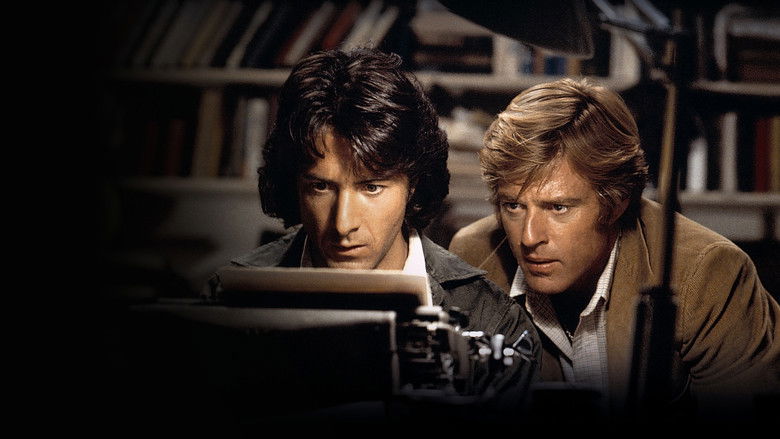
The film opens with an extreme close-up of a typewriter striking a page, sounding almost like a gunshot. It ends with a teletype machine punching out the final headlines of Nixon's downfall, reinforcing that the written word has conquered the corruption.
The Library of Congress
It represents the overwhelming scale of the government and the seemingly impossible, needle-in-a-haystack nature of their investigation.
In an iconic overhead shot, the camera pulls back slowly to the ceiling of the Library's massive reading room, reducing Woodward and Bernstein to tiny, insignificant specks surrounded by mountains of data.
Philosophical Questions
Do the ends justify the means in the pursuit of truth?
The film constantly places Woodward and Bernstein in morally gray areas. They manipulate sources, show up uninvited at people's homes, push frightened individuals to break confidentiality, and occasionally misrepresent themselves. The narrative forces the audience to ask whether these ethical breaches are acceptable when the ultimate goal is exposing a criminal presidency.
Is truth an inherent force, or a manufactured product of labor?
Rather than portraying truth as something that simply 'comes to light,' the film suggests that truth is deeply obscured and must be violently excavated. It explores the philosophy that objective reality can only be established through obsessive, exhausting, and repetitive human labor.
Can institutions ever effectively police themselves?
The film highlights a massive failure of the justice system, the FBI, and the government to address their own corruption. It raises the philosophical question of whether external oversight—in this case, the Fourth Estate—is the only mechanism capable of holding absolute power accountable.
Core Meaning
The core meaning of All the President's Men lies in its vindication of the free press and the persistence of the individual in the face of overwhelming, corrupted institutional power. Director Alan J. Pakula sought to demonstrate that truth and democracy are incredibly fragile, requiring constant, exhaustive vigilance to maintain. The film posits that monumental, historical change is rarely achieved through glamorous heroism, but rather through meticulous attention to detail, relentless questioning, and the moral courage of ordinary people doing their jobs. It serves as a stark warning about the hubris of power and a timeless testament to the necessity of investigative journalism.