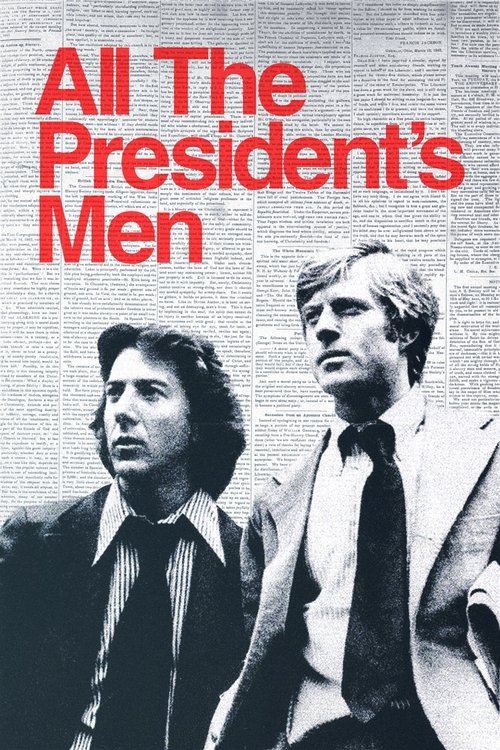
All the President's Men
"The most devastating detective story of this century."
Overview
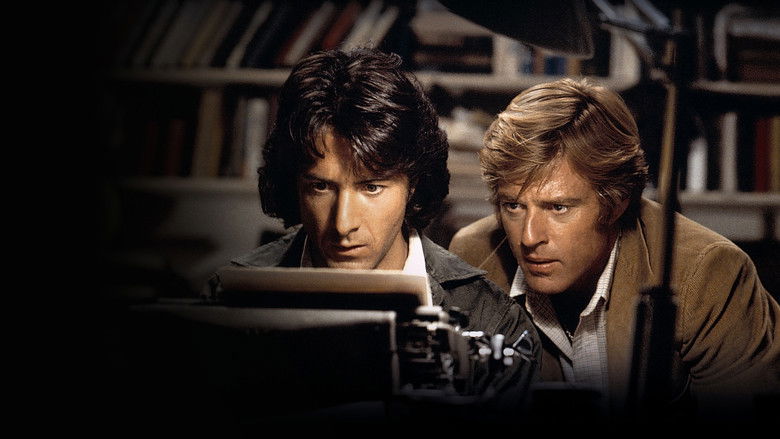
Set against the backdrop of the early 1970s, All the President's Men meticulously chronicles the true story of Washington Post reporters Bob Woodward and Carl Bernstein as they investigate the 1972 Watergate burglary. What begins as a minor local break-in at the Democratic National Committee headquarters slowly unravels into a massive, labyrinthine political conspiracy reaching the highest levels of the United States government. Without relying on car chases or shootouts, the narrative extracts profound suspense from the grueling, everyday legwork of investigative journalism.
As Woodward and Bernstein dig deeper, they face immense institutional stonewalling, terrified sources, and escalating paranoia. Guided by the cryptic warnings of an anonymous government informant known only as Deep Throat, the two vastly different reporters must learn to overcome their initial rivalry. They pool their resources, working tirelessly through the night, knocking on doors, and piecing together a complex puzzle of secret slush funds and political sabotage.
Director Alan J. Pakula masterfully crafts a procedural thriller that is as much about the tedious, unglamorous process of truth-seeking as it is about the scandal itself. The film stands as a monumental tribute to the First Amendment and a defining cinematic representation of the power of a free press to hold the ultimate authority accountable.
Core Meaning
The core meaning of All the President's Men lies in its vindication of the free press and the persistence of the individual in the face of overwhelming, corrupted institutional power. Director Alan J. Pakula sought to demonstrate that truth and democracy are incredibly fragile, requiring constant, exhaustive vigilance to maintain. The film posits that monumental, historical change is rarely achieved through glamorous heroism, but rather through meticulous attention to detail, relentless questioning, and the moral courage of ordinary people doing their jobs. It serves as a stark warning about the hubris of power and a timeless testament to the necessity of investigative journalism.
Thematic DNA
Freedom of the Press and Journalistic Integrity
The film serves as an ultimate defense of the First Amendment. Through the grueling editorial meetings led by Ben Bradlee and the ethical debates between Woodward and Bernstein, the narrative explores the immense responsibility of the press. The reporters are constantly weighing the public's right to know against the dangers of relying on anonymous sources and destroying reputations.
Paranoia and Secrecy
Reflecting the cynical zeitgeist of the 1970s, the film drenches its characters in an atmosphere of omnipresent surveillance and mistrust. This is visually communicated through darkened parking garages, bugged apartments, and the characters' constant need to look over their shoulders. Trust becomes the rarest commodity in Washington.
Institutional Corruption
The film dissects how power insulates itself. The Committee for the Re-Election of the President (CREEP) operates as a shadow entity, utilizing massive slush funds to sabotage political opponents. The theme highlights how corruption can become normalized within a bureaucracy when individuals prioritize loyalty over the law.
The Power of Diligence and Process
Unlike typical thrillers, the heroism here is found in the mundane. The theme is revealed through endless phone calls, typing, reviewing library slips, and knocking on doors. The film celebrates the unglamorous, blue-collar work ethic required to piece together the truth, proving that persistence can topple a presidency.
Character Analysis
Bob Woodward
Robert Redford
Motivation
To uncover the truth behind the burglary and establish himself as a serious, capable journalist at a major national newspaper.
Character Arc
Woodward begins as a somewhat naive, polite rookie reporter who assumes people in power will tell the truth. Throughout the investigation, he sheds his innocence, adopting a profound, necessary paranoia and learning to navigate the dangerous, shadowy world of political espionage.
Carl Bernstein
Dustin Hoffman
Motivation
To beat the competition to the ultimate scoop, driven by a deep-seated distrust of authority and a hunger for a career-defining story.
Character Arc
Bernstein starts as an aggressive, disorganized, and slightly arrogant veteran of the newsroom. His arc involves learning the value of collaboration, channeling his chaotic energy into a focused, meticulous partnership with Woodward.
Ben Bradlee
Jason Robards
Motivation
To protect the integrity of the Washington Post while relentlessly pursuing the truth, ensuring the story is airtight before publication.
Character Arc
Initially skeptical of placing a national story in the hands of two metro reporters, Bradlee transitions into their fiercest protector. He moves from demanding harder facts to risking the reputation of his entire paper to defend their findings against the White House.
Deep Throat
Hal Holbrook
Motivation
To subtly guide the press toward uncovering massive corruption within the executive branch, driven by his own institutional loyalties and moral outrage.
Character Arc
Remaining static in his mystery, Deep Throat acts as a narrative guide. He moves from offering vague confirmations to delivering terrifying, explicit warnings about the scale of the conspiracy and the physical danger the reporters face.
Symbols & Motifs
The Washington Post Newsroom
It symbolizes truth, transparency, and clarity. The harsh, unrelenting illumination represents the probing light of journalism attempting to banish the shadows of political deceit.
The newsroom is the only fully and brightly lit set in the entire film. Cinematographer Gordon Willis intentionally over-lit the space to create a stark contrast with the dark, shadowy world outside where the conspiracy hides.
The Underground Parking Garage
The garage represents the murky, hidden depths of the government, moral ambiguity, and the terrifying danger of the secrets being kept from the American public.
This is the recurring meeting place between Woodward and his anonymous source, Deep Throat. It is shrouded in pitch-black shadows, symbolizing the danger and obscurity of the information being traded.
Typewriters and Teletype Machines
They are the weapons of the journalist. The mechanical clatter symbolizes the rhythmic, unstoppable march of the truth.
The film opens with an extreme close-up of a typewriter striking a page, sounding almost like a gunshot. It ends with a teletype machine punching out the final headlines of Nixon's downfall, reinforcing that the written word has conquered the corruption.
The Library of Congress
It represents the overwhelming scale of the government and the seemingly impossible, needle-in-a-haystack nature of their investigation.
In an iconic overhead shot, the camera pulls back slowly to the ceiling of the Library's massive reading room, reducing Woodward and Bernstein to tiny, insignificant specks surrounded by mountains of data.
Memorable Quotes
Follow the money.
— Deep Throat
Context:
Spoken during a tense, shadowy meeting in the underground parking garage, Deep Throat refuses to give Woodward direct answers, instead giving him this cryptic but crucial directive to track the CREEP slush fund.
Meaning:
This iconic line encapsulates the fundamental strategy of investigative journalism: complex political conspiracies can usually be unraveled by tracing the financial trails of corruption.
Nothing's riding on this except the, uh, first amendment to the Constitution, freedom of the press, and maybe the future of the country.
— Ben Bradlee
Context:
Bradlee says this to Woodward and Bernstein late at night on his front lawn, warning them of the dire consequences if their story is wrong, while ultimately giving them his full support to proceed.
Meaning:
A dark, sarcastic, but entirely accurate summary of the immense stakes of their reporting. It underlines the sheer weight of responsibility the journalists carry.
I don't mind what you did; I mind the way you did it.
— Bob Woodward
Context:
Woodward confronts Bernstein after discovering that Bernstein took his notes from his desk and rewrote his story without asking for permission.
Meaning:
This line establishes Woodward's moral boundaries and demands professional respect, forming the foundation of the reporters' eventual partnership.
These are not very bright guys, and things got out of hand.
— Deep Throat
Context:
Deep Throat explains the origins of the Watergate break-in and the subsequent massive cover-up during one of his clandestine meetings with Woodward.
Meaning:
It demystifies the aura of the government, portraying the conspirators not as evil geniuses, but as arrogant, incompetent men corrupted by power.
Philosophical Questions
Do the ends justify the means in the pursuit of truth?
The film constantly places Woodward and Bernstein in morally gray areas. They manipulate sources, show up uninvited at people's homes, push frightened individuals to break confidentiality, and occasionally misrepresent themselves. The narrative forces the audience to ask whether these ethical breaches are acceptable when the ultimate goal is exposing a criminal presidency.
Is truth an inherent force, or a manufactured product of labor?
Rather than portraying truth as something that simply 'comes to light,' the film suggests that truth is deeply obscured and must be violently excavated. It explores the philosophy that objective reality can only be established through obsessive, exhausting, and repetitive human labor.
Can institutions ever effectively police themselves?
The film highlights a massive failure of the justice system, the FBI, and the government to address their own corruption. It raises the philosophical question of whether external oversight—in this case, the Fourth Estate—is the only mechanism capable of holding absolute power accountable.
Alternative Interpretations
While generally viewed as a heroic tale of a free press saving democracy, an alternative interpretation focuses on the systemic failures and complicity of institutions. Some critics and historians argue that the film inadvertently highlights how the press was used as a tool for institutional infighting. In this reading, Deep Throat (later revealed to be FBI Associate Director Mark Felt) is not a noble defender of truth, but a disgruntled bureaucrat settling scores after being passed over for promotion, manipulating eager young reporters to execute a political hit against the Nixon administration.
Another analytical perspective, often discussed by media scholars, is a feminist critique of the film's narrative structure. Throughout the movie, women—such as the bookkeeper Judy Hoback—hold the crucial pieces of the puzzle and take immense personal risks to share them. However, their contributions are continually mined by the male protagonists who ultimately claim the glory and the bylines. In this interpretation, the film is a fascinating, if unintentional, document of 1970s workplace gender dynamics, where women possess the truth but lack the institutional power to expose it without male intermediaries.
Cultural Impact
All the President's Men is widely considered the greatest film about journalism ever made. Released in 1976, just two years after Richard Nixon's resignation, the film captured the immediate post-Watergate zeitgeist of widespread institutional distrust. It successfully transformed a dense, confusing political scandal into a gripping procedural, making the painstaking process of reporting cinematic. The film served as the final installment of Alan J. Pakula's 'Paranoia Trilogy' (alongside Klute and The Parallax View), cementing a paranoid, shadowy visual language that influenced countless political thrillers for decades to come.
The cultural influence of the film on the journalism profession was staggering. In the years following the film's release, universities across the United States saw record enrollments in their journalism programs, a phenomenon often referred to as the 'Woodstein effect.' The movie romanticized the image of the investigative reporter as a vital defender of democracy, a blue-collar intellectual who fights the establishment with nothing but a notepad, a telephone, and relentless determination. It established the archetype of the newspaper movie, heavily influencing modern spiritual successors like Spotlight and The Post.
Furthermore, the film permanently injected the phrase 'Follow the money' into the global political lexicon. Even though it was an invention of screenwriter William Goldman, the line has become a universal maxim for investigators, politicians, and the public when attempting to unravel corruption. In 2010, the Library of Congress selected the film for preservation in the United States National Film Registry, officially recognizing it as 'culturally, historically, or aesthetically significant.'
Audience Reception
Upon its release, All the President's Men received near-universal acclaim from both audiences and critics. Viewers praised the film for achieving the impossible: turning a story with a universally known ending, comprised mostly of men talking on telephones and typing, into a riveting, edge-of-your-seat thriller. The dynamic chemistry between Robert Redford and Dustin Hoffman was highly celebrated, as was Jason Robards' authoritative, Oscar-winning performance as Ben Bradlee. Critics marveled at Alan J. Pakula's tight direction and William Goldman's sharp, intelligent screenplay, which refused to dumb down the complex web of names and financial trails for the audience.
The minor criticisms leveled at the film usually focused on its dense narrative. Some audience members found the sheer volume of names, dates, and government acronyms difficult to follow. Additionally, some political conservatives at the time felt the film was overly partisan, capitalizing on a fresh national trauma. However, the overarching verdict was one of cinematic triumph. The film was nominated for eight Academy Awards and won four, including Best Adapted Screenplay and Best Supporting Actor, cementing its status as a definitive American classic.
Interesting Facts
- The iconic phrase 'Follow the money' was never spoken by the real Deep Throat, nor does it appear in Woodward and Bernstein's book. It was invented by screenwriter William Goldman to simplify the complex financial narrative.
- The Washington Post newsroom was meticulously recreated on two soundstages in Burbank, California at a cost of $450,000. They even shipped nearly 200 boxes of actual trash and paperwork from the real Post offices to scatter on the desks.
- Robert Redford and Dustin Hoffman deliberately memorized each other's lines so they could constantly interrupt and talk over one another, creating an authentic, overlapping conversational style that unsettled the supporting cast.
- Frank Wills, the real-life security guard who discovered the tape on the door at the Watergate complex, was hired to play himself in the opening sequence of the film.
- Director Alan J. Pakula decided to keep a take where Robert Redford genuinely lost his place and fumbled his words during a phone call, believing the mistake added documentary-style realism to the scene.
- Dustin Hoffman wore Carl Bernstein's actual wristwatch during filming. Bernstein had invited Hoffman to a Passover dinner and gave him the watch to help him get into character.
- The film's cinematographer, Gordon Willis, was known as the 'Prince of Darkness.' He pushed film stock to its limits to create the crushing blacks of the parking garage scenes, forcing the film lab to alter their development processes.
Easter Eggs
Frank Wills plays himself
The security guard who is shown finding the taped lock in the film's opening sequence is Frank Wills, the actual man who discovered the real-life Watergate break-in, adding a profound layer of historical authenticity.
Nixon's Inauguration on the TV
During the final scene in the newsroom, Woodward and Bernstein are typing furiously while a television in the background broadcasts Richard Nixon's second inauguration. It acts as a bitter, ironic easter egg, contrasting the temporary victory of the corrupt politician with the relentless truth-seeking that will soon destroy him.
⚠️ Spoiler Analysis
Click to reveal detailed analysis with spoilers
Frequently Asked Questions
Explore More About This Movie
Dive deeper into specific aspects of the movie with our detailed analysis pages
Comments (0)
No comments yet. Be the first to share your thoughts!