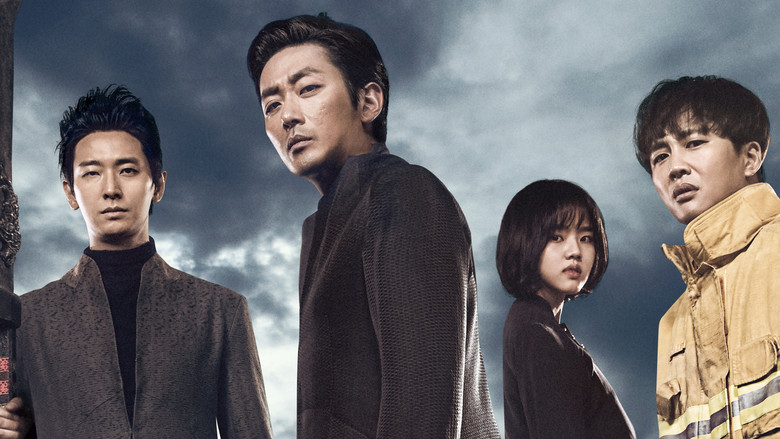

신과함께-죄와 벌
"Fate continues even after death."
Along with the Gods: The Two Worlds - Symbolism & Philosophy
Symbols & Motifs
The Seven Hells
Each of the seven hells symbolizes a different moral failing according to Buddhist beliefs: murder, indolence, deceit, injustice, betrayal, violence, and filial piety. They represent the internal and external consequences of one's earthly actions and serve as a structured framework for judging a soul's worthiness for reincarnation.
Ja-hong must travel through each of these hells, which are depicted as vast and treacherous landscapes with unique punishments. The order of the trials is determined by the severity of his sins, and he must be acquitted in each one to proceed to the next.
The Vengeful Spirit
The vengeful spirit, who is revealed to be Ja-hong's brother, Soo-hong, symbolizes unresolved trauma and injustice in the living world. His rage disrupts the balance between the two worlds, demonstrating that the grievances of the living can directly impact the fate of the dead.
Soo-hong's transformation into a vengeful spirit is a major subplot. His actions on Earth cause chaos in the afterlife, complicating Ja-hong's trials and forcing Gang-rim to intervene in the mortal realm to uncover the truth behind Soo-hong's death.
Mother's Dream
The dream sequence where Soo-hong communicates with his mother symbolizes the ultimate form of forgiveness and understanding that transcends the boundaries of life and death. It is in this spiritual space that the family's deepest pains are revealed and healing can begin.
In the film's emotional climax, Gang-rim facilitates a meeting between Soo-hong's spirit and their unconscious mother in her dream. Here, the truth about Ja-hong's past actions and his mother's unconditional love is revealed, leading to the forgiveness that ultimately allows Ja-hong to be reincarnated.
Philosophical Questions
What is the true measure of a 'good life'?
The film constantly challenges the definition of a good life. Is it defined by heroic, public acts of sacrifice, like Ja-hong's job as a firefighter? Or is it measured by the private, often painful, sacrifices made for one's family? The trials reveal that even a 'paragon' has committed sins, suggesting that a perfect, blameless life is impossible. The film posits that the measure of a life lies not in its flawlessness, but in the love that motivates one's actions and the willingness to atone for one's mistakes.
Does divine judgment matter more than human forgiveness?
"Along with the Gods" powerfully argues that human forgiveness, particularly from family, holds more weight than the judgment of deities. The entire intricate system of the afterlife, with its powerful gods and strict laws, is ultimately superseded by a mother's forgiveness for her son. This raises the question of whether true absolution is an external verdict or an internal peace achieved through reconciliation with loved ones.
Can actions taken for a good cause be considered sinful?
The film delves into moral ambiguity. Ja-hong tells lies, but they are to comfort the daughter of a deceased colleague. He works obsessively for money, but it is to support his family. The trials force a nuanced look at his actions, separating intent from outcome. This explores the complex idea that sins are not always born of malice, and that context and motivation are crucial in judging a person's character.
Core Meaning
The core meaning of "Along with the Gods: The Two Worlds" revolves around the profound themes of redemption, forgiveness, and the significance of human connection. The film posits that a person's life is not judged solely by their grand heroic deeds, but by the smaller, often unseen, acts of kindness and the intentions behind their actions. It emphasizes that everyone, no matter how righteous, carries burdens of guilt and regret.
Through Ja-hong's trials, the director, Kim Yong-hwa, explores the idea that true atonement comes not from divine judgment, but from seeking forgiveness from those one has wronged. The film's emotional climax underscores that the most important judgment comes from family, and their forgiveness holds the power to absolve even the gravest of sins. Ultimately, the film conveys a powerful message that a life lived with devotion and sacrifice for loved ones is the most noble life of all, and that the bonds of family transcend even death itself.