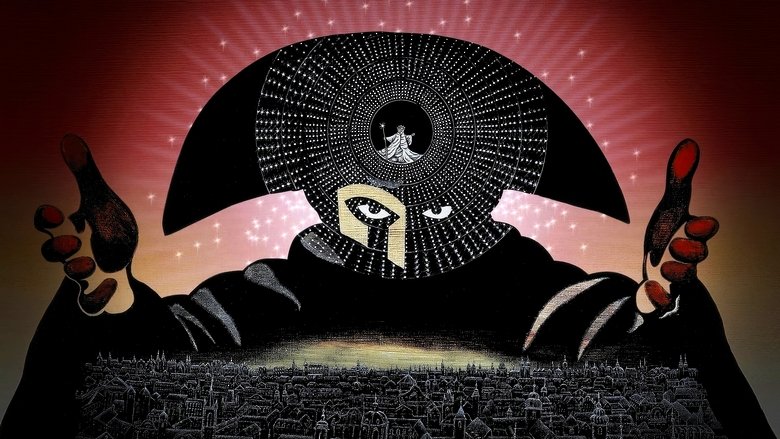
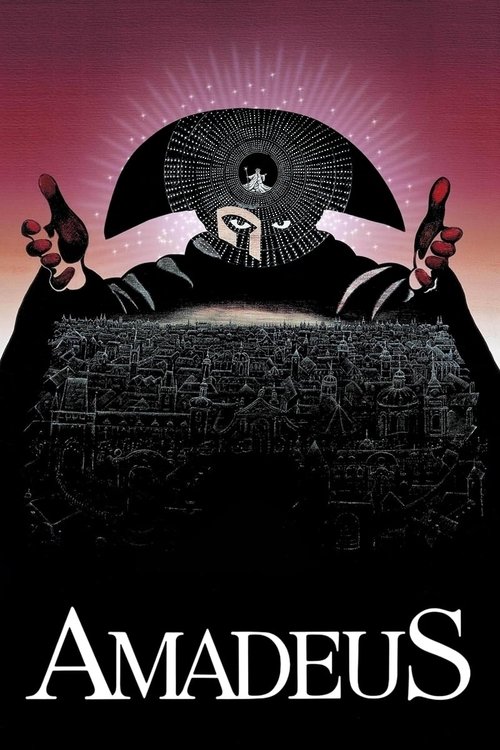
Amadeus
A tragic opera of divine genius and mortal envy, where sublime music fuels a destructive obsession under the powdered wigs of 18th-century Vienna.
Amadeus
Amadeus

"...Everything You've Heard is True"

19 September 1984 United States of America 160 min ⭐ 8.0 (4,509)
Director: Miloš Forman
Cast: F. Murray Abraham, Tom Hulce, Elizabeth Berridge, Simon Callow, Roy Dotrice
Drama History Music
Genius vs. Mediocrity Envy and Jealousy The Nature of God and Faith Art vs. Artist
Budget: $18,000,000
Box Office: $90,007,557

Amadeus - Ending Explained

⚠️ Spoiler Analysis

The narrative of Amadeus is framed by the confession of an elderly Antonio Salieri in a mental asylum, who dramatically claims to a priest, "I killed Mozart." The film then unfolds as an extended flashback, detailing how Salieri, once Vienna's most respected composer, orchestrated the demise of his brilliant rival. Salieri recognizes Mozart's genius as the voice of God, a gift he himself prayed for but was denied. Believing God is mocking him through Mozart's vulgarity, Salieri renounces his faith and vows to destroy Mozart as a means of taking revenge on God.

Salieri's plot is one of slow, psychological torment. He uses his influence at court to block Mozart's appointments and have his operas cancelled. The key turning point comes after the death of Mozart's stern father, Leopold. Sensing Mozart's deep-seated guilt and fear regarding his father, Salieri concocts his master plan. He disguises himself in a menacing mask and costume that Leopold once wore and commissions Mozart to write a Requiem Mass, a mass for the dead. The unstable Mozart, overworked and drinking heavily, believes he is being haunted by his father's ghost, commissioning a requiem for himself.

In the film's climax, a deathly ill Mozart collapses while conducting 'The Magic Flute'. Salieri takes him home and, seeing his chance to steal the Requiem, offers to help him finish it. This leads to the iconic deathbed dictation scene, where a feverish Mozart dictates the final passages of the 'Confutatis' to an astonished Salieri, who is simultaneously helping and destroying his idol. Before Salieri can claim the finished work, Mozart's wife Constanze returns, locks the manuscript away, and discovers Mozart has died from exhaustion. Due to his debts, Mozart is unceremoniously dumped into a pauper's mass grave in the rain.

The ending reveals the tragic irony of Salieri's life. He tells the priest that God chose to destroy His beloved Mozart rather than let Salieri share in a shred of his glory. Salieri outlived Mozart by decades, but was forced to watch his own fame fade while Mozart's grew into legend. His 'victory' was to be left alive, forgotten, and tormented by his own mediocrity. His confession is not one of literal murder, but of a spiritual assassination driven by envy. His final act in the asylum is to 'absolve' his fellow mediocrities, embracing his delusion that he is a figure of historical importance—the patron saint of the ungifted.

Alternative Interpretations

Salieri as a Modern Man

One interpretation views Salieri not as a villain, but as a tragic modern figure trapped in an age of faith. His crisis is existential: he believes in a rational, just universe where hard work and piety are rewarded. Mozart's irrational, divine genius shatters this worldview. Salieri's subsequent rebellion against God can be seen as the struggle of a rational man against an arbitrary and capricious universe. His declaration of being the "patron saint of mediocrity" is not just an act of madness, but a cynical, modern realization that the world is not fair and that greatness is not earned.

A Marxist Reading

Another perspective analyzes the film through a Marxist lens. Mozart can be seen as a proletarian artist whose revolutionary talent threatens the established aristocratic order (represented by the Italianate court composers and the Emperor). Salieri, in this reading, is a member of the liberal bourgeoisie who is alienated by the rigid class structures and norms but is ultimately too invested in the system to join Mozart's rebellion. His sabotage of Mozart is an act of preserving the status quo that both oppresses and benefits him. Mozart's pauper's burial is the ultimate symbol of how the ruling class consumes and discards artistic labor.

The Unreliable Narrator

The entire film is Salieri's confession, making him a deeply unreliable narrator. It is possible that his grand conspiracy is a complete fabrication, a delusion created by a failed composer to give his life meaning. In this view, Salieri was never Mozart's great nemesis; he was simply another forgotten contemporary. His elaborate story of psychological warfare and murder is a final, desperate attempt to link his name to Mozart's, achieving a dark immortality by casting himself as the villain in the genius's story. His true sin wasn't murder, but the profound envy of a man who spent his life in the shadow of greatness and is trying to rewrite history to give himself a starring role.