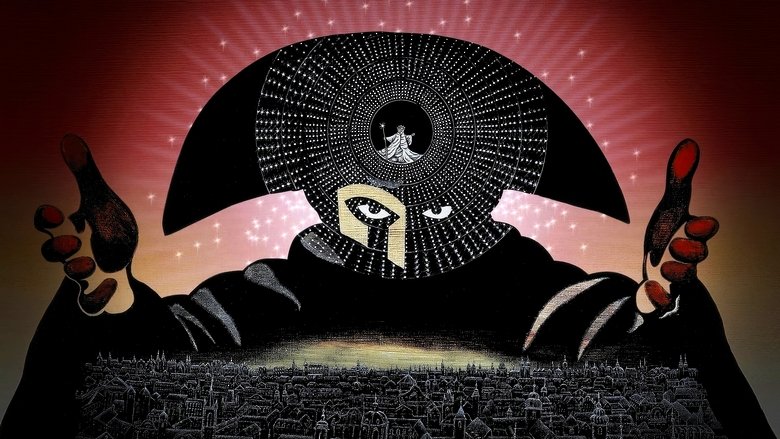
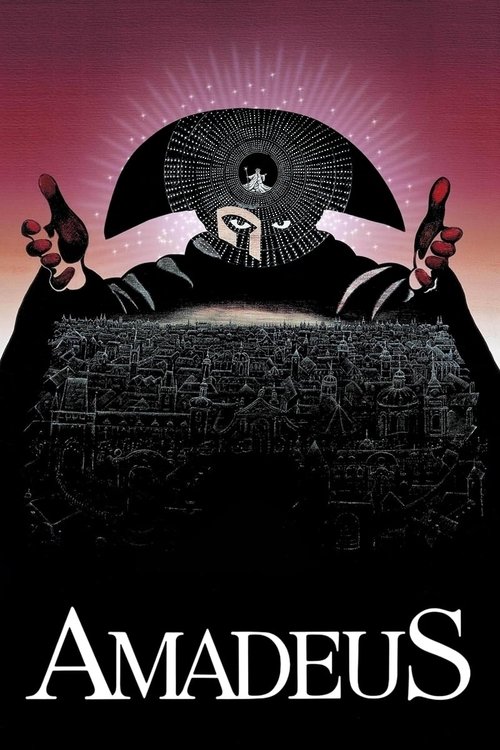
Amadeus
A tragic opera of divine genius and mortal envy, where sublime music fuels a destructive obsession under the powdered wigs of 18th-century Vienna.
Amadeus

Amadeus

"...Everything You've Heard is True"

19 September 1984 United States of America 160 min ⭐ 8.0 (4,509)
Director: Miloš Forman
Cast: F. Murray Abraham, Tom Hulce, Elizabeth Berridge, Simon Callow, Roy Dotrice
Drama History Music
Genius vs. Mediocrity Envy and Jealousy The Nature of God and Faith Art vs. Artist
Budget: $18,000,000
Box Office: $90,007,557

Overview

Amadeus, directed by Miloš Forman, is a lavish period drama that chronicles the supposed rivalry between Wolfgang Amadeus Mozart and his contemporary, Antonio Salieri, in the court of Emperor Joseph II in Vienna. The story is framed as a confession from an elderly and institutionalized Salieri, who claims to have murdered the prodigious Mozart decades earlier.

As Salieri recounts his life, we see a devout and disciplined composer who believes his success is a reward from God for his piety. His world is shattered by the arrival of Mozart—a vulgar, giggling, and infantile prodigy whose genius is effortlessly divine. Salieri is one of the few who can truly recognize the sublime, god-like quality of Mozart's music, and he is consumed by a corrosive jealousy. Why would God bestow such a gift on this crude creature, while Salieri, for all his devotion, remains a mediocrity?

This question drives Salieri to declare a secret war, not against Mozart, but against God himself. He vows to destroy God's chosen instrument. While pretending to be Mozart's friend and confidant, Salieri uses his influence in the court to sabotage Mozart's career, pushing the struggling genius further into poverty, alcoholism, and despair.

Core Meaning

The core meaning of Amadeus is an exploration of the battle between genius and mediocrity, and the profound, often painful, human response to divine, inexplicable talent. The film is less a historical biography and more a "fantasia" that uses the lives of Mozart and Salieri to examine themes of envy, faith, and the nature of artistic creation.

Director Miloš Forman and writer Peter Shaffer pose a central question: What happens when a person has the soul to recognize true greatness but lacks the talent to achieve it themselves? Salieri represents this tragic figure. He makes a pact with God for fame and talent, but is instead granted only the ability to be the world's most astute critic of a genius he can never equal. His war against Mozart is ultimately a tragic rebellion against God for this perceived injustice. The film suggests that genius is a divine, almost arbitrary gift, bestowed without regard for piety or virtue, and that envy is a destructive force that consumes the envious more than its target.

Thematic DNA

Genius vs. Mediocrity 35%
Envy and Jealousy 30%
The Nature of God and Faith 25%
Art vs. Artist 10%

Genius vs. Mediocrity

The central conflict of the film is the clash between Mozart's effortless, divine genius and Salieri's diligent, yet ultimately forgettable, mediocrity. Salieri's tragedy is not that he is untalented, but that he is just talented enough to fully comprehend the chasm between his abilities and Mozart's. Mozart composes masterpieces as if "taking dictation from God," without corrections, while Salieri toils for lesser results. This theme culminates in Salieri declaring himself the "patron saint of mediocrity."

Envy and Jealousy

Salieri’s character is a profound study of envy. His admiration for Mozart's music is poisoned by his bitter jealousy of the man himself—a man he deems unworthy of such a divine gift. This envy drives him to renounce God and dedicate his life to destroying Mozart. He manipulates court politics, sabotages commissions, and preys on Mozart's vulnerabilities, all while maintaining a facade of friendship. His jealousy is the engine of the entire plot.

The Nature of God and Faith

The film frames Salieri's struggle as a theological one. Having made a pact of celibacy and devotion in exchange for musical greatness, Salieri feels profoundly betrayed by God, who chose the "obscene" Mozart as His vessel. Salieri's war on Mozart is his revenge on an "unjust, unfair, unkind" God. The film explores questions of divine justice, predestination, and whether sacred gifts are granted to the virtuous or simply bestowed at random.

Art vs. Artist

Amadeus creates a stark contrast between Mozart's sublime, heavenly music and his vulgar, immature personality. Salieri is horrified that such beautiful art can come from such a crude source. This theme questions whether we should separate the art from the artist. The court and Emperor Joseph II often judge Mozart by his behavior, failing to fully appreciate the revolutionary nature of his work, while Salieri is tortured by his ability to see past the man and hear the voice of God in the music.

Character Analysis

Antonio Salieri

F. Murray Abraham

Archetype: Antihero / Tragic Villain
Key Trait: Pious Envy

Motivation

His primary motivation is a desperate longing for immortality and greatness through music, a promise he believes God made to him. When he realizes this gift was given to Mozart instead, his motivation shifts to a vengeful desire to spite God by destroying His chosen "instrument." It's a combination of professional envy and a profound theological crisis.

Character Arc

Salieri begins as a devout, ambitious, and respected court composer who believes in a just God that rewards piety. His discovery of Mozart's genius, housed in a vulgar man, shatters his faith and transforms him into a bitter, vengeful schemer. He declares war on God and works to destroy Mozart, only to find himself aiding his rival on his deathbed, forced to transcribe the very divine music he despises and adores. His arc ends in madness and obscurity, where he ironically anoints himself the "patron saint of mediocrity," forever haunted by Mozart's legacy.

Wolfgang Amadeus Mozart

Tom Hulce

Archetype: The Divine Fool / Prodigy
Key Trait: Sublime Immaturity

Motivation

Mozart is driven by an irrepressible need to create music and a desire for recognition on his own terms. He chafes against the conservative tastes of the court and seeks to revolutionize opera. He also craves the approval and love of his stern, deceased father, Leopold, a psychological weakness that Salieri ruthlessly exploits.

Character Arc

Mozart arrives in Vienna as a brilliant, arrogant, and socially inept prodigy, eager for fame but unwilling to play by the court's rules. He is portrayed as a genius who is tragically naive about the political machinations around him, particularly Salieri's enmity. His initial success gives way to a decline marked by financial struggle, alcoholism, and emotional turmoil, especially after the death of his father. Despite his personal failings and suffering, he continues to produce transcendent music. His arc is one of a brilliant flame that burns too brightly and is extinguished too soon, dying in poverty before his genius is fully appreciated.

Constanze Mozart

Elizabeth Berridge

Archetype: The Loyal Spouse
Key Trait: Pragmatic Devotion

Motivation

Her motivations are simple and direct: she loves Wolfgang and wants to build a secure life with him. She pushes him to take on pupils and secure stable positions to alleviate their debt. Her actions are consistently driven by a desire to protect her husband and their family from the consequences of his impracticality.

Character Arc

Constanze begins as a lighthearted and somewhat vulgar young woman who falls for Mozart's genius. As their fortunes decline, she becomes a fiercely protective, pragmatic, and increasingly worried wife, struggling to manage their finances and her husband's erratic behavior. She is naive at first, even approaching Salieri for help, unaware he is their greatest enemy. Her love for Wolfgang is unwavering, but she is ultimately powerless to save him from his own self-destructive tendencies and Salieri's machinations, returning just too late to prevent his final collapse.

Emperor Joseph II

Jeffrey Jones

Archetype: The Affable Patron
Key Trait: Amiable Philistinism

Motivation

The Emperor is motivated by a desire to be seen as an enlightened monarch and a patron of the arts. He wants to foster a national German opera but is constrained by court tradition and his own limited understanding. His primary goal is to maintain decorum and harmony within his court.

Character Arc

Emperor Joseph II is a static character, serving as the well-meaning but musically unsophisticated ruler of Vienna. He is genuinely interested in music and open to Mozart's talent, but is easily swayed by his court advisors, especially Salieri and the Count Orsini-Rosenberg. He represents the conservative establishment that Mozart must win over. His famous line, "too many notes," perfectly encapsulates his inability to fully grasp Mozart's revolutionary genius.

Symbols & Motifs

Mozart's Laugh

Meaning:

Mozart's high-pitched, infantile giggle symbolizes the disconnect between his divine talent and his crude personality. To Salieri, it is the sound of God mocking his piety and mediocrity. The laugh is jarring and inappropriate, representing the profane vessel God chose for his sacred music. The film's final sound is this laugh, signifying that Salieri is forever tormented by it.

Context:

The laugh punctuates Mozart's appearances throughout the film, often undercutting moments of seriousness or triumph. Salieri first hears it at the Archbishop's residence and is appalled. He later tells the priest, "That was not Mozart laughing, Father... that was God. That was God laughing at me."

The Masked Figure (Leopold's Disguise)

Meaning:

The black, masked figure who commissions the Requiem symbolizes death, guilt, and Salieri's manipulation. It is a physical manifestation of Mozart's unresolved issues with his deceased father, Leopold, whose domineering presence haunted him. Salieri exploits this guilt to drive Mozart to his breaking point.

Context:

Salieri purchases a costume identical to one Mozart's father wore to a masquerade ball. He then wears it to anonymously commission the Requiem Mass, making the guilt-ridden Mozart believe he is being haunted by his father's ghost. This psychological torment accelerates Mozart's physical and mental decline.

The Crucifix

Meaning:

The crucifix in Salieri's quarters represents his broken pact with God. It is the object of his devotion and, later, his furious rebellion. It symbolizes his journey from piety to blasphemy, a silent witness to his vow of revenge against his creator.

Context:

Early in the film, Salieri prays devoutly before the crucifix, bargaining for fame. After realizing the divine nature of Mozart's talent, he delivers a furious monologue to the crucifix, declaring God his enemy before contemptuously throwing it into the fire.

Uncorrected Music Scores

Meaning:

Constanze presents Salieri with Mozart's original scores, which contain no corrections or drafts. They symbolize the divine, effortless nature of Mozart's genius. For Salieri, who toils over his own compositions, this is the ultimate proof that Mozart is not merely composing, but channeling music directly from God.

Context:

When Constanze brings Mozart's portfolio to Salieri to plead for a court position for her husband, Salieri is stunned to learn they are originals. As he reads through the perfect manuscripts of sublime music, he describes it as hearing the "very voice of God," a moment that solidifies his jealous rage and despair.

Memorable Quotes

Mediocrities everywhere... I absolve you.

— Antonio Salieri

Context:

Spoken in the asylum at the end of the film, as an elderly Salieri is wheeled through a corridor of other patients. He offers this "absolution" after concluding his confession to the young priest, cementing his descent into a madness defined by his lifelong struggle.

Meaning:

This is Salieri's final, haunting line. It represents his ultimate embrace of his own mediocrity and his twisted sense of vindication. By becoming the "patron saint" of the average, he finds a perverse form of immortality. He sees himself as a martyr who understands their plight, having been personally crushed by divine genius.

Forgive me, Majesty. I am a vulgar man! But I assure you, my music is not.

— Wolfgang Amadeus Mozart

Context:

Mozart says this during his first audience with Emperor Joseph II, after his awkward and overly familiar behavior has scandalized the court. It is both an apology and a defiant statement of his artistic integrity.

Meaning:

This quote perfectly encapsulates the film's central dichotomy of the artist versus his art. Mozart acknowledges his own boorish and immature nature but fiercely defends the purity and brilliance of his creations. It is his plea to be judged by his work, not his personality.

All I wanted was to sing to God. He gave me that longing... and then made me mute. Why?

— Antonio Salieri

Context:

Salieri says this in his confession to the priest, explaining the depth of his despair upon hearing Mozart's music for the first time. He cannot reconcile his devotion with God's apparent cruelty in making Mozart his instrument instead of him.

Meaning:

This quote expresses the core of Salieri's theological torment. He feels cursed by God, who implanted in him the desire and understanding for musical greatness but denied him the genius to achieve it. It is the heart of his perceived divine injustice.

Your work is ingenious. It's quality work. And there are simply too many notes, that's all. Just cut a few and it will be perfect.

— Emperor Joseph II

Context:

The Emperor delivers this verdict to Mozart after the premiere of his opera "The Abduction from the Seraglio." Mozart's incredulous response—"Which few did you have in mind, Majesty?"—highlights the absurdity of the comment.

Meaning:

This is the film's most famous comedic line, perfectly summarizing the establishment's inability to comprehend Mozart's revolutionary genius. The Emperor's critique is polite and well-meaning but demonstrates a complete lack of musical depth, treating a complex symphony as something that can be simplified.

Philosophical Questions

Is genius a divine gift, and is it bestowed justly?

The film's central philosophical conflict revolves around this question. Salieri, a man of devout faith and discipline, believes talent should be a reward for virtue. However, he is confronted with Mozart, a man he sees as profane and childish, who possesses a talent so profound it can only be divine. This forces Salieri—and the audience—to question the nature of divine justice. Is God fair? Does he grant genius arbitrarily, without regard for moral worth? Salieri's conclusion is that God is cruel, delighting in placing His voice in an unworthy vessel simply to torture a pious man like himself. The film never fully answers the question, leaving it as a painful paradox.

What is the relationship between an artist's character and their art?

Amadeus constantly juxtaposes Mozart's sublime music with his puerile and often vulgar behavior. Salieri is unable to reconcile the "filthy creature" with the "absolute beauty" of his compositions. This raises the question of whether art transcends its creator. Should our knowledge of an artist's personal failings diminish the value of their work? The film suggests that true genius is a force of nature that exists independently of the artist's personality. Mozart himself says, "I am a vulgar man! But I assure you, my music is not." The court cannot see past the man, but Salieri, to his torment, cannot help but hear the divine in the music.

Can envy be a more destructive force than hatred?

Salieri does not simply hate Mozart; in a way, he reveres him, or at least his music, more than anyone. His actions are born of a deep, corrosive envy—the pain of seeing someone else possess what you desperately desire. The film portrays this envy as a complex, all-consuming emotion. It drives Salieri not to a simple act of violence, but to a slow, methodical, and psychological destruction of his rival. This suggests that envy, rooted in a twisted form of admiration, can be a far more intimate and devastating force than simple hatred, ultimately destroying Salieri's own soul and sanity in the process.

Alternative Interpretations

Salieri as a Modern Man

One interpretation views Salieri not as a villain, but as a tragic modern figure trapped in an age of faith. His crisis is existential: he believes in a rational, just universe where hard work and piety are rewarded. Mozart's irrational, divine genius shatters this worldview. Salieri's subsequent rebellion against God can be seen as the struggle of a rational man against an arbitrary and capricious universe. His declaration of being the "patron saint of mediocrity" is not just an act of madness, but a cynical, modern realization that the world is not fair and that greatness is not earned.

A Marxist Reading

Another perspective analyzes the film through a Marxist lens. Mozart can be seen as a proletarian artist whose revolutionary talent threatens the established aristocratic order (represented by the Italianate court composers and the Emperor). Salieri, in this reading, is a member of the liberal bourgeoisie who is alienated by the rigid class structures and norms but is ultimately too invested in the system to join Mozart's rebellion. His sabotage of Mozart is an act of preserving the status quo that both oppresses and benefits him. Mozart's pauper's burial is the ultimate symbol of how the ruling class consumes and discards artistic labor.

The Unreliable Narrator

The entire film is Salieri's confession, making him a deeply unreliable narrator. It is possible that his grand conspiracy is a complete fabrication, a delusion created by a failed composer to give his life meaning. In this view, Salieri was never Mozart's great nemesis; he was simply another forgotten contemporary. His elaborate story of psychological warfare and murder is a final, desperate attempt to link his name to Mozart's, achieving a dark immortality by casting himself as the villain in the genius's story. His true sin wasn't murder, but the profound envy of a man who spent his life in the shadow of greatness and is trying to rewrite history to give himself a starring role.

Cultural Impact

Historical Context and Reception

Released in 1984, Amadeus was a critical and commercial triumph. Directed by Czech expatriate Miloš Forman, who brought a cynical, anti-authoritarian perspective to the lavish period piece, the film captured the public imagination. It won eight Academy Awards, including Best Picture, Best Director for Forman, and Best Actor for F. Murray Abraham. Its success was remarkable for a three-hour film centered on classical composers. Critics lauded its intelligence, wit, and visual splendor, with Roger Ebert calling it a "magnificent film, full and tender and funny and charming."

Influence on Cinema and Pop Culture

Amadeus revitalized the historical biopic genre, demonstrating that it could be artistically daring, thematically complex, and commercially viable. Its narrative structure—a story told in flashback by an unreliable narrator—has been influential. The film's portrayal of Mozart as a punk-rock genius with an obnoxious laugh redefined the composer for a modern generation, moving him from a stuffy historical figure to a relatable, rebellious artist. This characterization has had a lasting impact on how genius is often portrayed in film—as inherently eccentric and at odds with society. Following the film's release, Mozart's music experienced a massive surge in popularity, with his albums topping classical and even pop charts, an phenomenon dubbed the "Mozart effect."

Philosophical and Cultural Resonance

The film is not a documentary but a "fantasia on a theme," a deliberate work of fiction that uses history to explore timeless human struggles. It popularised the largely mythical story of the Salieri-Mozart rivalry, cementing it in the public consciousness despite its historical inaccuracy. This has been a point of contention among historians but is also key to the film's power. It functions as a powerful allegory about envy, divine injustice, and the agony of the gifted but not-quite-genius individual—a feeling many can relate to. The central conflict is a philosophical and theological one, questioning the nature of God's grace and the meaning of talent, making it a subject of continued analysis.

Audience Reception

Audience reception for Amadeus has been overwhelmingly positive since its release. On Rotten Tomatoes, it holds a 90% approval rating, with the consensus praising it as a "divinely diabolical myth of genius and mediocrity." Viewers consistently praise the magnificent performances of F. Murray Abraham and Tom Hulce, the stunning costume and production design, and the glorious use of Mozart's music. Many find the central story of Salieri's jealousy to be a powerful and relatable human drama, even if they are aware of its historical inaccuracies. The film is often cited as making classical music accessible and exciting for a new generation.

Points of criticism are relatively few but persistent. The most common critique comes from music historians and purists who object to the film's drastic fictionalization of the Mozart-Salieri relationship and the cartoonish portrayal of Mozart's personality. Some viewers find the film's three-hour runtime (especially the Director's Cut) to be excessive. A controversial scene added in the Director's Cut, where Salieri attempts to coerce sexual favors from Constanze, has been criticized by some for being unnecessary, though others feel it adds depth to Constanze's hatred for him.

Interesting Facts

  • Tom Hulce, who played Mozart, did not know how to play the piano before filming. He practiced for four to six hours a day to make his performances look authentic. Music professors who studied the film frame-by-frame could not find a single incorrectly struck key.
  • The film was shot on location in Prague, which was under Communist rule at the time. Director Miloš Forman, who had fled Czechoslovakia, was able to film in historic locations like the Estates Theatre, where Mozart himself had premiered 'Don Giovanni'.
  • F. Murray Abraham (Salieri) reportedly felt a degree of real-life exclusion on set, as Tom Hulce (Mozart) and Elizabeth Berridge (Constanze) bonded closely. Abraham channeled this feeling of being an outsider into his performance.
  • Mark Hamill, who had played Mozart to great acclaim on Broadway, was not considered for the film role because director Miloš Forman feared audiences would only see him as Luke Skywalker.
  • Meg Tilly was originally cast as Constanze but had to drop out after tearing a ligament in her leg the day before shooting began. Elizabeth Berridge was hired as a last-minute replacement.
  • To achieve authentic 18th-century lighting for the opera scenes, the crew used hundreds of real candles and open flames inside the historic, centuries-old wooden Estates Theatre, a significant fire risk.
  • The historical rivalry depicted in the film is largely a fabrication. In reality, Mozart and Salieri were professional rivals but also had a cordial relationship. Salieri even tutored Mozart's son after his death. The myth of Salieri's murderous envy was popularized by a play by Alexander Pushkin in 1830.
  • Tom Hulce claimed he developed Mozart's iconic high-pitched giggle after downing a bottle of whiskey.

Easter Eggs

Simon Callow, the actor who plays Emanuel Schikaneder (the librettist of 'The Magic Flute'), was the first actor to play Mozart in the original London stage production of 'Amadeus'.

This is an inside joke and a nod to the play's origins. Having the original stage Mozart appear in a different role within the film adaptation connects the two landmark productions of Peter Shaffer's work.

⚠️ Spoiler Analysis

Click to reveal detailed analysis with spoilers

Frequently Asked Questions

Explore More About This Movie

Dive deeper into specific aspects of the movie with our detailed analysis pages

Comments (0)

Leave a comment

No comments yet. Be the first to share your thoughts!