"...Everything You've Heard is True"
Amadeus - Symbolism & Philosophy
Symbols & Motifs
Mozart's Laugh
Mozart's high-pitched, infantile giggle symbolizes the disconnect between his divine talent and his crude personality. To Salieri, it is the sound of God mocking his piety and mediocrity. The laugh is jarring and inappropriate, representing the profane vessel God chose for his sacred music. The film's final sound is this laugh, signifying that Salieri is forever tormented by it.
The laugh punctuates Mozart's appearances throughout the film, often undercutting moments of seriousness or triumph. Salieri first hears it at the Archbishop's residence and is appalled. He later tells the priest, "That was not Mozart laughing, Father... that was God. That was God laughing at me."
The Masked Figure (Leopold's Disguise)
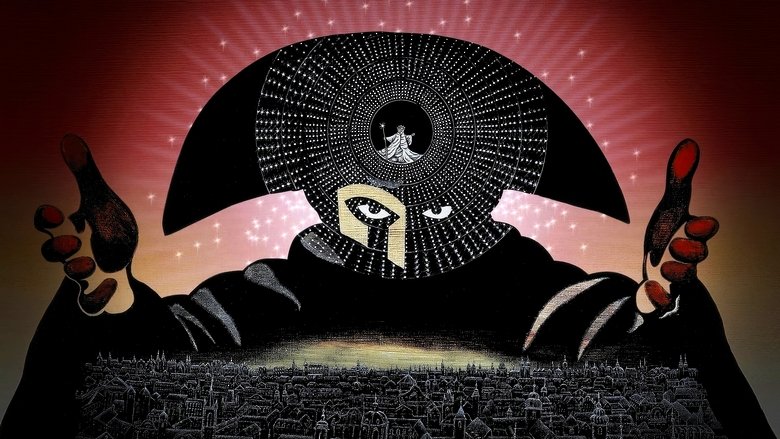
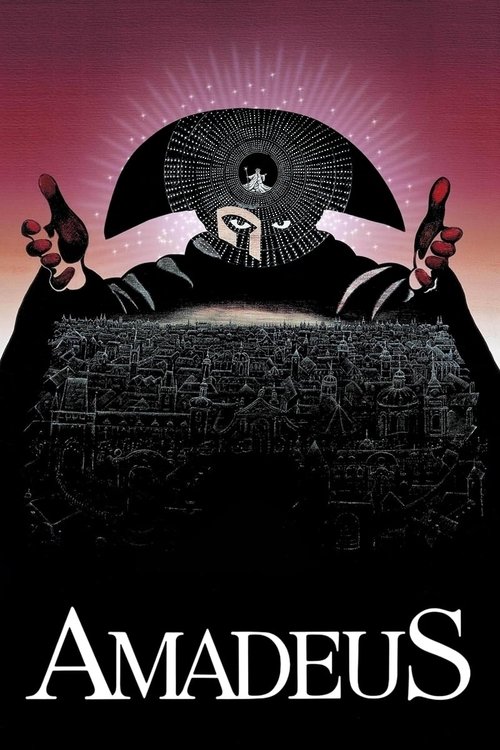
The black, masked figure who commissions the Requiem symbolizes death, guilt, and Salieri's manipulation. It is a physical manifestation of Mozart's unresolved issues with his deceased father, Leopold, whose domineering presence haunted him. Salieri exploits this guilt to drive Mozart to his breaking point.
Salieri purchases a costume identical to one Mozart's father wore to a masquerade ball. He then wears it to anonymously commission the Requiem Mass, making the guilt-ridden Mozart believe he is being haunted by his father's ghost. This psychological torment accelerates Mozart's physical and mental decline.
The Crucifix
The crucifix in Salieri's quarters represents his broken pact with God. It is the object of his devotion and, later, his furious rebellion. It symbolizes his journey from piety to blasphemy, a silent witness to his vow of revenge against his creator.
Early in the film, Salieri prays devoutly before the crucifix, bargaining for fame. After realizing the divine nature of Mozart's talent, he delivers a furious monologue to the crucifix, declaring God his enemy before contemptuously throwing it into the fire.
Uncorrected Music Scores
Constanze presents Salieri with Mozart's original scores, which contain no corrections or drafts. They symbolize the divine, effortless nature of Mozart's genius. For Salieri, who toils over his own compositions, this is the ultimate proof that Mozart is not merely composing, but channeling music directly from God.
When Constanze brings Mozart's portfolio to Salieri to plead for a court position for her husband, Salieri is stunned to learn they are originals. As he reads through the perfect manuscripts of sublime music, he describes it as hearing the "very voice of God," a moment that solidifies his jealous rage and despair.
Philosophical Questions
Is genius a divine gift, and is it bestowed justly?
The film's central philosophical conflict revolves around this question. Salieri, a man of devout faith and discipline, believes talent should be a reward for virtue. However, he is confronted with Mozart, a man he sees as profane and childish, who possesses a talent so profound it can only be divine. This forces Salieri—and the audience—to question the nature of divine justice. Is God fair? Does he grant genius arbitrarily, without regard for moral worth? Salieri's conclusion is that God is cruel, delighting in placing His voice in an unworthy vessel simply to torture a pious man like himself. The film never fully answers the question, leaving it as a painful paradox.
What is the relationship between an artist's character and their art?
Amadeus constantly juxtaposes Mozart's sublime music with his puerile and often vulgar behavior. Salieri is unable to reconcile the "filthy creature" with the "absolute beauty" of his compositions. This raises the question of whether art transcends its creator. Should our knowledge of an artist's personal failings diminish the value of their work? The film suggests that true genius is a force of nature that exists independently of the artist's personality. Mozart himself says, "I am a vulgar man! But I assure you, my music is not." The court cannot see past the man, but Salieri, to his torment, cannot help but hear the divine in the music.
Can envy be a more destructive force than hatred?
Salieri does not simply hate Mozart; in a way, he reveres him, or at least his music, more than anyone. His actions are born of a deep, corrosive envy—the pain of seeing someone else possess what you desperately desire. The film portrays this envy as a complex, all-consuming emotion. It drives Salieri not to a simple act of violence, but to a slow, methodical, and psychological destruction of his rival. This suggests that envy, rooted in a twisted form of admiration, can be a far more intimate and devastating force than simple hatred, ultimately destroying Salieri's own soul and sanity in the process.
Core Meaning
The core meaning of Amadeus is an exploration of the battle between genius and mediocrity, and the profound, often painful, human response to divine, inexplicable talent. The film is less a historical biography and more a "fantasia" that uses the lives of Mozart and Salieri to examine themes of envy, faith, and the nature of artistic creation.
Director Miloš Forman and writer Peter Shaffer pose a central question: What happens when a person has the soul to recognize true greatness but lacks the talent to achieve it themselves? Salieri represents this tragic figure. He makes a pact with God for fame and talent, but is instead granted only the ability to be the world's most astute critic of a genius he can never equal. His war against Mozart is ultimately a tragic rebellion against God for this perceived injustice. The film suggests that genius is a divine, almost arbitrary gift, bestowed without regard for piety or virtue, and that envy is a destructive force that consumes the envious more than its target.