
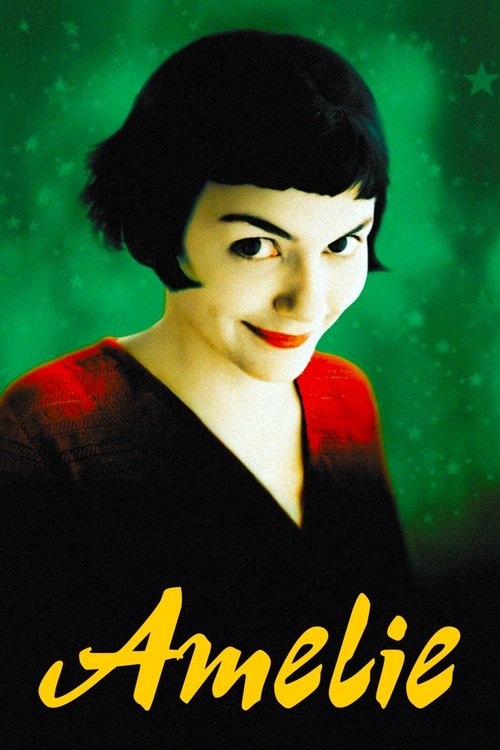
Le Fabuleux Destin d'Amélie Poulain
"She’ll change your life."
Amélie - Symbolism & Philosophy
Symbols & Motifs
The Traveling Garden Gnome
The garden gnome symbolizes Amélie's father's repressed desire for adventure and his emotional stagnation. By 'kidnapping' the gnome and sending pictures of it from around the world, Amélie encourages him to break free from his self-imposed isolation and embrace the life he secretly longs for. The gnome's journey is a metaphor for her father's own journey toward rediscovering his zest for life.
Amélie takes her father's beloved garden gnome from his yard. She gives it to a flight attendant friend who photographs it in various famous locations across the globe. The photos, sent to her father, finally inspire him to pack his bags and travel.
The Photo Album
Nino's album of discarded and reassembled photo booth pictures symbolizes the search for connection and meaning in the fragmented lives of strangers. It represents a desire to piece together stories and find humanity in the anonymous faces of the city. For Amélie, the album becomes a tangible connection to Nino, a puzzle she must solve that mirrors her own quest to understand and connect with others.
Nino collects torn and discarded photos from underneath photo booths, painstakingly taping them together in an album. Amélie finds this album when Nino accidentally drops it. She becomes fascinated with the mystery of a man whose photo appears repeatedly, and uses the album as the centerpiece of an elaborate cat-and-mouse game to meet Nino.
The Tin Box of Memories
The small tin box filled with a child's treasures symbolizes the importance of memory, nostalgia, and the past's influence on the present. For its owner, Dominique Bretodeau, it's a powerful, tangible link to his lost childhood. For Amélie, discovering the box is the catalyst for her entire mission, symbolizing the profound impact that reconnecting with one's past can have on finding happiness in the present.
Amélie finds the box hidden behind a loose tile in her bathroom wall. After an extensive search, she anonymously returns it to Bretodeau, who is moved to tears by the flood of memories it brings back, prompting him to reconnect with his estranged daughter and grandson.
The Glass Man (Raymond Dufayel)
Raymond Dufayel, known as the 'Glass Man' because of his brittle bone disease, symbolizes a life lived at a distance, one of pure observation without participation. He is a mirror of Amélie's own emotional detachment. His obsession with recreating Renoir's painting, particularly the girl with the glass of water, reflects his (and Amélie's) struggle to capture and understand human emotion from the outside. He acts as her mentor, pushing her to engage with life rather than just observe it.
Dufayel lives in Amélie's building and never leaves his apartment. He spends his days meticulously repainting "Luncheon of the Boating Party." Through conversations about the painting, he provides Amélie with crucial insights into her own life and fears, eventually giving her the push she needs to pursue Nino.
Philosophical Questions
What is the nature of happiness, and how is it achieved?
The film explores this question by contrasting grand life ambitions with the joy of simple, everyday pleasures. It posits that happiness is not necessarily a result of achieving major goals, but can be found in small, mindful moments: the perfect crack of a crème brûlée, the feel of grain on one's hands, a shared smile. Amélie's journey suggests that happiness is also deeply intertwined with altruism. She finds her own sense of purpose and harmony not by focusing on herself, but by actively creating moments of joy for others, suggesting that a meaningful life is one dedicated to alleviating the loneliness and sadness of those around us.
Is it better to live in a beautiful dream or to confront a flawed reality?
Amélie spends most of her life in an imaginative dream world as a defense against loneliness and disappointment. The film celebrates the beauty and creativity of her inner world but also shows its limitations. Her mentor, Dufayel, consistently pushes her to stop observing and start participating, to risk the messiness of real relationships rather than orchestrating them from afar. The film's conclusion, where she finally finds love by taking a real emotional risk, suggests that while imagination is a vital refuge, true fulfillment requires the courage to engage with and embrace an imperfect reality.
To what extent do we have the right to intervene in the lives of others?
Amélie appoints herself as a secret arbiter of fate, manipulating people and situations for what she perceives as their own good. The film presents her interventions as charming and largely successful, leading to positive outcomes. However, it implicitly raises questions about consent and manipulation. Her actions, though well-intentioned, are fundamentally deceptive. This prompts the viewer to consider the ethical line between helping someone and imposing one's own will upon them, even if the intentions are pure.
Core Meaning
The core meaning of "Amélie" revolves around the idea of finding and creating joy in the small, everyday moments of life. Director Jean-Pierre Jeunet presents a vision of the world where small acts of kindness can have a profound and positive ripple effect on the lives of others. The film suggests that happiness is not something to be passively waited for, but something that can be actively cultivated through empathy, imagination, and a willingness to connect with the world.
Furthermore, the film is a profound exploration of loneliness and the courage it takes to overcome it. Amélie's journey from a detached observer to an active participant in her own life highlights the universal human need for connection. Her initial focus on orchestrating happiness for others is also a defense mechanism, a way to engage with the world without risking vulnerability. The ultimate message is that while bringing joy to others is a noble pursuit, true fulfillment comes from having the courage to seek out one's own happiness and embrace love, even with the risks it entails.