Amélie
Le Fabuleux Destin d'Amélie Poulain
"She’ll change your life."
Overview
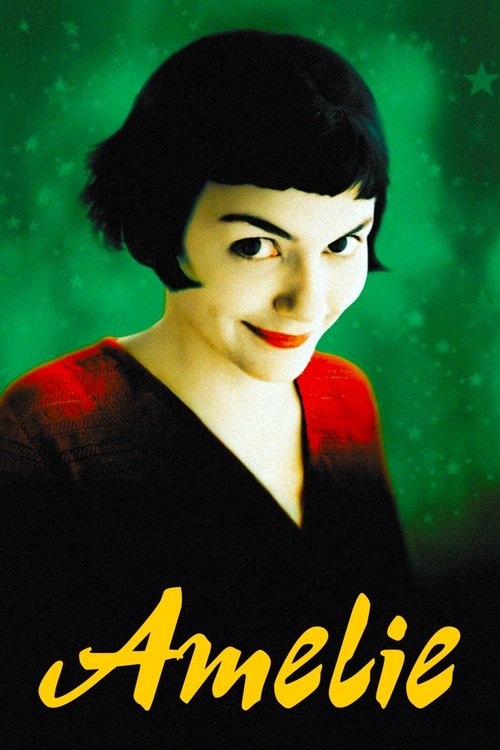
"Amélie" (original title: "Le Fabuleux Destin d'Amélie Poulain") is a charming 2001 French romantic comedy directed by Jean-Pierre Jeunet. The film tells the story of Amélie Poulain (Audrey Tautou), a shy and imaginative waitress working at the Café des 2 Moulins in Montmartre, Paris. Having grown up in isolation due to a misdiagnosed heart condition, Amélie develops a rich inner world and a unique perspective on life.
Her life takes a pivotal turn on the day of Princess Diana's death when she discovers a small, old box of childhood treasures hidden in her apartment. She decides to track down its owner, a man now in his middle age. Witnessing his profound emotional reaction upon being reunited with his memories inspires Amélie to dedicate her life to subtly and secretly bringing happiness to those around her. She embarks on a series of whimsical and elaborate schemes to mend relationships, boost confidence, and exact playful revenge on behalf of her quirky neighbors and colleagues.
While she succeeds in enriching the lives of others, Amélie remains a spectator in her own life, struggling with her own loneliness and fear of connection. This changes when she encounters Nino Quincampoix (Mathieu Kassovitz), an equally eccentric young man who collects discarded photo booth pictures. Amélie finds herself falling in love but must summon the courage to step out from behind her elaborate games and embrace the possibility of her own happiness.
Core Meaning
The core meaning of "Amélie" revolves around the idea of finding and creating joy in the small, everyday moments of life. Director Jean-Pierre Jeunet presents a vision of the world where small acts of kindness can have a profound and positive ripple effect on the lives of others. The film suggests that happiness is not something to be passively waited for, but something that can be actively cultivated through empathy, imagination, and a willingness to connect with the world.
Furthermore, the film is a profound exploration of loneliness and the courage it takes to overcome it. Amélie's journey from a detached observer to an active participant in her own life highlights the universal human need for connection. Her initial focus on orchestrating happiness for others is also a defense mechanism, a way to engage with the world without risking vulnerability. The ultimate message is that while bringing joy to others is a noble pursuit, true fulfillment comes from having the courage to seek out one's own happiness and embrace love, even with the risks it entails.
Thematic DNA
The Joy of Small Pleasures
"Amélie" celebrates the beauty found in mundane details. The narrator frequently lists the simple things that bring characters joy, such as Amélie cracking the top of a crème brûlée with a spoon, skipping stones, or dipping her hand into a sack of grain. This theme suggests that happiness isn't found in grand gestures, but in the appreciation of everyday sensory experiences and small, personal rituals. It's a direct response to the complexities and anxieties of modern life, proposing a return to a more mindful and childlike appreciation of the world.
Compassion and Altruism
After finding her purpose, Amélie dedicates herself to performing secret acts of kindness for those around her. She helps the blind man experience the richness of the street, concocts a long-lost love letter for her widowed concierge, and stands up for a mistreated grocery store assistant. Her actions, driven by a deep sense of empathy, form the narrative's backbone. The film explores how these altruistic acts not only transform the lives of the recipients but also give Amélie's own life meaning and direction, serving as a powerful antidote to her loneliness.
Loneliness vs. Connection
Despite being surrounded by people in bustling Paris, many characters, including Amélie herself, experience profound isolation. Her isolated childhood shapes her into a solitary adult who prefers observing to participating. The film contrasts her lonely existence with her deep-seated desire for connection. Her journey to bring people together is also a journey toward finding her own place in the world. The central romance with Nino is a testament to the idea that overcoming loneliness requires taking emotional risks and allowing oneself to be vulnerable.
Imagination and Reality
Amélie's vibrant imagination is her primary coping mechanism for a lonely childhood and a sometimes-disappointing reality. The film frequently blurs the line between her whimsical daydreams and the real world, employing magical realism to visualize her inner life. However, the narrative also pushes her to move beyond her fantasies. Her neighbor, Dufayel, constantly urges her to engage with life directly rather than through elaborate schemes. The film suggests that while imagination is a wonderful gift, true happiness is found when one dares to make their dreams a reality.
Character Analysis
Amélie Poulain
Audrey Tautou
Motivation
Initially motivated by a desire to cope with her loneliness, her primary motivation becomes the altruistic goal of bringing happiness to others. After witnessing the joy her first good deed brings, she feels a "surge of love, an urge to help mankind" and dedicates herself to orchestrating small miracles in the lives of those around her. Later, her motivation shifts to include finding her own happiness and love.
Character Arc
Amélie begins as a shy, isolated young woman who lives more in her rich imagination than in the real world. The discovery of the tin box gives her a sense of purpose, transforming her from a passive observer into a secret benefactor, or a "godmother of outcasts." However, she still orchestrates events from a safe distance. Her journey culminates in her learning to apply her courage and empathy to her own life, overcoming her fear of intimacy to build a genuine connection with Nino, thus completing her transformation into an active participant in her own story.
Nino Quincampoix
Mathieu Kassovitz
Motivation
Nino is motivated by curiosity and a desire to find meaning and connection in the fragments of life that others discard. This is evident in both his photo album hobby and his persistent search for the mysterious woman (Amélie) who is leaving him clues. He is a seeker of patterns and stories in the anonymous city.
Character Arc
Nino is introduced as an eccentric and somewhat solitary figure, working in a porn shop but passionate about his unusual hobby of collecting discarded photos. Like Amélie, he is an observer who looks for meaning where others see trash. Through his quest to solve the mystery of the recurring man in his photo album and his participation in Amélie's elaborate games, he is drawn out of his own world. He demonstrates persistence and romantic curiosity, ultimately meeting Amélie halfway and reciprocating her interest, ready for a real connection.
Raymond Dufayel
Serge Merlin
Motivation
Confined to his apartment, Dufayel is motivated by a deep need to understand the human connection he cannot physically experience. He channels this into his repetitive painting and his observations of his neighbors. He becomes motivated to help Amélie because he recognizes her emotional isolation as a parallel to his physical one and wants to see her break free from it.
Character Arc
Dufayel, the 'Glass Man,' starts as a complete recluse, a man who has retreated from the world due to his physical fragility and who experiences life only through his art. Initially, he is just an observer of Amélie, but he gradually becomes her confidant and mentor. By analyzing Amélie's life through the metaphor of his painting, he helps her see her own cowardice. His final act of sending her a video message encouraging her to pursue Nino shows his own growth; the observer becomes an active force for good, directly intervening to help his friend find happiness.
Raphaël Poulain
Rufus
Motivation
His primary motivation is to maintain a controlled, predictable environment to cope with his grief and anxiety. He resists change and finds comfort in his routine and his small garden. He is motivated by a deep-seated, but unacknowledged, fear of the outside world.
Character Arc
Amélie's father is emotionally distant and withdrawn, especially after the bizarre death of his wife. He lives a quiet, regimented life, finding solace only in his garden gnome. He is trapped by his grief and routine. Amélie's elaborate gnome-napping scheme forces him to confront his dormant desire for adventure. The arc is completed when we see at the end that he has taken his own trip, finally breaking out of his shell and embracing the world.
Symbols & Motifs
The Traveling Garden Gnome
The garden gnome symbolizes Amélie's father's repressed desire for adventure and his emotional stagnation. By 'kidnapping' the gnome and sending pictures of it from around the world, Amélie encourages him to break free from his self-imposed isolation and embrace the life he secretly longs for. The gnome's journey is a metaphor for her father's own journey toward rediscovering his zest for life.
Amélie takes her father's beloved garden gnome from his yard. She gives it to a flight attendant friend who photographs it in various famous locations across the globe. The photos, sent to her father, finally inspire him to pack his bags and travel.
The Photo Album
Nino's album of discarded and reassembled photo booth pictures symbolizes the search for connection and meaning in the fragmented lives of strangers. It represents a desire to piece together stories and find humanity in the anonymous faces of the city. For Amélie, the album becomes a tangible connection to Nino, a puzzle she must solve that mirrors her own quest to understand and connect with others.
Nino collects torn and discarded photos from underneath photo booths, painstakingly taping them together in an album. Amélie finds this album when Nino accidentally drops it. She becomes fascinated with the mystery of a man whose photo appears repeatedly, and uses the album as the centerpiece of an elaborate cat-and-mouse game to meet Nino.
The Tin Box of Memories
The small tin box filled with a child's treasures symbolizes the importance of memory, nostalgia, and the past's influence on the present. For its owner, Dominique Bretodeau, it's a powerful, tangible link to his lost childhood. For Amélie, discovering the box is the catalyst for her entire mission, symbolizing the profound impact that reconnecting with one's past can have on finding happiness in the present.
Amélie finds the box hidden behind a loose tile in her bathroom wall. After an extensive search, she anonymously returns it to Bretodeau, who is moved to tears by the flood of memories it brings back, prompting him to reconnect with his estranged daughter and grandson.
The Glass Man (Raymond Dufayel)
Raymond Dufayel, known as the 'Glass Man' because of his brittle bone disease, symbolizes a life lived at a distance, one of pure observation without participation. He is a mirror of Amélie's own emotional detachment. His obsession with recreating Renoir's painting, particularly the girl with the glass of water, reflects his (and Amélie's) struggle to capture and understand human emotion from the outside. He acts as her mentor, pushing her to engage with life rather than just observe it.
Dufayel lives in Amélie's building and never leaves his apartment. He spends his days meticulously repainting "Luncheon of the Boating Party." Through conversations about the painting, he provides Amélie with crucial insights into her own life and fears, eventually giving her the push she needs to pursue Nino.
Memorable Quotes
Vous n'avez pas des os en verre. Vous pouvez vous cogner à la vie.
— Raymond Dufayel
Context:
Dufayel records this message on a videotape for Amélie after she fails to meet Nino. Watching it, she is finally spurred into action, realizing that her self-imposed emotional isolation is a choice, not a necessity.
Meaning:
"You don't have bones of glass. You can take life's knocks." This is the crucial piece of advice Dufayel gives Amélie. It's a direct challenge to her fear and emotional fragility, reminding her that she is stronger than she thinks and that she must engage with life's challenges, particularly love, rather than hiding from them. It is the turning point that gives her the courage to finally meet Nino.
Sans toi, les émotions d'aujourd'hui ne seraient que la peau morte des émotions d'autrefois.
— Hipolito (written on a wall)
Context:
Amélie sees this line written in Hipolito's notebook at the café. Later, in one of her final acts of kindness, she (or someone she inspires) paints the quote as graffiti on a wall along Hipolito's route, giving the dejected writer a moment of anonymous recognition and profound joy.
Meaning:
"Without you, today's emotions would be the scurf of yesterday's." This poetic line, written by the failed writer Hipolito, speaks to the power of love and connection to make life vibrant and meaningful. It suggests that without someone to share experiences with, life becomes a pale, lifeless repetition of the past. It encapsulates the film's central theme about the importance of connection over isolation.
C'est drôle, la vie. Quand on est gosse, le temps n'en finit pas de se traîner, et puis du jour au lendemain, on a 50 ans. Et l'enfance, tout ce qui en reste, ça tient dans une petite boîte rouillée.
— Dominique Bretodeau
Context:
Bretodeau says this in a bar after being anonymously given his childhood treasure box by Amélie. He is reflecting on his life and the flood of memories the box has unlocked, unaware that Amélie is sitting nearby, witnessing the powerful effect of her actions.
Meaning:
"Life's funny. To a kid, time always drags. Suddenly you're fifty. All that's left of your childhood... fits in a rusty little box." This quote reflects on the bittersweet nature of time, memory, and nostalgia. It highlights how quickly life passes and how physical objects can hold immense emotional weight, serving as vessels for our most cherished memories. It validates Amélie's mission, proving the profound impact of her first act of kindness.
Amélie a soudain le sentiment étrange d'être en harmonie parfaite avec elle-même. Tout est parfait en cet instant.
— Narrator
Context:
The narrator says this after Amélie has successfully returned the box and is walking through Paris. The sun is shining, the city is beautiful, and she feels a deep sense of purpose and peace, which solidifies her resolve to continue her mission of kindness.
Meaning:
"Amélie has a strange feeling of absolute harmony. It's a perfect moment. Everything is perfect in that instant." This line captures the film's core theme of finding profound joy in simple, fleeting moments. It's a state of grace and contentment that arises not from a major life event, but from a perfect confluence of sensory details and an internal feeling of rightness with the world. It's this feeling that inspires her to help others.
Philosophical Questions
What is the nature of happiness, and how is it achieved?
The film explores this question by contrasting grand life ambitions with the joy of simple, everyday pleasures. It posits that happiness is not necessarily a result of achieving major goals, but can be found in small, mindful moments: the perfect crack of a crème brûlée, the feel of grain on one's hands, a shared smile. Amélie's journey suggests that happiness is also deeply intertwined with altruism. She finds her own sense of purpose and harmony not by focusing on herself, but by actively creating moments of joy for others, suggesting that a meaningful life is one dedicated to alleviating the loneliness and sadness of those around us.
Is it better to live in a beautiful dream or to confront a flawed reality?
Amélie spends most of her life in an imaginative dream world as a defense against loneliness and disappointment. The film celebrates the beauty and creativity of her inner world but also shows its limitations. Her mentor, Dufayel, consistently pushes her to stop observing and start participating, to risk the messiness of real relationships rather than orchestrating them from afar. The film's conclusion, where she finally finds love by taking a real emotional risk, suggests that while imagination is a vital refuge, true fulfillment requires the courage to engage with and embrace an imperfect reality.
To what extent do we have the right to intervene in the lives of others?
Amélie appoints herself as a secret arbiter of fate, manipulating people and situations for what she perceives as their own good. The film presents her interventions as charming and largely successful, leading to positive outcomes. However, it implicitly raises questions about consent and manipulation. Her actions, though well-intentioned, are fundamentally deceptive. This prompts the viewer to consider the ethical line between helping someone and imposing one's own will upon them, even if the intentions are pure.
Alternative Interpretations
While "Amélie" is largely seen as a straightforward, heartwarming tale, some alternative interpretations exist. One perspective views Amélie not as a benevolent angel but as a manipulative and controlling figure. Her acts of 'kindness' are often intrusive and based on her own judgment of what will make people happy, without their consent. For instance, she forges a letter to her concierge and plays elaborate, sometimes cruel, pranks on the grocer. This reading suggests a darker undercurrent to her character, where her actions are more about exercising control over her environment to compensate for her own powerlessness and isolation.
Another interpretation, offered by critics like Hannah Thompson, questions the morality of her actions. Her 'help' for the blind man is cited as an example: she gives him a vivid tour of the street but then abandons him at a Métro station, without asking where he actually wanted to go. This view complicates the film's feel-good narrative by suggesting Amélie's altruism may be self-serving and performative, more about making herself feel good than genuinely helping others on their own terms.
Finally, some view the film as a critique of globalization and a nostalgic retreat into a sanitized, idealized French past. The Paris of "Amélie" is conspicuously clean, devoid of social problems, and largely excludes the multicultural populations of the real Montmartre. In this light, the film can be seen not as a whimsical fantasy, but as a conservative fantasy, a longing for a simpler, more homogenous national identity in the face of modern complexities.
Cultural Impact
"Amélie" was a global phenomenon upon its release in 2001, becoming one of the most successful French films internationally. It offered a whimsical, romanticized, and visually stunning depiction of Parisian life that captivated audiences worldwide. This portrayal, however, also drew criticism for presenting an idealized and ethnically homogenous version of Montmartre, ignoring the multicultural reality of the district.
The film's influence on cinema can be seen in its popularization of a certain quirky, magical-realist aesthetic. Its distinctive visual style—characterized by a vibrant, saturated color palette (heavy on reds and greens), dynamic camera work with wide-angle lenses, and charmingly eccentric characters—has been emulated in numerous films, commercials, and music videos since. The film, along with "O Brother, Where Art Thou?", was a pioneer in the use of the Digital Intermediate process for color grading, a technique that has since become standard in the industry.
Yann Tiersen's soundtrack became instantly iconic, and its accordion-heavy waltzes are now inseparable from the popular conception of a romantic, whimsical Paris. The film had a tangible impact on tourism, with locations like the Café des 2 Moulins becoming pilgrimage sites for fans. Critically, it was widely acclaimed, earning five Academy Award nominations and winning Best Film at the European Film Awards and four César Awards. For audiences, "Amélie" became a quintessential "feel-good" movie, celebrated for its charm, optimism, and heartfelt message about finding joy in small acts of kindness.
Audience Reception
"Amélie" was met with overwhelmingly positive reactions from audiences worldwide, who were captivated by its charm, wit, and visual beauty. Viewers frequently praise Audrey Tautou's endearing and iconic performance, the film's whimsical and optimistic tone, and its celebration of life's simple pleasures. Many consider it a quintessential "feel-good" movie, a film that leaves them feeling happy and inspired. The unique storytelling, quirky characters, and the magical, romanticized depiction of Paris are consistently highlighted as its strongest aspects. Yann Tiersen's soundtrack is also universally beloved and seen as integral to the film's enchanting atmosphere.
Points of criticism are less common but do exist. Some viewers find the film's whimsy to be excessive or cloying, describing it as overly sweet. The narrative pace can feel slow to some, and the fast-paced French dialogue with subtitles can be challenging. A more significant critique from some circles points to the film's idealized and unrealistic portrayal of Paris, specifically its lack of ethnic diversity in a multicultural neighborhood like Montmartre, which is seen by some as a notable flaw.
Interesting Facts
- The role of Amélie was originally written for English actress Emily Watson. Director Jean-Pierre Jeunet changed the character to be French after Watson dropped out due to difficulties with the French language and scheduling conflicts.
- Audrey Tautou, who brilliantly played Amélie, was not the first choice. Jeunet discovered her after seeing her on a movie poster for "Venus Beauty Institute" (1999) and was immediately captivated.
- The vibrant, saturated color palette of the film, rich in reds, greens, and yellows, was heavily inspired by the paintings of Brazilian artist Juarez Machado.
- The film was one of the first to extensively use a Digital Intermediate (DI) process, which allowed the filmmakers to have precise control over the color grading and create the film's signature stylized, warm look.
- The Café des 2 Moulins, where Amélie works, is a real café in Montmartre, Paris. It was struggling financially before the film's release but has since become a major tourist attraction.
- Despite her character's proficiency at it, Audrey Tautou is not very good at skipping stones. The iconic stone-skipping scenes had to be created with digital special effects.
- The film's beloved and whimsical score by Yann Tiersen was largely composed of existing pieces from his discography. Jeunet discovered his music by chance after his original choice for composer was unavailable.
- Due to its massive success, the film is credited with a significant rise in the popularity of the name "Amélie" for baby girls in several countries, including the UK and the US, in the years following its release.
⚠️ Spoiler Analysis
Click to reveal detailed analysis with spoilers
Frequently Asked Questions
Explore More About This Movie
Dive deeper into specific aspects of the movie with our detailed analysis pages
Comments (0)
No comments yet. Be the first to share your thoughts!