American Beauty
A darkly comedic drama that peels back the pristine veneer of suburbia, revealing the turbulent emotional currents and desperate search for beauty that lie beneath, all bathed in a haunting, rose-petal-strewn light.
American Beauty
American Beauty

"... look closer"

15 September 1999 United States of America 122 min ⭐ 8.0 (12,579)
Director: Sam Mendes
Cast: Kevin Spacey, Annette Bening, Thora Birch, Wes Bentley, Mena Suvari
Drama
The Illusion of the American Dream Sexuality and Repression Self-Liberation and Rebellion Finding Beauty in the Mundane
Budget: $15,000,000
Box Office: $356,296,601

American Beauty - Symbolism & Philosophy

Symbols & Motifs

Red and Roses

Meaning:

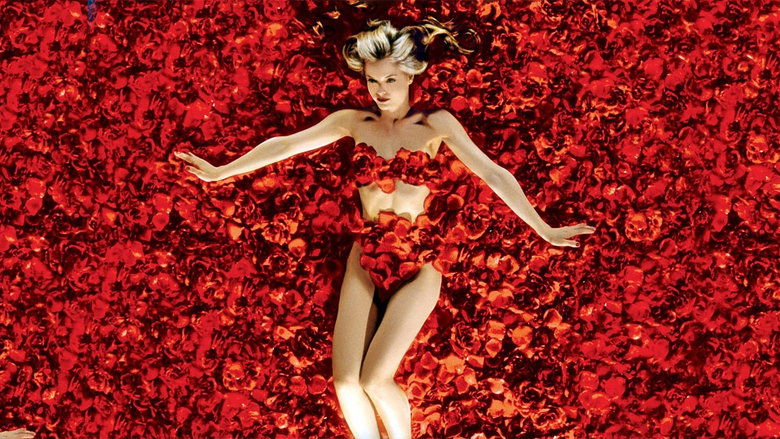
Red, particularly in the form of the American Beauty rose, is the film's most potent and recurring symbol. It represents passion, desire, life force, and rebellion against the sterile suburban landscape. For Lester, the red rose petals in his fantasies symbolize his intense, idealized lust for Angela. For Carolyn, who meticulously cultivates her red roses, they represent the fragile facade of suburban perfection. Ultimately, red signifies the repressed lifeblood that erupts throughout the narrative, culminating in Lester's death.

Context:

Red appears constantly: the Burnhams' front door, Carolyn's gardening clogs, the red convertible Lester buys, Angela's lipstick, and most iconically, the petals that inundate Lester's sexual fantasies about Angela. The film's final shot lingers on the splatter of Lester's blood—the ultimate expression of red—against a white wall.

Plastic Bag

Meaning:

The video of a plastic bag dancing in the wind, which Ricky shows to Jane, symbolizes the discovery of profound and transcendent beauty in the most mundane and overlooked objects. It represents a different kind of beauty—not the manicured, artificial beauty of Carolyn's roses, but a spontaneous, free, and elevated beauty found in the everyday. It speaks to the idea of a benevolent force or structure behind the seemingly chaotic nature of life.

Context:

Ricky presents this video to Jane as the most beautiful thing he has ever filmed. He explains his realization that there was an "entire life behind things" and a feeling of such overwhelming beauty that his "heart was going to cave in." It becomes a pivotal bonding moment for the two teenagers, who feel alienated from the superficial world around them.

Ricky's Camcorder

Meaning:

Ricky's camcorder represents a different way of seeing and the subjective nature of perception. Through his lens, he detaches himself from the world to observe it more closely, finding meaning and beauty where others see nothing. It is a tool for introspection and for capturing truths that lie beneath the surface, challenging viewers to question their own preconceived notions of what is important or beautiful.

Context:

Ricky is almost always seen with his camera, documenting his surroundings, from a dead bird to Jane through her bedroom window. His collection of tapes represents his attempt to capture and understand the world on his own terms. The film's opening shot is footage from his camera, immediately establishing his unique perspective as crucial to the narrative.

Philosophical Questions

What is the nature of true beauty?

The film constantly contrasts two ideas of beauty. The first is the conventional, manicured 'American Beauty' represented by Carolyn's prized roses and Angela's physical appearance—a beauty that is cultivated, superficial, and tied to societal approval. The second is the transcendent, unexpected beauty discovered by Ricky in a floating plastic bag or the sight of a dead bird. This raises the question of whether beauty is an inherent quality to be perfected and possessed, or a subjective experience found through a certain way of seeing the world. The film ultimately champions the latter, suggesting that true beauty is found not in perfection, but in the flawed, fleeting, and ordinary moments of life.

Can one achieve authentic freedom within the confines of society?

"American Beauty" explores the struggle for personal freedom against the immense pressure of societal norms and expectations. Lester's rebellion is a radical rejection of his prescribed role as a suburban husband and father. He seeks an adolescent freedom from responsibility. The film asks whether this kind of total break is necessary for an authentic life. Is it possible to find a balance between personal desire and societal obligation, or is conformity inherently soul-crushing? The film's tragic ending offers no easy answer, suggesting that the pursuit of absolute freedom can be both liberating and fatal.

What constitutes a meaningful life?

The film presents a cast of characters who are all, in their own way, grappling with a lack of meaning in their lives. Carolyn seeks meaning in professional success, Lester in recapturing his youth, and Angela in being desired. The film critiques these external sources of validation and suggests, particularly through Lester's final monologue, that a meaningful life is not defined by achievements or possessions, but by the accumulation of small, cherished moments: watching fireflies, the feel of a cousin's hand, and the simple memory of a family photo. It posits that meaning is found in gratitude and the appreciation of the life one has lived, however imperfect.

Core Meaning

The core meaning of "American Beauty" is a profound and satirical critique of the American middle-class's perception of happiness and fulfillment. The film suggests that the relentless pursuit of material success and the maintenance of a perfect facade—the conventional "American Dream"—leads to spiritual emptiness and profound unhappiness. Director Sam Mendes and writer Alan Ball argue that true beauty and meaning are not found in societal approval or material possessions, but in moments of genuine connection, self-liberation, and the appreciation of ordinary, often overlooked, aspects of life.

The film's message is that breaking free from societal constraints and personal inhibitions, however messy and chaotic the process might be, is essential for authentic living. Lester's journey, though initially sparked by misplaced lust, ultimately leads him to a state of grace where he can appreciate the small, beautiful moments of his life. It's a call to "look closer" beyond appearances and discover the extraordinary within the ordinary, even amidst decay and tragedy.