American Beauty
A darkly comedic drama that peels back the pristine veneer of suburbia, revealing the turbulent emotional currents and desperate search for beauty that lie beneath, all bathed in a haunting, rose-petal-strewn light.
American Beauty

American Beauty

"... look closer"

15 September 1999 United States of America 122 min ⭐ 8.0 (12,579)
Director: Sam Mendes
Cast: Kevin Spacey, Annette Bening, Thora Birch, Wes Bentley, Mena Suvari
Drama
The Illusion of the American Dream Sexuality and Repression Self-Liberation and Rebellion Finding Beauty in the Mundane
Budget: $15,000,000
Box Office: $356,296,601

Overview

"American Beauty" chronicles the last year in the life of Lester Burnham, a middle-aged advertising executive trapped in a seemingly perfect suburban existence. Voiced by Lester himself from beyond the grave, the narrative unfolds his profound midlife crisis. He despises his job, his marriage to the materialistic and neurotic real estate agent Carolyn is passionless, and his relationship with their insecure teenage daughter, Jane, is strained.

A potent catalyst for change arrives when Lester becomes infatuated with Jane's beautiful and confident best friend, Angela Hayes. This obsession ignites a rebellion within him; he quits his job, blackmails his boss, and reverts to a more carefree, adolescent state. Simultaneously, Carolyn embarks on an affair with a rival real estate mogul, while Jane finds a kindred spirit in their new, enigmatic neighbor, Ricky Fitts, a boy who finds profound beauty in the mundane and documents it with his camcorder.

As these characters navigate their desires, frustrations, and quests for self-liberation, their lives intersect in ways that are at once comedic, tragic, and deeply resonant. The film satirizes the hollow pursuit of the American Dream, exploring themes of conformity, repression, and the unexpected places where true beauty can be found.
Core Meaning

The core meaning of "American Beauty" is a profound and satirical critique of the American middle-class's perception of happiness and fulfillment. The film suggests that the relentless pursuit of material success and the maintenance of a perfect facade—the conventional "American Dream"—leads to spiritual emptiness and profound unhappiness. Director Sam Mendes and writer Alan Ball argue that true beauty and meaning are not found in societal approval or material possessions, but in moments of genuine connection, self-liberation, and the appreciation of ordinary, often overlooked, aspects of life.

The film's message is that breaking free from societal constraints and personal inhibitions, however messy and chaotic the process might be, is essential for authentic living. Lester's journey, though initially sparked by misplaced lust, ultimately leads him to a state of grace where he can appreciate the small, beautiful moments of his life. It's a call to "look closer" beyond appearances and discover the extraordinary within the ordinary, even amidst decay and tragedy.

Thematic DNA

The Illusion of the American Dream 35%
Sexuality and Repression 30%
Self-Liberation and Rebellion 20%
Finding Beauty in the Mundane 15%

The Illusion of the American Dream

The film relentlessly deconstructs the conventional American Dream as a hollow and soul-crushing pursuit. The Burnham family embodies this illusion: they have a beautiful house, respectable jobs, and the outward appearance of success, yet they are deeply miserable. Carolyn's obsession with material success and maintaining a perfect image contrasts sharply with the emotional decay within her family. The film posits that this dream, built on conformity and materialism, is a gilded cage that stifles individuality and genuine happiness.

Sexuality and Repression

Sexuality is a central driving force for the characters, often manifesting as a result of deep-seated repression. Lester's midlife crisis is triggered by his lust for Angela, a yearning for lost youth and vitality. Carolyn's affair is a desperate attempt to feel powerful and desired. The most tragic example is Colonel Fitts, whose repressed homosexuality leads to violent and fatal consequences. The film explores how societal and self-imposed repression of desire can lead to destructive behavior.

Self-Liberation and Rebellion

"American Beauty" is fundamentally a story about rebellion against conformity. Lester's transformation from a passive, 'dead already' suburbanite to a rebellious, pot-smoking, fast-food employee is his path to self-liberation. He rejects the expectations placed upon him by his job, his wife, and society. Similarly, Jane and Ricky seek freedom from their oppressive family environments, finding solace and connection in their shared outsider status. The film champions the act of breaking free, even if it leads to chaos and tragedy.

Finding Beauty in the Mundane

Contrasting with the artificial beauty pursued by characters like Carolyn, the film champions the idea of finding profound beauty in the ordinary and unexpected. This theme is most explicitly articulated through the character of Ricky Fitts, who sees and records immense beauty in seemingly mundane things, most famously a plastic bag dancing in the wind. His perspective suggests that there is an "entire life behind things" and that true beauty is accessible to anyone who takes the time to "look closer." Lester ultimately reaches this understanding in his final moments.

Character Analysis

Lester Burnham

Kevin Spacey

Archetype: Antihero / Everyman
Key Trait: Rebellious

Motivation

His primary motivation is to escape his meaningless, passionless existence and recapture a sense of freedom, vitality, and happiness. Initially, this desire is projected onto Angela, but it evolves into a broader quest for an authentic life lived on his own terms, free from the oppressive expectations of his wife and corporate America.

Character Arc

Lester begins the film as a passive, defeated man, describing himself as already dead. His infatuation with Angela awakens him from his stupor, leading to a rebellious adolescent regression where he quits his job, buys a sports car, and starts smoking pot. This rebellion, while selfish, is a journey of self-discovery. He regains a sense of personal freedom and agency. In the film's climax, he achieves a moment of grace and redemption when he chooses not to sleep with Angela, seeing her as a child. He dies not in despair, but in a state of enlightened happiness, appreciating the beauty of his life.

Carolyn Burnham

Annette Bening

Archetype: The Perfectionist / The Materialist
Key Trait: Materialistic

Motivation

Carolyn is motivated by a desperate need for control and the validation that comes from projecting an image of success and perfection. She believes that material possessions and professional achievement are the keys to happiness and respect, driving her to meticulously manage every aspect of her life and family.

Character Arc

Carolyn starts as a neurotic, materialistic real estate agent obsessed with the appearance of success. Her identity is tied to her career and her perfectly maintained home. Frustrated by her passionless marriage and professional failures, she seeks empowerment through an affair with a successful rival and by learning to shoot a gun. Her arc is one of escalating desperation. While she briefly experiences a sense of liberation, it's rooted in the same values of power and success she always held. Her final scene, sobbing while clutching Lester's clothes, suggests a shattering of her carefully constructed world and a potential for genuine, albeit tragic, emotional breakthrough.

Jane Burnham

Thora Birch

Archetype: The Outcast
Key Trait: Insecure

Motivation

Jane is motivated by a deep desire to escape her toxic family environment and find someone who sees and accepts her for who she is. She craves authenticity and a genuine emotional connection that is absent in her relationship with her parents and her superficial friendship with Angela.

Character Arc

Jane is introduced as a sullen, insecure teenager who resents her parents and has low self-esteem. She is disgusted by her father's obsession with her best friend and her mother's superficiality. Her arc is one of finding self-worth and genuine connection. Through her relationship with Ricky, she learns to see herself and the world differently, embracing her own unconventionality. She moves from a place of quiet resentment to one of active rebellion, planning to run away with Ricky to find a life where she can be herself.

Ricky Fitts

Wes Bentley

Archetype: The Visionary / The Mystic
Key Trait: Observant

Motivation

Ricky is motivated by a profound need to find and capture beauty in the world around him. He seeks to see beyond the surface of things to a deeper, more meaningful reality. This drives him to document his life with his camera and to connect with Jane, whom he sees as possessing a unique and authentic beauty.

Character Arc

Ricky is the film's spiritual and philosophical center. Having endured a traumatic upbringing under his abusive father, including time in a mental institution, he has developed a detached, observational perspective on life. His arc is less about transformation and more about his impact on others, particularly Jane. He remains consistent in his worldview, finding beauty and meaning where others do not. His arc culminates in his decision to leave his oppressive home with Jane, choosing love and freedom over conformity and fear.

Angela Hayes

Mena Suvari

Archetype: The Temptress / The Ingénue
Key Trait: Insecure

Motivation

Angela is motivated by a desperate need to be noticed and to be considered special and desirable. She fears being ordinary and uses her sexuality as a tool to gain power and validation from others, masking her profound insecurity and fear of being average.

Character Arc

Angela presents herself as a sexually experienced and confident seductress, craving attention and admiration. She believes her value lies in her desirability. Her arc involves the stripping away of this false persona. She is flattered by Lester's attention and plays along, but her confidence is a fragile facade for deep-seated insecurity. In her final scene with Lester, she admits she is a virgin, revealing the scared and vulnerable young woman beneath the bravado. This moment of honesty is her turning point, leading to a genuine, non-sexual connection with Lester.

Symbols & Motifs

Red and Roses

Meaning:

Red, particularly in the form of the American Beauty rose, is the film's most potent and recurring symbol. It represents passion, desire, life force, and rebellion against the sterile suburban landscape. For Lester, the red rose petals in his fantasies symbolize his intense, idealized lust for Angela. For Carolyn, who meticulously cultivates her red roses, they represent the fragile facade of suburban perfection. Ultimately, red signifies the repressed lifeblood that erupts throughout the narrative, culminating in Lester's death.

Context:

Red appears constantly: the Burnhams' front door, Carolyn's gardening clogs, the red convertible Lester buys, Angela's lipstick, and most iconically, the petals that inundate Lester's sexual fantasies about Angela. The film's final shot lingers on the splatter of Lester's blood—the ultimate expression of red—against a white wall.

Plastic Bag

Meaning:

The video of a plastic bag dancing in the wind, which Ricky shows to Jane, symbolizes the discovery of profound and transcendent beauty in the most mundane and overlooked objects. It represents a different kind of beauty—not the manicured, artificial beauty of Carolyn's roses, but a spontaneous, free, and elevated beauty found in the everyday. It speaks to the idea of a benevolent force or structure behind the seemingly chaotic nature of life.

Context:

Ricky presents this video to Jane as the most beautiful thing he has ever filmed. He explains his realization that there was an "entire life behind things" and a feeling of such overwhelming beauty that his "heart was going to cave in." It becomes a pivotal bonding moment for the two teenagers, who feel alienated from the superficial world around them.

Ricky's Camcorder

Meaning:

Ricky's camcorder represents a different way of seeing and the subjective nature of perception. Through his lens, he detaches himself from the world to observe it more closely, finding meaning and beauty where others see nothing. It is a tool for introspection and for capturing truths that lie beneath the surface, challenging viewers to question their own preconceived notions of what is important or beautiful.

Context:

Ricky is almost always seen with his camera, documenting his surroundings, from a dead bird to Jane through her bedroom window. His collection of tapes represents his attempt to capture and understand the world on his own terms. The film's opening shot is footage from his camera, immediately establishing his unique perspective as crucial to the narrative.

Memorable Quotes

My name is Lester Burnham. This is my neighborhood. This is my street. This... is my life. I am 42 years old. In less than a year, I'll be dead. Of course, I don't know that yet. And in a way, I'm dead already.

— Lester Burnham

Context:

This is part of the opening voiceover narration by Lester, playing over aerial shots of his suburban neighborhood. It sets a fatalistic and ironic tone, introducing the audience to his profound sense of dissatisfaction before the main plot begins.

Meaning:

This opening line establishes the film's narrative framework (a story told from beyond the grave) and its central theme of spiritual death within a seemingly perfect life. It immediately signals that the film will be a dark, satirical exploration of suburban ennui and one man's tragic journey to reclaim his life moments before its end.

Sometimes there's so much beauty in the world, I feel like I can't take it, and my heart is just going to cave in.

— Ricky Fitts

Context:

Ricky says this to Jane after showing her his video of a plastic bag dancing in the wind. It is a moment of profound vulnerability and connection, where he shares his deepest feelings and worldview, fundamentally changing how Jane sees him and the world.

Meaning:

This quote encapsulates the film's core philosophical message: the idea that overwhelming, transcendent beauty can be found in the most mundane and unexpected places. It articulates an alternative to the superficial, materialistic values of the adult world, suggesting a more spiritual and appreciative way of experiencing life.

Look closer.

— Tagline

Context:

This phrase was used in all of the film's promotional material, including posters and trailers, serving as a thematic key to unlock the movie's deeper meanings about appearance versus reality.

Meaning:

While not a spoken line, this is the film's official tagline and it perfectly captures its central thesis. It's an instruction to the audience to look beyond the pristine surfaces of suburban life, the perfect lawns, the smiling family photos, and the confident facades of the characters to see the pain, longing, and hidden beauty that lie beneath.

Philosophical Questions

What is the nature of true beauty?

The film constantly contrasts two ideas of beauty. The first is the conventional, manicured 'American Beauty' represented by Carolyn's prized roses and Angela's physical appearance—a beauty that is cultivated, superficial, and tied to societal approval. The second is the transcendent, unexpected beauty discovered by Ricky in a floating plastic bag or the sight of a dead bird. This raises the question of whether beauty is an inherent quality to be perfected and possessed, or a subjective experience found through a certain way of seeing the world. The film ultimately champions the latter, suggesting that true beauty is found not in perfection, but in the flawed, fleeting, and ordinary moments of life.

Can one achieve authentic freedom within the confines of society?

"American Beauty" explores the struggle for personal freedom against the immense pressure of societal norms and expectations. Lester's rebellion is a radical rejection of his prescribed role as a suburban husband and father. He seeks an adolescent freedom from responsibility. The film asks whether this kind of total break is necessary for an authentic life. Is it possible to find a balance between personal desire and societal obligation, or is conformity inherently soul-crushing? The film's tragic ending offers no easy answer, suggesting that the pursuit of absolute freedom can be both liberating and fatal.

What constitutes a meaningful life?

The film presents a cast of characters who are all, in their own way, grappling with a lack of meaning in their lives. Carolyn seeks meaning in professional success, Lester in recapturing his youth, and Angela in being desired. The film critiques these external sources of validation and suggests, particularly through Lester's final monologue, that a meaningful life is not defined by achievements or possessions, but by the accumulation of small, cherished moments: watching fireflies, the feel of a cousin's hand, and the simple memory of a family photo. It posits that meaning is found in gratitude and the appreciation of the life one has lived, however imperfect.

Alternative Interpretations

While the film is widely seen as a critique of suburban phoniness, there are several alternative and nuanced interpretations. One perspective argues that the film is not just a satire, but a profound tragedy about loneliness and the inability to connect. Each character is isolated in their own private misery, and their attempts to break free often only deepen their solitude. Lester's final epiphany is beautiful, but it's achieved only in death, making it a tragic, not triumphant, victory.

Another interpretation views the film through a more cynical lens, suggesting that Lester's rebellion isn't a heroic act of self-liberation but a selfish and destructive midlife crisis. From this viewpoint, he remains a 'willing devotee of the popular media's exaltation of pubescent male sexuality' and only stumbles into a moment of grace by accident. His actions cause pain to his family, and his quest for freedom is ultimately a narcissistic one. This reading is supported by some critics who found the characters to be contrived and the film's philosophical pronouncements to be pretentious.

Finally, some analyses focus on the film's exploration of repressed homosexuality as the central catalyst for the story's tragic climax. In this reading, Colonel Fitts is the story's most tragic figure. His intense self-loathing and repressed desire, misdirected at both his son and Lester, is the ultimate source of violence. The film becomes a commentary on the destructive nature of homophobia and the violent consequences of forcing individuals to deny their true selves.

Cultural Impact

Released at the cusp of the new millennium, "American Beauty" captured the cultural zeitgeist of late-90s disillusionment with the promises of post-war American prosperity. It tapped into a growing sense of spiritual emptiness and suburban discontent that resonated deeply with both critics and audiences, becoming one of the best-reviewed American films of 1999.

Its influence on cinema was significant. The film helped to popularize a certain brand of suburban satire, influencing a wave of films and television shows in the 2000s that explored the dark underbelly of the American Dream, such as "Donnie Darko," "The Stepford Wives" (2004 remake), and TV shows like "Desperate Housewives" and "Weeds." Its visual style, particularly the work of cinematographer Conrad L. Hall, with its static, composed shots and symbolic use of color, was widely praised and imitated.

The film was a massive critical and commercial success, grossing over $356 million worldwide on a $15 million budget and winning five major Academy Awards, including Best Picture. This cemented its place in the cinematic canon. In pop culture, the image of Mena Suvari covered in red rose petals became an iconic and frequently parodied image. The film's philosophical musings, especially Ricky's monologue about the plastic bag, entered the cultural lexicon, becoming a touchstone for discussions about finding beauty in the mundane, though it has also been a target of parody for its perceived pretentiousness.

Audience Reception

Audiences were largely captivated by "American Beauty," leading to its significant box office success and enduring popularity. Many viewers praised the film's sharp writing, dark humor, and stunning visuals, particularly the cinematography of Conrad L. Hall. The performances, especially by Kevin Spacey and Annette Bening, were widely acclaimed. The film's central themes of suburban disillusionment and the search for meaning resonated with many who felt a similar sense of malaise in their own lives. It was often described as powerful, thought-provoking, and emotionally affecting.

However, the reception was not universally positive. A significant point of criticism, both at the time and in retrospect, was the film's perceived pretentiousness. Some viewers found characters like Ricky Fitts and his philosophical monologues, particularly about the plastic bag, to be contrived and emotionally manipulative. Others criticized the film for its cynical and somewhat smug tone, arguing that it looked down on its suburban subjects. Over time, some have re-evaluated the film as being less profound than it initially appeared, a stylish but ultimately hollow critique of conformity.

Interesting Facts

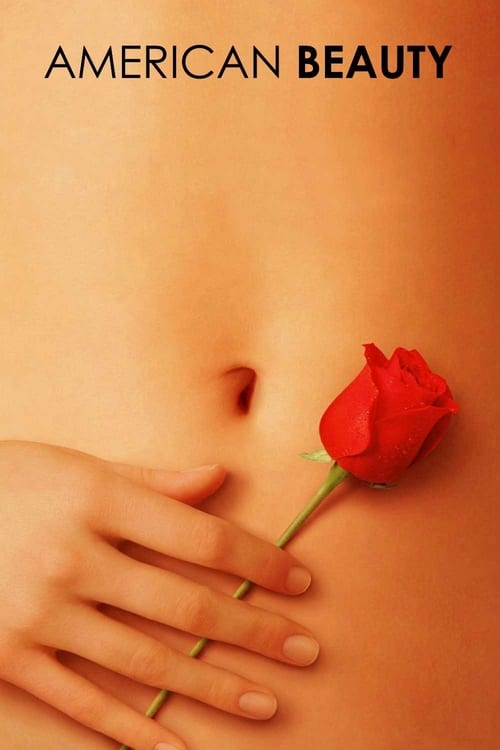
  • The iconic poster image of a stomach with a hand holding a rose is actually actress Chloe Hunter's stomach, not Mena Suvari's.
  • The film was Sam Mendes's feature directorial debut. He was primarily known for his work in theater before this.
  • Screenwriter Alan Ball was partly inspired to write the story after witnessing the media circus surrounding the Amy Fisher trial in the early 1990s.
  • The scene with the plastic bag was inspired by a real-life experience Alan Ball had.
  • Jake Gyllenhaal and Seth Green were considered for the role of Ricky Fitts.
  • The film won five Academy Awards, including Best Picture, Best Director, Best Actor (for Spacey), Best Original Screenplay, and Best Cinematography.
  • The original script was reportedly darker and more cynical, but director Sam Mendes made changes during editing to soften the tone slightly.

⚠️ Spoiler Analysis

Click to reveal detailed analysis with spoilers

Frequently Asked Questions

Explore More About This Movie

Dive deeper into specific aspects of the movie with our detailed analysis pages

Comments (0)

Leave a comment

No comments yet. Be the first to share your thoughts!