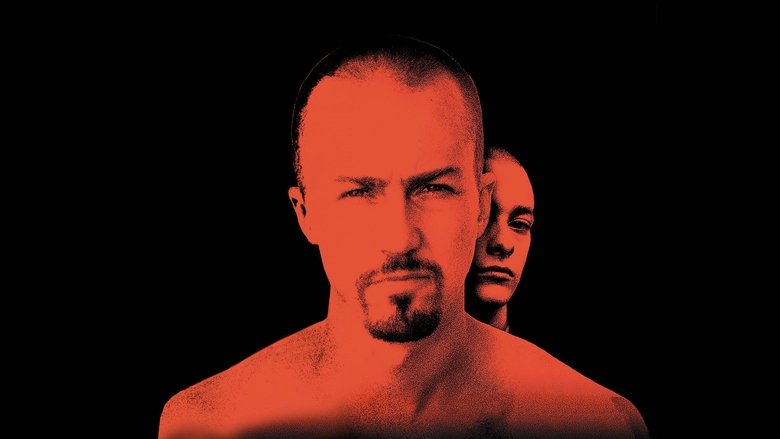
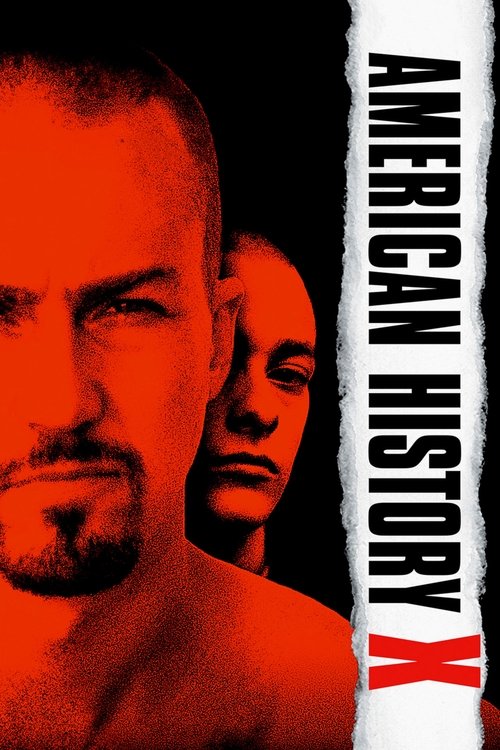
American History X
A visceral and unflinching drama that explores the devastating legacy of hatred through the fractured lens of brotherly love, presented as a stark, monochrome memory colliding with a color-saturated present.
American History X
American History X

"Some Legacies Must End."

01 July 1998 United States of America 119 min ⭐ 8.3 (12,073)
Director: Tony Kaye
Cast: Edward Norton, Edward Furlong, Beverly D'Angelo, Jennifer Lien, Ethan Suplee
Drama
The Cycle of Hatred and Violence Redemption and Transformation Family and Influence Ideology and Manipulation
Budget: $20,000,000
Box Office: $23,900,000

American History X - Ending Explained

⚠️ Spoiler Analysis

The entire narrative structure of "American History X" builds toward a devastating final act that re-contextualizes Derek's journey. The non-linear storytelling, alternating between the black-and-white past and the color present, juxtaposes the man Derek was with the man he is trying to become. The major twist in his backstory is the reason for his change in prison. He wasn't swayed by moral arguments alone; he was betrayed by his own neo-Nazi brethren. He discovered the Aryan Brotherhood was a hypocritical criminal enterprise involved in drug trade with non-white gangs. This disillusionment, combined with the brutal sexual assault he suffers at their hands and the unexpected kindness from his Black laundry co-worker, Lamont, shatters his worldview completely.

The ultimate plot turn is the film's tragic ending. After Derek has successfully convinced Danny to leave the white supremacist movement, and Danny has submitted his cathartic paper to Dr. Sweeney, the audience is led to believe that the crisis has been averted. However, Danny is ambushed and shot to death in the school bathroom by the same Black student he had a minor confrontation with earlier in the day. This ending is cruelly ironic. Derek's redemption does not grant him or his family immunity from the violence that permeates their world. The hidden meaning is that hatred, once unleashed, has a life of its own. Danny's murder is not an act of neo-Nazi retribution but a seemingly unrelated act of school violence, yet it is born from the same undercurrents of anger and conflict that Derek's movement amplified. The final quote from Abraham Lincoln about the "better angels of our nature" becomes a gut-wrenching lament for a peace that could not be achieved. Derek is left alive, but forced to carry the ultimate baggage: the knowledge that his past actions indirectly led to the death of the brother he was trying to save.

Alternative Interpretations

One of the most significant points of contention and alternative interpretation surrounds the film's ending and the director's original vision. Director Tony Kaye's intended ending would have shown Derek, after Danny's death, shaving his head again, implying that the cycle of hate was unbreakable and that he was reverting to his old ways. This interpretation suggests a far more pessimistic view: that redemption is ultimately futile in the face of such profound loss and that Derek's core identity remains rooted in violence.

The theatrical ending, which concludes with Danny's tragic death and his hopeful words from Lincoln, is more ambiguous. Some viewers interpret Derek's grief-stricken cry of "What did I do?" as a moment of final, painful acceptance of his own responsibility, suggesting he will not relapse but will instead have to live with the devastating consequences of the hatred he once spread. This reading preserves the possibility of his redemption, albeit at an unbearable cost.

Another critical perspective argues that the film, despite its intentions, inadvertently glorifies its protagonist. Derek is portrayed as intelligent, charismatic, and powerful, even during his time as a neo-Nazi leader. Some critics argue that this makes his hateful ideology appear seductive and that his redemption arc is too simplistic, failing to fully grapple with the systemic nature of racism and instead reducing it to a problem of individual anger.