American History X
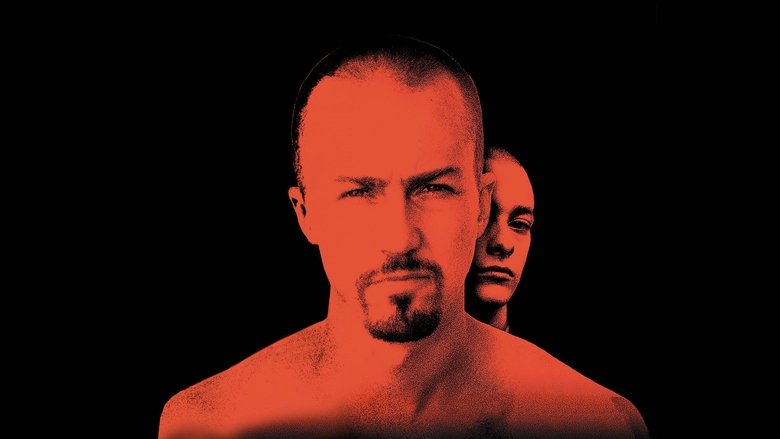
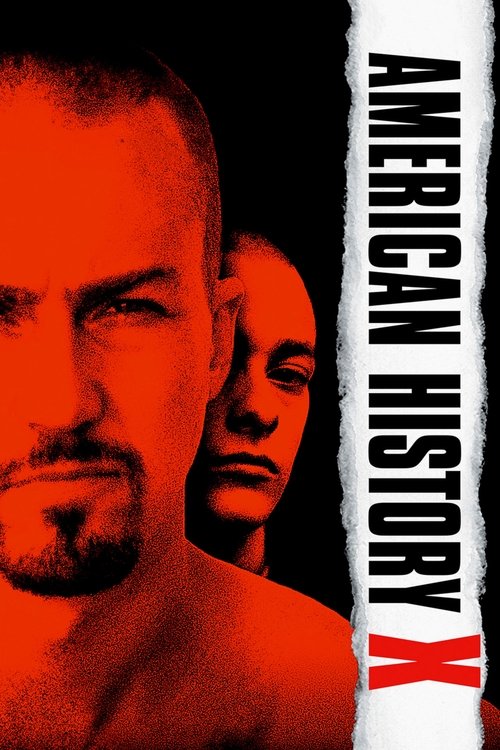
A visceral and unflinching drama that explores the devastating legacy of hatred through the fractured lens of brotherly love, presented as a stark, monochrome memory colliding with a color-saturated present.
American History X

American History X

"Some Legacies Must End."

01 July 1998 United States of America 119 min ⭐ 8.3 (12,073)
Director: Tony Kaye
Cast: Edward Norton, Edward Furlong, Beverly D'Angelo, Jennifer Lien, Ethan Suplee
Drama
The Cycle of Hatred and Violence Redemption and Transformation Family and Influence Ideology and Manipulation
Budget: $20,000,000
Box Office: $23,900,000

Overview

"American History X" is a powerful and provocative drama that unfolds in Venice Beach, Los Angeles. The story centers on Derek Vinyard (Edward Norton), a charismatic and intelligent young man who becomes a leader in the neo-Nazi movement after his firefighter father is killed by Black drug dealers. His descent into violent white supremacy profoundly influences his younger brother, Danny (Edward Furlong).

The narrative is presented non-linearly, with scenes from the past shot in stark black and white, depicting Derek's rise as a skinhead leader, culminating in his imprisonment for the brutal voluntary manslaughter of two Black men who tried to steal his truck. The present-day events, shown in color, follow Derek's release from prison three years later. He emerges a changed man, horrified by his past and desperate to prevent Danny from following the same destructive path.

As Derek tries to sever ties with his old gang and its manipulative leader, Cameron Alexander (Stacy Keach), he confronts the deep-seated hatred he once championed. The film's tension builds as Derek races against time to save his brother, forcing both to confront the devastating consequences of their ideology and the possibility of redemption in a world still rife with racial conflict.


Core Meaning

"American History X" serves as a cautionary tale about the genesis and destructive nature of hatred. The director, Tony Kaye, aims to illustrate how racism is a learned behavior, often seeded by family and societal influences, and nurtured by anger and misinformation. The film's central message is encapsulated in Danny's final paper: "Hate is baggage. Life's too short to be pissed off all the time. It's just not worth it."

The film argues that ideologies built on hate are ultimately self-destructive, leading to the disintegration of family, community, and one's own humanity. Derek's transformation in prison underscores the idea that change is possible, but it comes at a great cost and does not erase the consequences of past actions. The tragic ending suggests that the cycle of violence, once set in motion, is incredibly difficult to break, and its repercussions can be both devastating and indiscriminate.

Thematic DNA

The Cycle of Hatred and Violence 35%
Redemption and Transformation 30%
Family and Influence 20%
Ideology and Manipulation 15%

The Cycle of Hatred and Violence

The film's primary theme is the cyclical and self-perpetuating nature of hatred. Derek's racism is fueled by his father's prejudices and then his murder, which leads Derek to commit acts of violence that land him in prison. In turn, his actions inspire Danny to embrace the same ideology. The tragic ending, where Danny is killed by a Black schoolmate he had a conflict with earlier, demonstrates that violence begets more violence, and the cycle is tragically completed, showing that Derek's past actions have inescapable consequences.

Redemption and Transformation

Derek's journey is one of profound transformation. In prison, isolated from his former neo-Nazi allies who he discovers are hypocritical criminals, and through an unlikely friendship with a Black inmate, Lamont, he begins to question his beliefs. His pivotal moment comes after he is brutally raped by the Aryan Brotherhood, forcing him to confront the question from his former teacher, Dr. Sweeney: "Has anything you've done made your life better?" His redemption is genuine, but the film powerfully argues that personal change cannot always prevent tragedy or undo past wrongs.

Family and Influence

The film intricately explores how family dynamics can foster and combat hatred. Derek's father plants the initial seeds of racism through dinner-table conversations. After his father's death, Derek becomes a surrogate father figure to Danny, leading him down the path of white supremacy. The story is also about Derek's attempt to reclaim that influence for good upon his release, desperately trying to undo the damage he has done to his family, which has been fractured by his ideology.

Ideology and Manipulation

"American History X" examines how charismatic figures manipulate vulnerable and angry youth. Cameron Alexander, an older, more calculating white supremacist, exploits Derek's intelligence and anger to build a violent movement. The film critiques the intellectual bankruptcy of racist ideology, showing it to be a mishmash of historical revisionism and scapegoating that provides easy answers for complex social problems. Derek's eventual realization that the movement is built on lies and hypocrisy is a key part of his transformation.

Character Analysis

Derek Vinyard

Edward Norton

Archetype: Antihero / Reformed Sinner
Key Trait: Charismatic and Intense

Motivation

Initially, his motivation is a twisted sense of justice and racial pride, fueled by his father's racist rhetoric and subsequent murder. After his reformation, his motivation shifts entirely to protecting his family, especially Danny, from the destructive path he himself forged.

Character Arc

Derek begins as a highly intelligent but deeply angry young man, channeling his grief over his father's murder into becoming a charismatic and violent neo-Nazi leader. His time in prison serves as a brutal crucible; he is betrayed and assaulted by the very Aryan Brotherhood he championed, which shatters his ideological convictions. He emerges humbled, filled with remorse, and singularly focused on saving his younger brother from the same fate, representing a powerful, albeit tragic, arc of redemption.

Danny Vinyard

Edward Furlong

Archetype: The Follower / The Innocent
Key Trait: Impressionable

Motivation

Danny's primary motivation is to emulate his older brother, whom he views as a hero. He craves the sense of belonging and power that he perceives in Derek's neo-Nazi gang.

Character Arc

Danny starts the film idolizing his older brother, readily adopting his white supremacist views and seeking to follow in his footsteps. He is impressionable and caught in Derek's powerful orbit. Throughout the day of Derek's return, he is forced to confront the ugliness behind the ideology he embraced. He listens to Derek's story of transformation and ultimately renounces his hatred, completing his own arc of enlightenment just before his tragic death.

Dr. Bob Sweeney

Avery Brooks

Archetype: The Mentor
Key Trait: Principled and Persistent

Motivation

Sweeney is motivated by a deep-seated belief in education as a tool for change and a personal commitment to steering vulnerable students away from destructive paths. He reveals his own past struggles with racism, adding depth to his determination.

Character Arc

Dr. Sweeney is the high school principal who serves as the moral compass of the film. He was Derek's history teacher and refuses to give up on him, visiting him in prison to challenge his worldview. In the present, he takes on the task of reforming Danny by assigning him the "American History X" paper. His arc is one of steadfast mentorship, believing in the capacity for change even in the face of immense hatred.

Cameron Alexander

Stacy Keach

Archetype: The Corruptor / The Shadow
Key Trait: Manipulative

Motivation

Cameron is motivated by a desire for power and influence, using racist ideology as a tool to recruit and control followers. He preys on the anger and frustration of young white men to build his movement.

Character Arc

Cameron is the older, behind-the-scenes propagandist who manipulates disaffected youths like Derek. He shows no personal development and remains a committed and manipulative leader of the white supremacist movement. His character represents the insidious, intellectualized evil that fuels the violent actions of others. He is based on the real-life white supremacist leader Tom Metzger.

Symbols & Motifs

Black and White Cinematography

Meaning:

The use of black and white for flashback sequences symbolizes Derek's past mindset, which was rigid, simplistic, and saw the world in absolute terms of good and evil, black and white. It visually represents the stark and unforgiving nature of his neo-Nazi ideology. The present-day scenes are in color, signifying his more nuanced and complex understanding of the world after his transformation.

Context:

All scenes depicting events before Derek's release from prison—his radicalization, his leadership of the gang, and the murders—are presented in black and white. The film shifts to color for the present timeline, highlighting the contrast between his past and his reformed present.

Swastika Tattoo

Meaning:

The large swastika tattooed on Derek's chest is the most prominent visual symbol of his commitment to the neo-Nazi movement. It represents his deep-seated hatred, his identity as a white supremacist, and the violent ideology he has embraced. It is a brand that marks him, both to others and to himself.

Context:

The tattoo is featured prominently in many key scenes, including the basketball game, the curb-stomp murder, and his arrest, where he smiles defiantly. In the original ending conceived by the director, Derek would have been seen shaving his head again in front of a mirror, with the swastika visible, suggesting a relapse into his old ways.

The Curb Stomp

Meaning:

This act of extreme and brutal violence is a horrifying symbol of Derek's dehumanization of his victims and the ultimate expression of his hatred. It represents the absolute loss of morality and the terrifying endpoint of his racist ideology. It is the single act that defines his past and haunts his present.

Context:

After catching two Black men trying to steal his truck, Derek shoots one and then forces the other to bite the street curb before stomping on the back of his head. This infamous and graphic scene is what leads to his three-year prison sentence.

Memorable Quotes

Hate is baggage. Life's too short to be pissed off all the time. It's just not worth it.

— Danny Vinyard

Context:

This is part of the voiceover from Danny's paper, which he has just finished writing. The quote is heard over the tragic final scene as Derek cradles his dying brother in the school bathroom.

Meaning:

This line, from the conclusion of Danny's essay, encapsulates the film's central message. It signifies his and Derek's ultimate realization that hatred is a destructive burden that poisons one's life without offering any real solutions or peace.

Has anything you've done made your life better?

— Dr. Bob Sweeney

Context:

Dr. Sweeney asks Derek this question in the prison infirmary after Derek has been brutally raped by the Aryan Brotherhood. It is a moment of profound vulnerability and realization for Derek.

Meaning:

This simple, direct question is the turning point for Derek's transformation. It forces him to confront the reality that his violent actions and hateful ideology have brought him nothing but pain, loss, and imprisonment, stripping away all of his justifications.

We are not enemies, but friends. We must not be enemies. Though passion may have strained, it must not break our bonds of affection. The mystic chords of memory will swell when again touched, as surely they will be, by the better angels of our nature.

— Danny Vinyard (quoting Abraham Lincoln)

Context:

These are the final lines of Danny's paper and the final words heard in the film, read in voiceover as the camera focuses on the school building after his death.

Meaning:

This quote, from Abraham Lincoln's first inaugural address, serves as an ironic and tragic bookend to the film. It expresses a hope for reconciliation and unity that is tragically shattered by Danny's murder, highlighting the deep chasm that still exists and the difficulty of appealing to our "better angels."

Philosophical Questions

Is redemption possible without atonement, and can it erase past sins?

The film deeply explores this question through Derek's journey. He undergoes a genuine transformation and seeks redemption by trying to save his brother. However, the ending powerfully argues that his change of heart does not absolve him of his past. Danny's death is a direct consequence of the world of hate Derek introduced him to. The film suggests that while personal change is possible and necessary, it cannot undo the harm caused, and the piper must eventually be paid. Derek is redeemed in his beliefs, but he is not saved from the tragic fallout of his history.

Are we products of our environment, or do we have ultimate free will over our beliefs?

"American History X" presents a complex interplay between nature and nurture. Derek's racism is clearly shown to be learned: first from his father's casual bigotry, then amplified by a manipulative ideologue, and finally solidified by personal tragedy. His ability to unlearn this hatred in the equally harsh environment of prison suggests the power of individual choice and critical thinking. The film doesn't offer a simple answer, instead showing that while environmental factors can create a monster, the capacity for change—the exercise of free will—remains, however difficult it may be to access.

Can the cycle of violence ever truly be broken?

This is the central, haunting question of the film's conclusion. Derek successfully breaks his own personal cycle of hatred, and he manages to pull his brother out of it as well. Yet, the larger societal cycle of violence claims Danny's life. His death is not directly at the hands of the neo-Nazi movement but is a result of a separate, more mundane conflict at school that escalates to murder. This suggests that the poison of violence and hatred is so pervasive in society that even when one escapes a specific ideology, the threat remains. The ending leaves the audience to ponder whether individual change is enough to alter a violent culture.

Alternative Interpretations

One of the most significant points of contention and alternative interpretation surrounds the film's ending and the director's original vision. Director Tony Kaye's intended ending would have shown Derek, after Danny's death, shaving his head again, implying that the cycle of hate was unbreakable and that he was reverting to his old ways. This interpretation suggests a far more pessimistic view: that redemption is ultimately futile in the face of such profound loss and that Derek's core identity remains rooted in violence.

The theatrical ending, which concludes with Danny's tragic death and his hopeful words from Lincoln, is more ambiguous. Some viewers interpret Derek's grief-stricken cry of "What did I do?" as a moment of final, painful acceptance of his own responsibility, suggesting he will not relapse but will instead have to live with the devastating consequences of the hatred he once spread. This reading preserves the possibility of his redemption, albeit at an unbearable cost.

Another critical perspective argues that the film, despite its intentions, inadvertently glorifies its protagonist. Derek is portrayed as intelligent, charismatic, and powerful, even during his time as a neo-Nazi leader. Some critics argue that this makes his hateful ideology appear seductive and that his redemption arc is too simplistic, failing to fully grapple with the systemic nature of racism and instead reducing it to a problem of individual anger.

Cultural Impact

Upon its release in 1998, "American History X" was met with critical acclaim, particularly for Edward Norton's powerhouse performance which earned him an Academy Award nomination for Best Actor. However, it was also highly controversial for its graphic violence and unflinching depiction of racial hatred. The film entered a cultural landscape grappling with issues of race, extremism, and urban violence in post-Rodney King Los Angeles.

Its influence on cinema can be seen in its raw, visceral style and its non-linear narrative structure. The film's daring approach to a sensitive subject paved the way for other films to explore the complexities of racism and redemption. It has become a staple in educational settings, used in sociology and history classes to provoke discussions about the roots of prejudice and the consequences of hate crimes.

Over time, the film's relevance has only grown. Critics have noted that the rhetoric used by Derek in the film eerily prefigures the language that has entered mainstream political discourse in subsequent decades, making the film feel prescient. While some have criticized the film for potentially making a neo-Nazi character charismatic and for simplifying the motivations for racism, it remains a potent and disturbing cultural artifact. It has had a lasting impact on pop culture, with the "curb stomp" scene becoming an infamous and widely referenced moment in film history. The film forces audiences to confront the uncomfortable reality of hatred in America, ensuring its continued discussion and analysis.

Audience Reception

Audiences surveyed by CinemaScore gave "American History X" a grade of "A" on an A to F scale, indicating a highly positive reception. Viewers consistently praise the film for its powerful and unflinching message against racism, its emotional depth, and, above all, the commanding and transformative performance by Edward Norton, which is almost universally cited as the film's greatest strength. Many find the film to be a deeply moving and thought-provoking experience that stays with them long after viewing.

The main points of criticism from some audience members often revolve around the film's intense and graphic violence, particularly the infamous curb-stomp scene, which some find gratuitously shocking. Other critiques mirror those of some professional critics, suggesting the film's message can feel heavy-handed or "preachy" at times, and that the narrative oversimplifies the complex roots of racism by tying it too neatly to a single tragic event. The ending is also a point of controversy; while many find it tragically powerful, others feel it is overwhelmingly bleak or that it undermines Derek's redemption arc. Despite these criticisms, the overall verdict from audiences is that it is a vital, challenging, and important film.

Interesting Facts

  • To prepare for the role of Derek Vinyard, Edward Norton gained about 30 pounds of muscle and shaved his head.
  • The character of Derek Vinyard was partly inspired by the life of Frank Meeink, a real-life former skinhead who reformed after his time in prison.
  • Joaquin Phoenix was offered the lead role of Derek Vinyard but turned it down because he was uncomfortable with the subject matter.
  • Director Tony Kaye was so dissatisfied with the final cut of the film, which was re-edited by the studio and Edward Norton, that he tried to have his name removed from the credits and replaced with the pseudonym 'Humpty Dumpty'. He even filed a $200 million lawsuit against New Line Cinema and the Directors Guild of America.
  • Edward Norton took a significant pay cut of about $500,000 to ensure the film could be made within its budget.
  • The diner where Derek and Danny have breakfast is the same diner used in the film 'The Big Lebowski' (1998).
  • The original screenplay ended with Derek shaving his head again after Danny's murder, implying a return to his neo-Nazi ways. Edward Norton was instrumental in changing this ending.

⚠️ Spoiler Analysis

Click to reveal detailed analysis with spoilers

Frequently Asked Questions

Explore More About This Movie

Dive deeper into specific aspects of the movie with our detailed analysis pages

Comments (0)

Leave a comment

No comments yet. Be the first to share your thoughts!