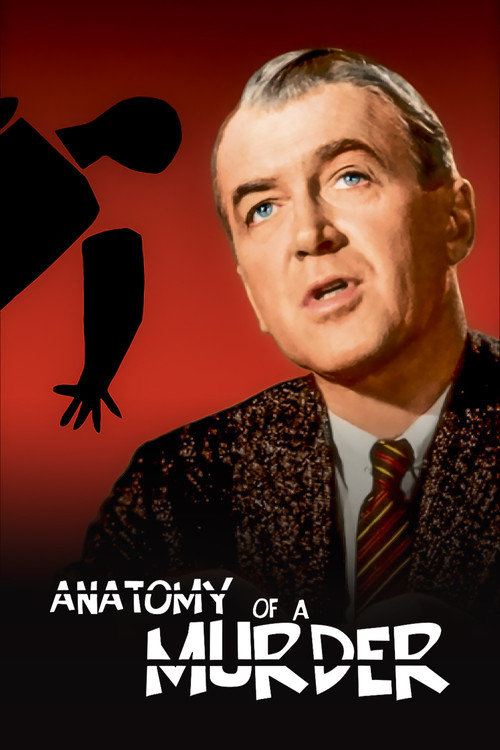
"No search of human emotions has ever probed so deeply, so truthfully as… Anatomy of a Murder."
Director: Otto Preminger
Cast: James Stewart, Lee Remick, Ben Gazzara, Arthur O'Connell, Eve Arden
Anatomy of a Murder — Characters & Cast
Character Analysis
Paul Biegler
James Stewart
Motivation
Initially motivated by the need to pay his bills, Biegler becomes intellectually and competitively invested in the complex case. He is driven by the challenge of crafting a viable defense for a difficult and unsympathetic client against a formidable opponent.
Character Arc
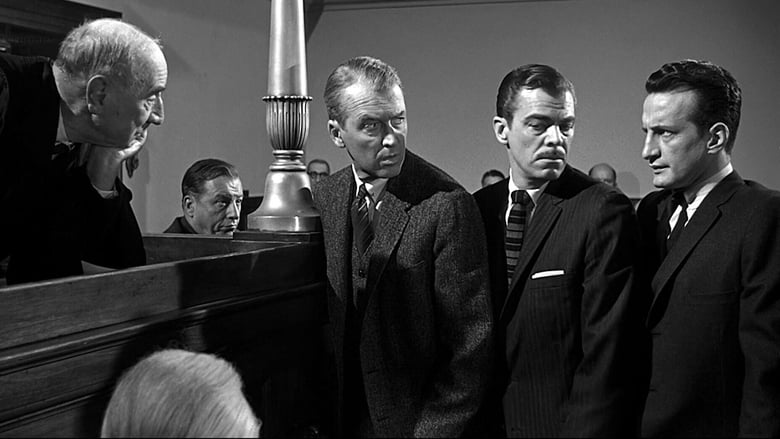
Paul Biegler begins as a semi-retired, disillusioned former prosecutor who has lost his passion for the law. Taking on the Manion case reignites his legal mind and competitive spirit. Throughout the trial, he demonstrates his sharp intellect and cunning legal maneuvering, ultimately achieving a victory that re-establishes his reputation. The ending, however, leaves him unpaid and perhaps more cynical, as he is left to ponder the true nature of justice.
Laura Manion
Lee Remick
Motivation
Her primary motivation appears to be securing her husband's freedom. However, her flirtatious behavior and conflicting statements suggest more complex and possibly self-serving motives that are never fully revealed.
Character Arc
Laura Manion is presented as a deeply ambiguous character. She oscillates between a vulnerable victim and a seductive manipulator, and her true nature remains a mystery throughout the film. Her arc is not one of transformation but of sustained enigma. The audience is never certain if she is a loyal wife who was brutally assaulted or a calculating woman who played a role in a deceptive scheme. Her character challenges traditional female roles of the era.
Lt. Frederick Manion
Ben Gazzara
Motivation
His stated motivation for the murder is revenge for the rape of his wife. However, his actions are also driven by a jealous and possessive nature. Ultimately, his primary motivation is self-preservation, using any means necessary to avoid conviction.
Character Arc
Lt. Manion is an arrogant, cunning, and unrepentant defendant who admits to the killing but claims a lack of memory. He shows little character development, remaining a cold and calculating figure throughout. His arc is defined by his ability to follow Biegler's legal guidance, leading to his acquittal. His final act of skipping town without paying his lawyer, using the very defense that freed him, solidifies his cynical and manipulative nature.
Claude Dancer
George C. Scott
Motivation
Dancer is motivated by professional ambition and a desire to secure a conviction. He is driven to win the high-profile case and sees it as a battle of wits against Biegler.
Character Arc
Claude Dancer is the sharp, relentless, and ambitious prosecutor from the big city. He serves as Biegler's primary foil in the courtroom. He does not undergo a significant personal change but consistently represents the formidable power of the state's legal apparatus. His arc is tied to the trial's outcome; despite his skill and confidence, he is ultimately outmaneuvered by Biegler's defense.
Parnell McCarthy
Arthur O'Connell
Motivation
His motivation is to help his friend Paul and to regain a sense of self-worth and purpose. He provides crucial legal insights and moral support to Biegler throughout the trial.
Character Arc
Parnell McCarthy is Biegler's alcoholic but wise friend and colleague. He begins the film as a 'drunkard counselor' but finds renewed purpose in assisting with the Manion case. By the end of the film, he has sobered up and is set to become a partner in Biegler's new law practice, representing a path toward redemption.
Cast
Explore More About This Movie
Dive deeper into specific aspects of the movie with our detailed analysis pages