Anatomy of a Murder
A taut courtroom drama that dissects the fragile nature of truth, wrapped in the smoky ambiguity of a Duke Ellington score.
Anatomy of a Murder

Anatomy of a Murder

"No search of human emotions has ever probed so deeply, so truthfully as… Anatomy of a Murder."

01 July 1959 United States of America 161 min ⭐ 7.8 (1,092)
Director: Otto Preminger
Cast: James Stewart, Lee Remick, Ben Gazzara, Arthur O'Connell, Eve Arden
Drama Crime Mystery
The Ambiguity of Truth and Justice The Mechanics and Morality of the Law Human Nature and Morality Sexuality and Social Mores of the 1950s
Budget: $2,000,000
Box Office: $8,000,000

Overview

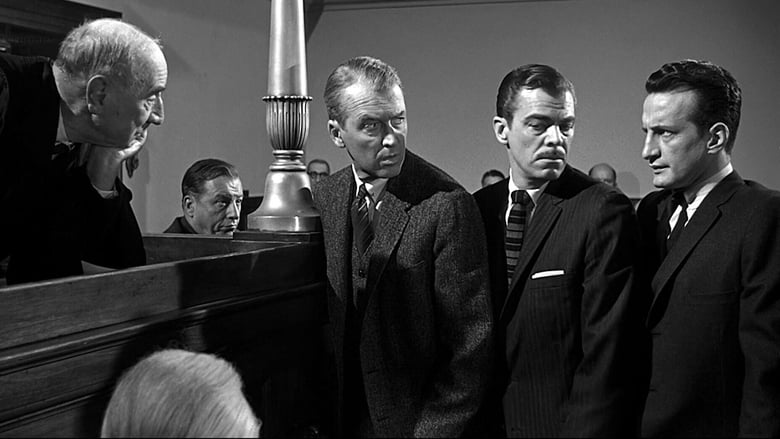
"Anatomy of a Murder" (1959), directed by Otto Preminger, is a gripping courtroom drama set in the Upper Peninsula of Michigan. The story follows Paul Biegler (James Stewart), a semi-retired small-town lawyer who prefers fishing and playing piano. His quiet life is interrupted when he's asked to defend U.S. Army Lieutenant Frederick Manion (Ben Gazzara), who is accused of murdering a local innkeeper, Barney Quill.

Manion admits to the killing but claims it was an act of "irresistible impulse" after Quill allegedly raped his alluring and enigmatic wife, Laura (Lee Remick). Biegler, with the help of his alcoholic but brilliant friend Parnell McCarthy (Arthur O'Connell) and his sharp-witted secretary Maida Rutledge (Eve Arden), takes on the challenging case. The prosecution is led by the formidable local D.A. Mitch Lodwick (Brooks West) and the shrewd, high-powered prosecutor from the Attorney General's office, Claude Dancer (George C. Scott).

The film meticulously details the legal process as Biegler prepares his defense, grappling with the ambiguous morality of his clients and the elusive nature of the truth. The narrative unfolds almost entirely within the confines of the investigation and the courtroom, creating a tense and intellectually stimulating atmosphere. The film was controversial for its time due to its frank discussion of rape and its use of explicit language, which challenged the prevailing Hollywood Production Code.
Core Meaning

"Anatomy of a Murder" delves into the inherent ambiguity of justice and the malleability of truth within the legal system. The film suggests that the courtroom is a theater where the most compelling narrative, rather than the absolute truth, often prevails. Director Otto Preminger meticulously dissects the legal process, revealing it as a complex game of strategy, psychology, and manipulation. The film challenges the audience to question the motives of every character, blurring the lines between right and wrong, and ultimately leaving the true nature of the events shrouded in doubt. It explores the idea that human beings are a complex mixture of good and bad, and that the law itself can be a flawed instrument for discerning absolute truth.

Thematic DNA

The Ambiguity of Truth and Justice 35%
The Mechanics and Morality of the Law 30%
Human Nature and Morality 20%
Sexuality and Social Mores of the 1950s 15%

The Ambiguity of Truth and Justice

The central theme of the film is the elusive nature of truth. The audience, like the jury, is presented with conflicting testimonies and morally ambiguous characters. The film deliberately avoids flashbacks, forcing viewers to rely on the characters' potentially unreliable accounts of the events. Laura Manion's flirtatious yet vulnerable demeanor and Lt. Manion's controlled arrogance make it difficult to ascertain the true sequence of events leading to the murder. The ending, where Manion skips town, mockingly using the "irresistible impulse" defense for his departure, further underscores the film's cynical take on whether true justice was served.

The Mechanics and Morality of the Law

The film provides a detailed and realistic portrayal of the legal process, from jury selection to courtroom maneuvering. It examines the ethical dilemmas faced by lawyers, particularly Paul Biegler's subtle coaching of his client on the "irresistible impulse" defense. The verbal battles between the defense attorney Biegler and the prosecutor Dancer highlight how legal arguments can be used to shape perception and obscure the truth. The film suggests that the law is not a perfect instrument of justice but a system that can be manipulated by skilled practitioners.

Human Nature and Morality

"Anatomy of a Murder" presents a cynical view of human nature, where characters are driven by self-interest and hidden motives. None of the main characters are purely heroic or villainous. Biegler is a shrewd lawyer who is not above bending the rules to win. Laura is both a victim and a manipulator, while Manion is a potentially violent and unrepentant killer. The film explores the idea that people are complex and often contradictory, a sentiment articulated by Biegler himself: "As a lawyer, I've had to learn that people aren't just good or just bad. People are many things."

Sexuality and Social Mores of the 1950s

The film was groundbreaking for its frank and open discussion of rape and sexuality at a time when Hollywood censorship was still very much in effect. The use of words like "rape," "sperm," "panties," and "contraceptive" was shocking to audiences in 1959. Laura Manion's character challenges the 1950s ideal of femininity; she is sexually assertive and her behavior is scrutinized throughout the trial, raising questions about societal attitudes towards female sexuality and victim-blaming.

Character Analysis

Paul Biegler

James Stewart

Archetype: The Shrewd Mentor/Reluctant Hero
Key Trait: Folksy yet brilliant

Motivation

Initially motivated by the need to pay his bills, Biegler becomes intellectually and competitively invested in the complex case. He is driven by the challenge of crafting a viable defense for a difficult and unsympathetic client against a formidable opponent.

Character Arc

Paul Biegler begins as a semi-retired, disillusioned former prosecutor who has lost his passion for the law. Taking on the Manion case reignites his legal mind and competitive spirit. Throughout the trial, he demonstrates his sharp intellect and cunning legal maneuvering, ultimately achieving a victory that re-establishes his reputation. The ending, however, leaves him unpaid and perhaps more cynical, as he is left to ponder the true nature of justice.

Laura Manion

Lee Remick

Archetype: The Femme Fatale/Damsel in Distress
Key Trait: Enigmatic and alluring

Motivation

Her primary motivation appears to be securing her husband's freedom. However, her flirtatious behavior and conflicting statements suggest more complex and possibly self-serving motives that are never fully revealed.

Character Arc

Laura Manion is presented as a deeply ambiguous character. She oscillates between a vulnerable victim and a seductive manipulator, and her true nature remains a mystery throughout the film. Her arc is not one of transformation but of sustained enigma. The audience is never certain if she is a loyal wife who was brutally assaulted or a calculating woman who played a role in a deceptive scheme. Her character challenges traditional female roles of the era.

Lt. Frederick Manion

Ben Gazzara

Archetype: The Antihero/The Accused
Key Trait: Arrogant and manipulative

Motivation

His stated motivation for the murder is revenge for the rape of his wife. However, his actions are also driven by a jealous and possessive nature. Ultimately, his primary motivation is self-preservation, using any means necessary to avoid conviction.

Character Arc

Lt. Manion is an arrogant, cunning, and unrepentant defendant who admits to the killing but claims a lack of memory. He shows little character development, remaining a cold and calculating figure throughout. His arc is defined by his ability to follow Biegler's legal guidance, leading to his acquittal. His final act of skipping town without paying his lawyer, using the very defense that freed him, solidifies his cynical and manipulative nature.

Claude Dancer

George C. Scott

Archetype: The Antagonist/The Rival
Key Trait: Sharp and relentless

Motivation

Dancer is motivated by professional ambition and a desire to secure a conviction. He is driven to win the high-profile case and sees it as a battle of wits against Biegler.

Character Arc

Claude Dancer is the sharp, relentless, and ambitious prosecutor from the big city. He serves as Biegler's primary foil in the courtroom. He does not undergo a significant personal change but consistently represents the formidable power of the state's legal apparatus. His arc is tied to the trial's outcome; despite his skill and confidence, he is ultimately outmaneuvered by Biegler's defense.

Parnell McCarthy

Arthur O'Connell

Archetype: The Mentor/The Sidekick
Key Trait: Wise but troubled

Motivation

His motivation is to help his friend Paul and to regain a sense of self-worth and purpose. He provides crucial legal insights and moral support to Biegler throughout the trial.

Character Arc

Parnell McCarthy is Biegler's alcoholic but wise friend and colleague. He begins the film as a 'drunkard counselor' but finds renewed purpose in assisting with the Manion case. By the end of the film, he has sobered up and is set to become a partner in Biegler's new law practice, representing a path toward redemption.

Symbols & Motifs

Laura Manion's Sunglasses

Meaning:

Laura's sunglasses symbolize her enigmatic nature and the hidden truths of the case. They initially conceal the bruises from her alleged assault, but also serve to create an aura of mystery and detachment, making it difficult for both the characters and the audience to read her true intentions.

Context:

Laura is frequently seen wearing sunglasses, particularly in her initial interactions with Biegler. The act of removing them is a moment of revelation, yet it doesn't necessarily clarify her character.

Paul Biegler's Fishing

Meaning:

Biegler's passion for fishing symbolizes his methodical and patient approach to unraveling the complexities of the case. Just as he carefully lures and catches fish, he meticulously gathers evidence and constructs his legal arguments. It represents his search for truth in a murky situation.

Context:

The film includes several scenes of Biegler fishing, often as he is contemplating the case. These moments of solitude and reflection contrast with the intense drama of the courtroom.

Duke Ellington's Jazz Score

Meaning:

The innovative jazz score by Duke Ellington reflects the film's moral ambiguity and sophisticated, adult themes. The improvisational nature of jazz mirrors Biegler's unorthodox legal strategies and the unpredictable twists of the trial. It gives the film a modern, edgy feel that was unusual for a courtroom drama of its time.

Context:

The jazz music is woven throughout the film, from the iconic opening titles to scenes in bars and Biegler's own piano playing. Duke Ellington himself makes a cameo appearance as a bandleader named "Pie-Eye".

Memorable Quotes

As a lawyer, I've had to learn that people aren't just good or just bad. People are many things.

— Paul Biegler

Context:

Biegler says this early in the film, explaining his professional philosophy. It sets the stage for the moral gray areas that the film will explore.

Meaning:

This line encapsulates one of the film's central themes: the moral complexity of human nature. It reflects Biegler's pragmatic and non-judgmental approach to his clients and the law, and serves as a guide for the audience in interpreting the film's morally ambiguous characters.

Maybe you're too pure, Paul. Too pure for the natural impurities of the law.

— Parnell Emmett McCarthy

Context:

Parnell says this to Biegler as they discuss the case, particularly after Biegler is hesitant about how to construct Manion's defense.

Meaning:

This quote highlights the cynical reality of the legal profession, suggesting that a certain degree of moral flexibility is necessary to succeed. It questions Biegler's initial reluctance and hints at the ethically dubious strategies that might be required to win the case.

Twelve people go off into a room: twelve different minds, twelve different hearts, from twelve different walks of life... And in their judgment, they must become of one mind - unanimous. It's one of the miracles of Man's disorganized soul that they can do it, and in most instances, do it right well. God bless juries.

— Parnell Emmett McCarthy

Context:

Parnell delivers this reflective speech, offering a moment of philosophical contemplation on the nature of the American legal system.

Meaning:

This monologue expresses a profound, almost reverential, faith in the jury system, despite its imperfections. It stands in contrast to the film's otherwise cynical portrayal of legal maneuvering, offering a moment of genuine idealism about the pursuit of justice.

Philosophical Questions

What is the relationship between law and justice?

The film constantly questions whether the legal system is a true vehicle for justice or merely a forum for a battle of narratives. Paul Biegler's success is not necessarily based on uncovering the truth, but on constructing a more convincing legal argument than the prosecution. The acquittal of Lt. Manion, a man who admittedly killed another, leaves the audience to ponder if the "law" was served at the expense of "justice." The film suggests that the law is a set of rules that can be skillfully manipulated, and that its outcomes do not always align with moral righteousness.

Can truth ever be objectively known in a legal proceeding?

"Anatomy of a Murder" suggests that objective truth is almost impossible to ascertain in a courtroom. By deliberately avoiding flashbacks and presenting all evidence through the biased perspectives of its characters, the film forces the audience into the position of the jury, having to piece together a version of reality from conflicting and incomplete information. The film's ambiguous ending reinforces this idea, as the ultimate truth of what happened between Laura Manion and Barney Quill is never definitively revealed.

Where does moral responsibility lie in the legal profession?

The film delves into the ethical responsibilities of a defense attorney. Biegler's "lecture" to Manion, where he carefully outlines the possible legal defenses, borders on suborning perjury. This raises questions about a lawyer's duty to their client versus their duty to the truth. Is Biegler's primary responsibility to achieve an acquittal for his client, regardless of his guilt, or does he have a higher moral obligation? The film presents this dilemma without offering easy answers, portraying Biegler as a complex professional rather than a simple hero.

Alternative Interpretations

A significant alternative interpretation revolves around Laura Manion's role in the events. While the primary narrative presents her as a potential rape victim, some analyses suggest she may not have been raped at all. This perspective posits that she might have been having an affair with Barney Quill. When her violently jealous husband, Lt. Manion, discovered the affair, he beat her (explaining her injuries) and then murdered Quill in a jealous rage. In this reading, the entire rape story is a fabrication concocted by Laura and her husband to create a legal defense. This interpretation views Laura not as a victim, but as a manipulative femme fatale who orchestrates the entire legal defense to save her husband.

Another interpretation focuses on the character of Paul Biegler. While he is the film's protagonist, he can also be seen as a monstrous figure whose primary interest is not in justice, but in winning a high-profile case. From this viewpoint, Biegler knowingly helps a guilty man escape conviction by carefully feeding him the "irresistible impulse" defense. The film's "happy ending," where Biegler and McCarthy decide to restart their practice, is therefore seen as deeply cynical, celebrating a victory for legal maneuvering over actual justice. This reading emphasizes the film's critique of a legal system where the truth is secondary to the skill of the lawyers.

Cultural Impact

"Anatomy of a Murder" had a significant and lasting cultural impact. Released in 1959, it was a landmark film that challenged the strict censorship of the Hollywood Production Code. Its candid discussion of sexual assault and use of then-shocking terminology helped to push the boundaries of what was permissible on screen, paving the way for more mature and realistic cinematic storytelling. The film is widely regarded as one of the finest courtroom dramas ever made, setting a new standard for the genre with its detailed and authentic depiction of legal strategy and courtroom procedure. Its influence can be seen in countless subsequent legal dramas, from television shows like "Law & Order" to films by authors like John Grisham.

The film's reception was largely positive, with critics praising its intelligent script, strong performances, and Preminger's masterful direction. It garnered seven Academy Award nominations, including Best Picture, solidifying its place in cinematic history. The innovative jazz score by Duke Ellington was also groundbreaking, being one of the first full scores for a major American film composed by an African-American artist. The film's morally ambiguous tone and complex characters resonated with a post-war America that was beginning to question simple black-and-white moralities. It has been preserved in the United States National Film Registry by the Library of Congress for being "culturally, historically, or aesthetically significant."

Audience Reception

Upon its release, "Anatomy of a Murder" was largely praised by critics for its intelligent screenplay, compelling performances, and realistic depiction of the legal system. Audiences were captivated by the intricate storytelling and the moral complexity of the characters. The film's frankness regarding the subject of rape and its use of explicit language was a point of controversy, shocking some viewers and leading to censorship in some areas, such as Chicago. James Stewart's performance as the shrewd but folksy lawyer was particularly acclaimed, earning him an Academy Award nomination. George C. Scott and Arthur O'Connell also received Oscar nominations for their supporting roles.

A main point of criticism, particularly from a modern perspective, is the film's portrayal of its female characters and the subject of sexual assault. Some viewers find the film's pre-feminist attitude jarring, as Laura Manion's character is often judged based on her sexuality and perceived promiscuity. Despite these criticisms, the film remains widely celebrated as a classic of the courtroom drama genre, admired for its intellectual depth and its challenging exploration of morality and justice.

Interesting Facts

  • The film is based on a best-selling novel by Robert Traver, the pen name for Michigan Supreme Court Justice John D. Voelker. The novel itself was based on a 1952 murder case in which Voelker served as the defense attorney.
  • The role of the judge was played by Joseph N. Welch, a real-life lawyer who was famous for confronting Senator Joseph McCarthy during the Army-McCarthy hearings in 1954.
  • The film was shot on location in Marquette County, Michigan, where the actual events that inspired the novel took place. This added a significant layer of realism to the production.
  • The film was highly controversial upon its release for its frank dialogue, including the use of words like "rape," "sperm," "penetration," and "panties," which pushed the boundaries of the Hollywood Production Code. The film was even banned in Chicago.
  • The acclaimed jazz score was composed by Duke Ellington and Billy Strayhorn. Ellington also has a cameo in the film as a roadhouse pianist named "Pie-Eye." This was one of the first major Hollywood films to feature a score by an African-American composer.
  • Lana Turner was originally cast as Laura Manion but was replaced by Lee Remick. Turner reportedly insisted on wearing gowns designed by her personal couturier, which director Otto Preminger deemed unsuitable for the character.
  • James Stewart's own father was so disturbed by the film's "dirty" content that he took out an ad in his local newspaper telling people not to see it.
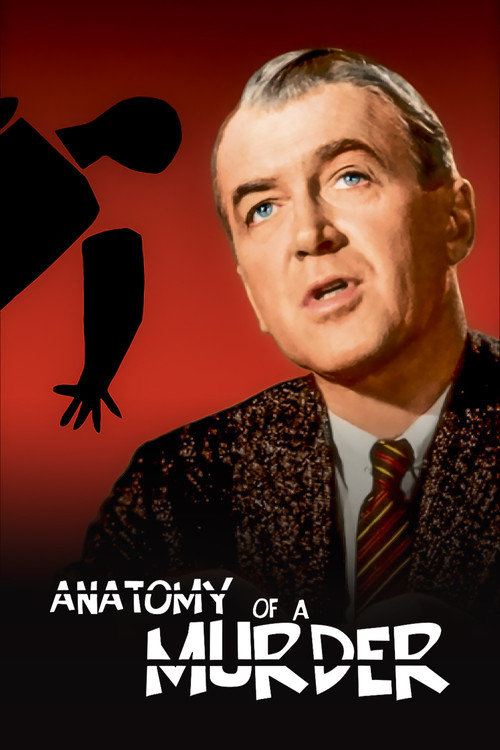
  • The iconic poster and title sequence were designed by Saul Bass.
  • The film received seven Academy Award nominations, including Best Picture, but did not win any.

Easter Eggs

During a scene where Paul Biegler visits a hotel, the desk clerk is seen reading the novel "Exodus" by Leon Uris.

This is an inside joke, as director Otto Preminger's next major film project after "Anatomy of a Murder" was the epic adaptation of "Exodus" (1960).

The author of the source novel, John D. Voelker (under the pen name Robert Traver), makes a brief, uncredited appearance in the film.

Voelker can be seen in the background of a courtroom scene. This cameo pays homage to the creator of the story and further grounds the film in its real-life origins.

⚠️ Spoiler Analysis

Click to reveal detailed analysis with spoilers

Frequently Asked Questions

Explore More About This Movie

Dive deeper into specific aspects of the movie with our detailed analysis pages

Comments (0)

Leave a comment

No comments yet. Be the first to share your thoughts!